Tower of London
Secrets, Ravens, and Royal Walls Await
The Crown Jewels are valued at over $4 billion and include the world’s largest clear-cut diamond.
1 A Fortress Born from Conquest
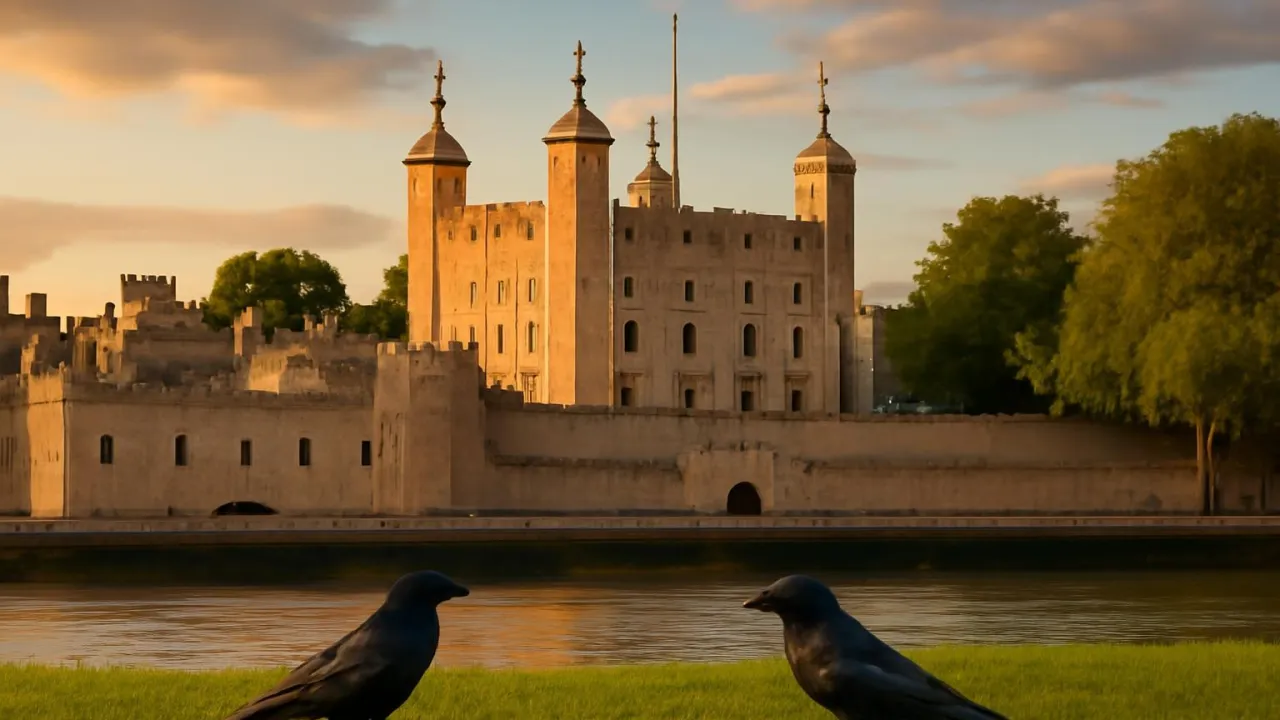
In 1078, William the Conqueror ordered the construction of the Tower of London to assert his power over England. The original White Tower, built from limestone imported from Caen, France, stands 90 feet (27 meters) tall and is flanked by four corner . Over the centuries, successive monarchs expanded the complex, adding , a deep moat, and multiple defensive towers. The Tower’s layered construction reflects advances in medieval military architecture, designed to withstand siege weapons and deter rebellion.
2 Ravens, Legends, and Royal Guardians
The Tower’s most famous residents are its ravens, whose presence is protected by royal decree. Each raven is banded, named, and carefully monitored to ensure the legend—'If the ravens leave the Tower, the kingdom will fall'—remains unbroken. The Yeoman Warders, or Beefeaters, are ceremonial guards who also serve as expert storytellers and raven caretakers. Their daily routines include feeding the birds a specialized diet and inspecting their health, blending tradition with animal science.
3 Crown Jewels and the Tower’s Many Roles
The Crown Jewels, housed in the Jewel House behind bombproof glass, include over 23,000 gemstones and are still used in royal ceremonies. The Tower’s roles have shifted dramatically throughout history: it has served as a royal residence, a notorious prison, a treasury, and even a menagerie for exotic animals. Each era left its mark, from the graffiti of imprisoned nobles to the echoes of state ceremonies in the Chapel Royal.
4 Engineering Mastery and Endurance
The Tower’s survival for nearly a millennium is a testament to medieval engineering. Its walls, up to 15 feet (4.5 meters) thick, are constructed from durable limestone and Kentish ragstone, which resist erosion from wind and rain. The fortress’s concentric design, with multiple defensive layers and a once-water-filled moat, provided formidable protection against attackers. The use of rounded arches and buttresses distributed weight and prevented collapse, while the strategic placement along the River Thames ensured both defense and supply access.
5 Legacy, Symbolism, and Global Impact
As a UNESCO World Heritage site, the Tower of London stands as a symbol of royal authority and . Its architecture influenced countless castles across Europe, and its stories—of intrigue, invention, and endurance—continue to captivate millions of visitors each year. The Tower’s preservation combines careful restoration, scientific study of materials, and ongoing traditions like the Ceremony of the Keys. Today, it remains a living monument, connecting past and present through its walls, treasures, and the ever-watchful gaze of its legendary ravens.
1. How did the Tower’s concentric design improve its defense?
2. Why is the Tower of London important globally today?