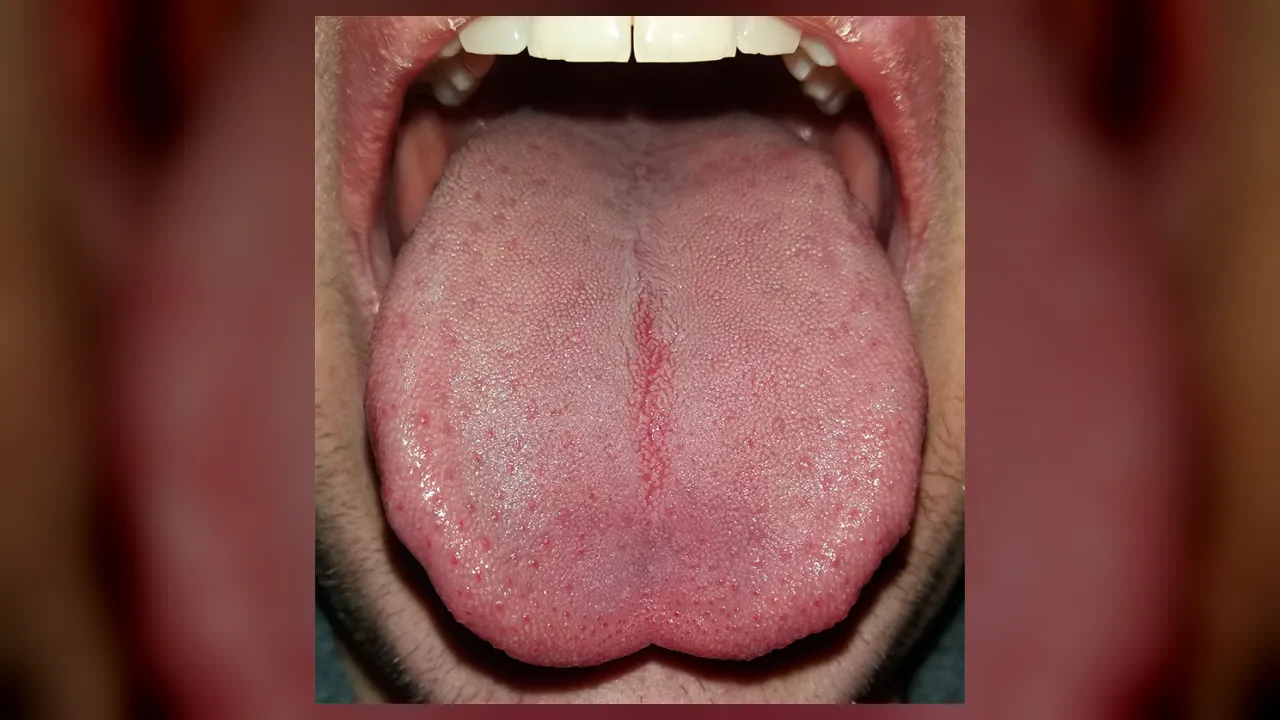
⚙️ Core JobTastes five core flavors, mixes food for safe swallowing, and shapes crisp speech sounds
⚡ Body SuperpowerMoves in every direction without a single bone inside it—just like an elephant's trunk!
🤯 Mind-Blowing Fact • Grade 1
Just like your fingertips have one-of-a-kind fingerprints, your tongue has a totally unique 'tongue print' that nobody else shares!
✨ Word Sparks (Grade 1 Glossary)
Tap 🔊 to hear
Taste bud
Tiny sensor that detects sweet, sour, or salty
Nimble
Quick, light, and easy in every movement
Weave
To crisscross strands tightly together like cloth
🪝
How can your tongue curl, twist, and point with zero bones inside it?
1
A Super-Bendy Helper
Stick out your tongue and wiggle it left and right! Unlike your fingers, your tongue has zero bones inside. Instead, eight strong muscles together so it can bend every way!
2
Thousands of Taste Sensors
Tiny bumps dot the top of your tongue. Hiding inside those bumps are that tell your brain if a berry is sweet or sour!
3
Talking and Chewing
Say 'la-la-la!' Your tongue taps behind your teeth to shape words and steers snacks safely while you chew.
2. Which two big jobs does your tongue help you do every single day?
🤯 Mind-Blowing Fact • Grade 2
Your taste buds renew themselves so fast that you get a brand-new set roughly every ten to fourteen days!
✨ Word Sparks (Grade 2 Glossary)
Tap 🔊 to hear
Papillae
Tiny grippy bumps covering your tongue's surface
Savory
Rich, brothy flavor found in cheese and soup
Crisscross
Forming neat crossing lines in different directions
🪝
What do your tongue, an octopus arm, and an elephant's trunk all have in common?
1
Built Like an Octopus Arm
Imagine trying to stand a cooked noodle straight up—impossible! Yet your tongue pushes, curls, and flattens effortlessly without any skeleton inside. Eight paired muscles up-and-down, side-to-side, and front-to-back, squeezing against each other just like an elephant's trunk or an octopus tentacle!
2
Bumps Versus Buds
Peek in a mirror at the tiny pink bumps covering your tongue. Those visible bumps are actually called —they add grip to roll food around! Tucked inside the walls of those bumps sit thousands of microscopic taste buds.
3
Five Delicious Tastes
Every single taste zone on your tongue can detect sweet, salty, sour, bitter, and flavors!
Is the old classroom chart showing 'sweet only on the tip' of the tongue true or a myth?
1
Busting the Tongue Map Myth
For decades, old posters claimed you could only taste sweet foods on the very tip of your tongue and bitter foods in the back. Put a tiny crystal of sugar on the side or middle of your tongue, and surprise—you taste sweetness everywhere! Scientists proved that every taste-bud zone across your tongue holds sensors for all five tastes.
2
Meet 'Umami,' the Fifth Taste
Everyone knows sweet, sour, salty, and bitter, yet your tongue also detects a fifth core taste called ! Discovered in Tokyo in 1908, umami senses savory amino acids in foods like roasted tomatoes, mushrooms, cheddar cheese, and warm soup broth.
3
Inside Crew and Outside Crew
Your tongue's eight muscles divide into two teams: four outside muscles anchor to jaw and throat bones to steer your tongue in and out, while four inside muscles change its shape to form crisp like T, D, L, and R!
4
Tireless Food Mixer
While chewing, your tongue deftly flips carrots between molars without getting bitten itself, then presses upward against the roof of your mouth to launch each swallow.
1. What did modern taste scientists prove about the old 'tongue map' diagram?
2. Which foods strongly trigger your tongue's fifth taste, umami?
🤯 Mind-Blowing Fact • Grade 4
Your tongue anchors at its root to the U-shaped hyoid bone in your throat—the single bone in the entire human skeleton that doesn't connect to any other bone!
✨ Word Sparks (Grade 4 Glossary)
Tap 🔊 to hear
Hydrostat
Boneless muscle organ stiffening through internal fluid pressure
Hyoid bone
Floating U-shaped throat bone anchoring tongue muscles
Olfaction
The scientific term for your sense of smell
🪝
Why does holding your nose make a strawberry jellybean taste like plain sugar until you let go?
1
A Muscular Hydrostat in Action
Biologists classify your tongue alongside elephant trunks and squid tentacles as a 'muscular '—a structure made almost entirely of incompressible water-filled muscle cells with zero internal skeleton! Because water cannot be squished into a smaller volume, squeezing vertical muscle fibers automatically pushes the tongue out longer and thinner, while contracting lengthwise fibers makes it shorter and wider. Anchoring the whole muscular base is the horseshoe-shaped —the only bone in your body that does not touch another bone!
2
Four Kinds of Papillae
Four specialized papilla types carpet the tongue's upper surface. Thread-like filiform papillae cover the center; they contain zero taste buds, acting instead like microscopic Velcro bristles that sense food texture and scoop ice cream cleanly! Scattered like tiny red dots, fungiform papillae, side-ridge foliate papillae, and large back-row circumvallate papillae house 2,000 to 10,000 onion-shaped taste buds, each poking microscopic taste hairs through a tiny pore.
3
Taste Versus Flavor
Pinch your nose gently, chew a fruit jellybean, and you will only detect 'sweet' and 'slightly sour'! Unpinch your nose as you exhale, and fragrant molecules drift up behind your palate into nasal smell sensors (retronasal )—instantly blooming into full strawberry or cherry flavor!
4
Why Bitter Protects Us
Humans possess about twenty-five different bitter-receptor genes so tiny traces of spoiled or toxic wild plants trigger an instant warning face!
1. How does a boneless 'muscular hydrostat' like your tongue push outward and grow longer?
2. Why does food seem bland when a stuffy cold blocks your nose?
🤯 Mind-Blowing Fact • Grade 5
Chili peppers aren't actually one of your tongue's tastes—their capsaicin molecule tricks temperature-sensing touch nerves (TRPV1) into reporting harmless heat!
✨ Word Sparks (Grade 5 Glossary)
Tap 🔊 to hear
Gustatory
Relating scientifically to the sense of taste
Genioglossus
Fan-shaped muscle keeping your airway open asleep
Capsaicin
Chili molecule that triggers heat-sensing nerve endings
🪝
Why are about one in four people 'supertasters' who experience broccoli as intensely bitter and chilies as extra fiery?
1
Intrinsic and Extrinsic Neuromuscular Precision
Divided along its midline by a fibrous lingual septum, the human tongue integrates four paired extrinsic muscles (, hyoglossus, styloglossus, and palatoglossus) that position the organ in space with four paired intrinsic muscle bundles (superior and inferior longitudinal, transverse, and vertical) that sculpt sub-millimeter contours for rapid speech articulation. Motor commands arrive primarily via the hypoglossal nerve (cranial nerve XII); remarkably, the fan-shaped genioglossus also maintains gentle tonic contraction all night during sleep so the tongue base never falls backward to block the pharyngeal airway!
2
Ion Channels and GPCR Gustatory Transduction
Each onion-shaped taste bud embeds 50 to 150 neuroepithelial receptor cells extending microvilli into a microscopic taste pore. transduction splits into two distinct molecular mechanisms! Salty and sour tastes work through direct ion channels: sodium ions (Na+) flow directly into salt-sensing cells to depolarize them, while sour hydrogen protons (H+) enter proton channels such as OTOP1. Conversely, sweet, bitter, and umami molecules bind G-protein-coupled receptors (T1R and T2R families)—with Kikunae Ikeda's 1908 discovery of L-glutamate umami validated decades later when molecular biologists cloned the T1R1+T1R3 heterodimer receptor!
3
Spicy Heat Is Touch, Not Taste!
Surprisingly, chili-pepper 'heat' and peppermint 'coolness' do not use taste buds at all! in chilies activates TRPV1 warmth-sensing nerve endings on the trigeminal nerve (CN V), while menthol triggers TRPM8 cold sensors—tricking your brain into feeling thermal fire or ice at room temperature!
4
Genetics of 'Supertasters'
Psychologist Linda Bartoshuk discovered that roughly 25 percent of people inherit dense carpets of fungiform papillae alongside sensitive TAS2R38 bitter-receptor alleles—making these 'supertasters' experience brassica vegetables like kale or dark chocolate far more vividly than non-tasters.
5
Lingual Tonsils at the Base
Guarding the posterior pharyngeal third of your tongue sits a cobblestone mound of lymphatic tissue—the lingual tonsil—sampling swallowed microbes to prime mucosal immunity.