1. What yummy nut is your amygdala named after because of its oval shape?
2. Why did your amygdala make you jump back from a curved stick on a forest trail?
🤯 Mind-Blowing Fact • Grade 2
Your amygdala doesn't just react to scary things—it lights up brightly for birthday surprises, winning goals, and happy puppy kisses too!
✨ Word Sparks (Grade 2 Glossary)
Tap 🔊 to hear
fight-or-flight
fast body boost preparing for danger
temporal
side brain region behind your temples
react
respond quickly when something new happens
🪝
How does your heart start pounding in a fraction of a second when a friendly dog barks by surprise?
1
Faster Than Thinking
Walk past a quiet bush when—WOOF!—a playful puppy barks and your heart leaps! Deep inside your left and right lobes sit two almond-sized hubs called the amygdalae, guarding you around the clock.
2
Fight, Flight, or Freeze
The instant your amygdala senses potential trouble, it radios your brainstem and hormone centers. Within heartbeats, extra oxygen and energy rush to your legs and arms so you can jump aside, sprint, or freeze safely!
3
Highlighter Pen for Memories
Parked right in front of your memory-saving hippocampus, your amygdala acts like a bright highlighter—marking exciting, funny, or scary moments so you remember them clearly!
1. Why does your amygdala sit right next door to your memory-saving hippocampus?
2. Does your amygdala ONLY care about fear, or does it notice positive excitement too?
🤯 Mind-Blowing Fact • Grade 3
Your amygdala can read wide, startled eyes on another person's face in less than 40 thousandths of a second—even before you consciously notice someone is standing there!
✨ Word Sparks (Grade 3 Glossary)
Tap 🔊 to hear
thalamus
central brain hub routing sensory signals
millisecond
one-thousandth of a single second
adrenaline
fast hormone boosting heartbeats and alertness
🪝
Why do signals from your eyes and ears split onto a secret 'shortcut road' straight to your amygdala?
1
The Low Road vs. The High Road
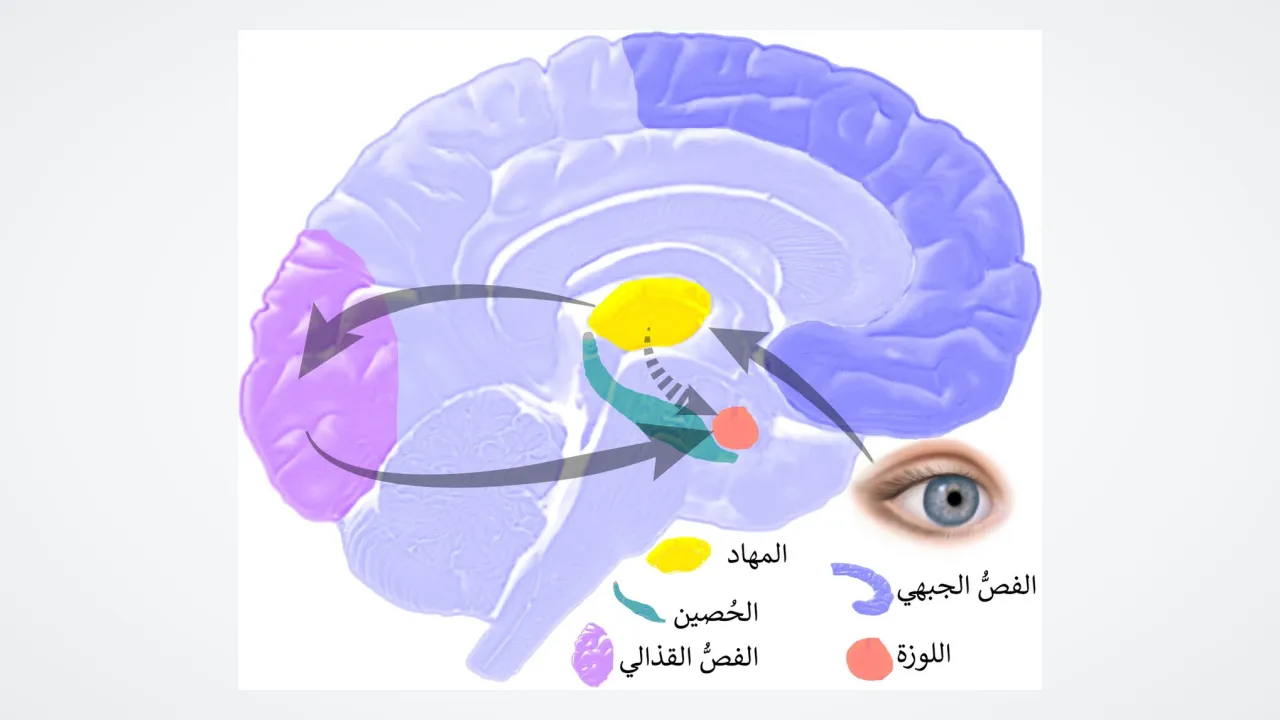
Picture two roads leading from your eyes and ears into your brain! Neuroscientist Joseph LeDoux discovered that sensory signals split at a relay hub called the . One path—the 'High Road'—travels up to your visual cortex to carefully inspect every detail. Meanwhile, a super-fast shortcut—the 'Low Road'—zips rough clues straight to your amygdala in just twelve !
2
Teamwork With Your Prefrontal Captain
That 12- shortcut makes you flinch away from a flying baseball before you consciously recognize its stitches! Half a second later, your prefrontal cortex checks the High Road picture: if it was only a blowing leaf, your prefrontal cortex calms your amygdala back down.
3
Reading Faces in a Split Second
Glance across a crowded lunchroom and you instantly tell whether a classmate looks worried, thrilled, or surprised—thanks to face-reading neurons inside your amygdala!
4
Calming False Alarms
Sometimes big tests or stage fright trigger false alarms; slow deep breaths tell your amygdala everything is safe!
1. What is the big advantage of the fast 'Low Road' shortcut from the thalamus straight to your amygdala?
2. Which brain partner steps in half a second later to calm your amygdala when a shadow turns out to be harmless?
🤯 Mind-Blowing Fact • Grade 4
Astronauts training for spacewalks practice emergency drills hundreds of times specifically so their prefrontal cortex builds fast calming highways to keep their amygdala steady under pressure!
✨ Word Sparks (Grade 4 Glossary)
Tap 🔊 to hear
salience
how important or noticeable something stands out
hypothalamus
brain hub controlling hormones and body balance
nuclei
specialized clusters of neurons inside brain
🪝
Why isn't the amygdala a single lump—and how does this tiny almond cluster decide what matters most in your world?
1
Thirteen Mini-Hubs Inside One Almond
Zoom inside the 1.5-centimeter amygdala—known anatomically as the corpus amygdaloideum—and surprise: it isn't one uniform blob at all, but a tight neighborhood of roughly thirteen distinct sub-clusters called ! Sensory clues from sight, hearing, touch, and smell enter through the lateral and basolateral nuclei, which evaluate whether an event is urgent, rewarding, or unfamiliar.
2
Triggering the Hypothalamus Cascade
Once the basolateral complex flags a real threat, it alerts the central nucleus—the amygdala's output command station! Instantly, signals shoot to the to trigger sympathetic 'fight-or-flight' adrenaline, to the brainstem's periaqueductal gray for protective freezing, and to neuromodulator centers that sharpen your visual cortex like turning up a spotlight.
3
Emotional Salience, Not Just Fear
Early textbooks labeled the amygdala simply 'the fear center,' yet modern neuroscience proved its true job is detecting ''—anything biologically or socially meaningful! Winning a close championship game, hearing your best friend laugh, or spotting someone who needs kindness all engage specialized amygdala neurons.
4
Flashbulb Memory Power
By releasing norepinephrine boosts straight onto neighboring hippocampal synapses during thrilling moments, the amygdala cements vivid memories while letting boring Tuesday sock choices fade away.
1. Why do modern neuroscientists call the amygdala a 'salience (importance) detector' rather than only a 'fear center'?
2. Why do you vividly remember winning a big tournament years later yet forget what socks you wore three Tuesdays ago?
🤯 Mind-Blowing Fact • Grade 5
Overcoming a childhood fear—like learning dogs are friendly—doesn't erase old amygdala synapses; instead, your prefrontal cortex activates tiny 'intercalated brake cells' inside the amygdala to quiet the old alarm!
✨ Word Sparks (Grade 5 Glossary)
Tap 🔊 to hear
extinction learning
building new calming circuits over old fears
basolateral
input amygdala hub pairing senses with emotion
valence
whether an experience feels positive or negative
🪝
How does a 15-millimeter complex of subcortical nuclei orchestrate associative threat learning, social gaze, and top-down fear extinction?
1
Cytoarchitectonic Mosaic in the Temporal Pole
Coined in 1822 by German anatomist Karl Friedrich Burdach for its almond-like silhouette perched immediately anterior to the hippocampal head, each human amygdala integrates roughly twelve million neurons partitioned across functionally distinct nuclear groups. Evolutionarily cortical-like nuclei (lateral, basal, and accessory basal) employ glutamatergic pyramidal-style projection neurons to integrate multimodal sensory inputs, whereas the striatal-like centromedial group utilizes inhibitory GABAergic circuits to drive rapid autonomic and behavioral outputs.
2
Dual Thalamic-Cortical Pathways and Associative Learning
Pioneering work by Joseph LeDoux mapped how auditory or visual stimuli reach the lateral amygdala simultaneously via two routes: a fast, low-resolution monosynaptic thalamo-amygdala projection (~12 milliseconds) and a slower, high-resolution thalamo-cortico-amygdala pathway that distinguishes genuine hazards from harmless mimics. Inside lateral amygdala dendrites, neutral cues paired with aversive events trigger NMDA-dependent long-term potentiation—teaching your brain in a single trial never to touch a hot stove twice! Conversely, neuropsychologist Ralph Adolphs showed that selective bilateral amygdala calcifications (Urbach-Wiethe syndrome) impair subconscious gaze toward human eyes, erasing fearful face recognition while leaving conscious vocabulary intact.
3
Downstream Effectors and Memory Modulation
When activated, the central amygdala projects via the stria terminalis and ventral amygdalofugal pathway to the lateral hypothalamus (sympathetic tachycardia and pupil dilation), paraventricular nucleus (HPA-axis cortisol release), locus coeruleus (norepinephrine vigilance), and pontine reticular nuclei. Concurrently, James McGaugh demonstrated that amygdala adrenergic signaling amplifies hippocampal consolidation—explaining emotionally vivid episodic recall.
4
Extinction Learning: Rewiring Rather Than Erasing
Crucially, overcoming a fear doesn't delete the original amygdala trace! Instead, ventromedial prefrontal cortex fibers excite clusters of GABAergic 'intercalated cells' wedged between the and central amygdala—building a fresh inhibitory brake whenever formerly scary situations prove safe.
5
Valence Coding and Emotional Resilience
Through genetically distinct circuits projecting to the nucleus accumbens for appetitive joy versus the central amygdala for defensive caution, these twin almonds balance survival vigilance with social warmth and human courage.
1. According to neuroscience research on 'fear extinction,' what happens inside your brain when you bravely overcome an old fear?
2. What subtle eye-tracking habit did neuroscientist Ralph Adolphs discover helps the healthy human amygdala read fearful expressions on other people's faces?