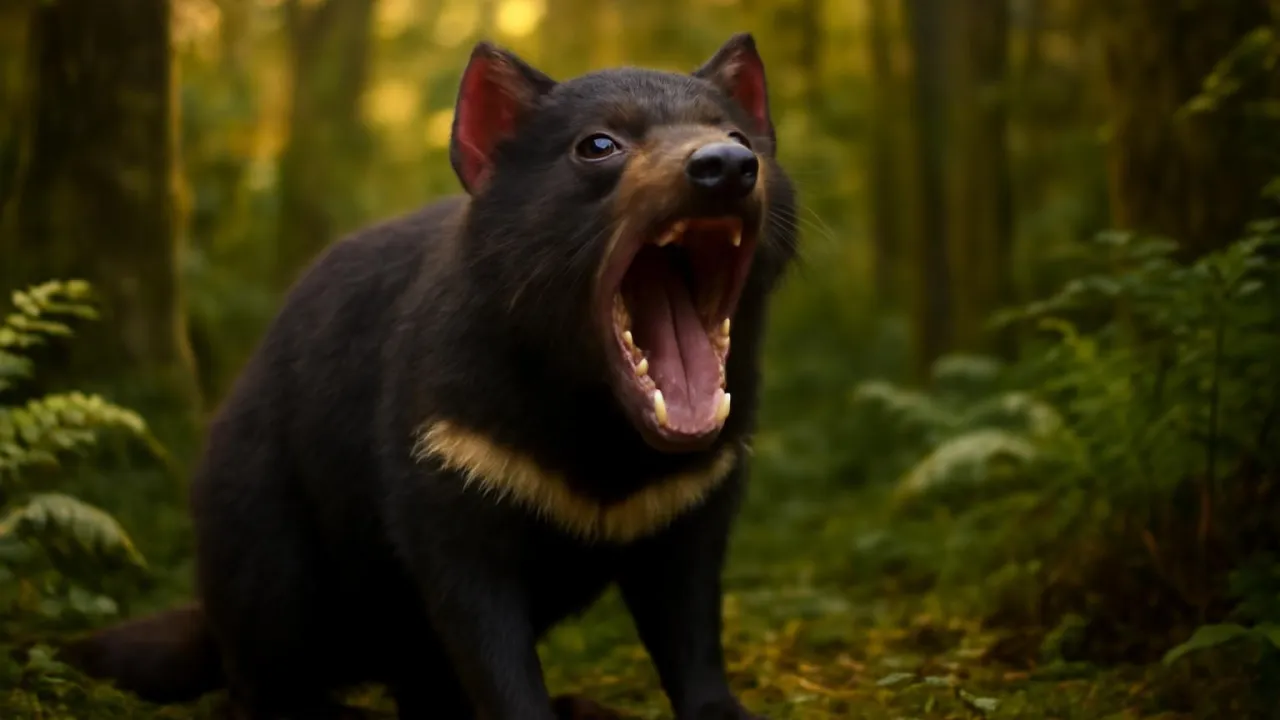
Tasmanian devils can bite through bones that are as thick as your thumb!
✨ Word Sparks (Grade 2 Glossary)
Tap 🔊 to hear
carnivore
An animal that eats only meat
island
Land surrounded by water
screech
A loud, high animal sound
🪝
Did you know some animals sound like monsters in the dark?
1
Meet the Tasmanian Devil
Tasmanian devils are not really scary, but they sound wild at night. They growl, , and make loud noises to keep others away. Their black fur and sharp teeth help them look tough.
2
Where Do They Live?
These animals live on the of Tasmania, which is part of Australia. They like to hide in forests and bushy places during the day. At night, they come out to find food.
3
How Do They Eat?
Tasmanian devils are meat eaters, called , and they eat small animals or dead things. Their jaws are very strong, so they can crunch through bones. They eat quickly and can eat a lot at once.
2. What do Tasmanian devils use their strong jaws for?
🤯 Mind-Blowing Fact • Grade 3
Tasmanian devils are marsupials, like kangaroos, and carry their babies in a pouch!
✨ Word Sparks (Grade 3 Glossary)
Tap 🔊 to hear
marsupial
Animal with a pouch for babies
camouflage
Colors that help animals hide
adaptation
A body part that helps survival
🪝
Can you imagine an animal that can out-chomp a dog its size?
1
Super Strong Jaws
The Tasmanian devil has the most powerful bite for its body size of any mammal. Its jaws can crush bones that would break other animals’ teeth. This lets it eat every part of its meal, even tough bones. The devil’s sharp teeth keep growing throughout its life.
2
Where Devils Roam
Tasmanian devils live only on the island of Tasmania, south of Australia. They prefer forests, coastal scrub, and open woodlands for shelter. During the day, they hide in burrows or caves to stay safe. At night, they search for food using their excellent sense of smell.
3
A Noisy Nightlife
These animals are famous for their scary screeches and growls. They use these sounds to scare away other devils from their food. Their black fur and white patches help them blend into the dark forest. This protects them from larger predators.
4
Life Cycle and Surprises
Tasmanian devils are , so mothers carry tiny babies in a pouch. After a few months, the babies leave the pouch and ride on their mom’s back. Devils live about five years in the wild. They help clean up the ecosystem by eating dead animals.
2. What do Tasmanian devils eat that helps the ecosystem?
🤯 Mind-Blowing Fact • Grade 4
A Tasmanian devil’s bite is so strong it can easily snap a stick as thick as a broom handle!
✨ Word Sparks (Grade 4 Glossary)
Tap 🔊 to hear
scavenger
An animal that eats dead things
endangered
At risk of disappearing forever
conservationist
A person who protects nature
🪝
What animal can crush bones and shriek like a banshee in the wild?
1
Jaw Power Champions
Tasmanian devils have the strongest bite force, pound for pound, of any mammal on Earth. Their jaws can exert up to 553 Newtons, allowing them to crush bones and eat every part of their prey. This adaptation is crucial for survival, as it lets them consume leftovers that other animals cannot. Their ever-growing teeth ensure they can keep biting hard throughout their lives.
2
Ecosystem Clean-Up Crew
As , Tasmanian devils play a vital role in Tasmania’s food web by eating dead animals and preventing disease spread. Their loud screeches and fierce growls help them compete for food and scare off rivals. Devils also help control populations of smaller animals by hunting them. Without devils, more rotting carcasses would attract pests and harm the ecosystem.
3
Family Life in the Wild
Female devils are marsupials, so they carry their tiny young in a pouch after birth. Only four babies can survive, because the mother has just four teats in her pouch. After leaving the pouch, the young ride on their mother’s back and learn to find food. Devils typically live up to five or six years in the wild, facing threats from disease and habitat loss.
4
Tasmanian Devils and People
Tasmanian devils once lived across Australia, but now they are only found on Tasmania. They are due to a contagious cancer called Devil Facial Tumor Disease, which has greatly reduced their numbers. are working to protect devils by creating disease-free populations and safe habitats. People in Tasmania celebrate the devil as a symbol of their island’s wild nature.
1. Why are Tasmanian devils important for their ecosystem?
2. What is the biggest threat to Tasmanian devils today?
🤯 Mind-Blowing Fact • Grade 5
A Tasmanian devil’s jaws can generate enough force to snap a metal trap and chew through bone as thick as a broomstick!
✨ Word Sparks (Grade 5 Glossary)
Tap 🔊 to hear
apex scavenger
Top animal that eats dead things
nocturnal
Active mostly at night
extinction
When a species disappears forever
🪝
What animal can devour a meal in minutes and has a bite force stronger than a pit bull’s?
1
The Mighty Marsupial Carnivore
The Tasmanian devil, Sarcophilus harrisii, is the world’s largest surviving carnivorous marsupial. It belongs to the Dasyuridae family, which includes quolls and other small meat-eating mammals native to Australia. Adult devils typically measure 20 to 31 inches (52–80 cm) in length and weigh between 9 and 26 pounds (4–12 kg). Their stocky build, black fur, and distinctive white chest patches help them blend into the forest shadows. Unlike placental mammals, devils give birth to underdeveloped young that finish growing inside the mother’s pouch.
2
Bite Force and Feeding Mechanics
Tasmanian devils possess the strongest bite force relative to body size of any living mammal, reaching up to 553 Newtons. Their robust skull, powerful jaw muscles, and ever-growing teeth allow them to crush bones up to one inch (2.5 cm) thick. Devils are both hunters and scavengers, consuming small mammals, birds, insects, and carrion. They can eat up to 40% of their body weight in a single feeding, stripping carcasses clean in less than 30 minutes. This efficiency helps keep Tasmania’s environment free of disease-spreading remains.
3
Role in the Ecosystem
As , Tasmanian devils prevent the spread of disease by rapidly consuming animal carcasses that would otherwise rot. Their presence helps balance populations of smaller animals and insects, supporting ecosystem health. Devils are , relying on excellent night vision and a keen sense of smell to locate food in the dark. They communicate with each other through screeches, growls, and scent markings, which help reduce direct conflict over food. Without devils, Tasmania’s forests would face increased risks from pests and disease outbreaks.
4
Life Cycle and Conservation Challenges
Female devils give birth to up to 40 tiny, jellybean-sized young, but only four can survive due to limited space in the pouch. The young spend about four months in the pouch, then ride on their mother’s back until they are old enough to fend for themselves. Tasmanian devils face a major threat from Devil Facial Tumor Disease (DFTD), a contagious cancer that has wiped out over 80% of the wild population since the 1990s. Conservationists are using captive breeding, vaccination research, and disease-free reserves to help save the species from .
5
From Ancient Australia to Modern Symbol
Fossil evidence shows Tasmanian devils once lived across mainland Australia but disappeared there thousands of years ago, likely due to competition with dingoes. Today, they are found only on the island of Tasmania, where they are a state emblem and a focus of scientific study. The devil’s unique biology and ecological role make it a flagship species for conservation efforts. Scientists monitor devil populations using GPS collars, camera traps, and genetic testing to track disease and recovery. The future of the Tasmanian devil depends on continued research, public support, and habitat protection.