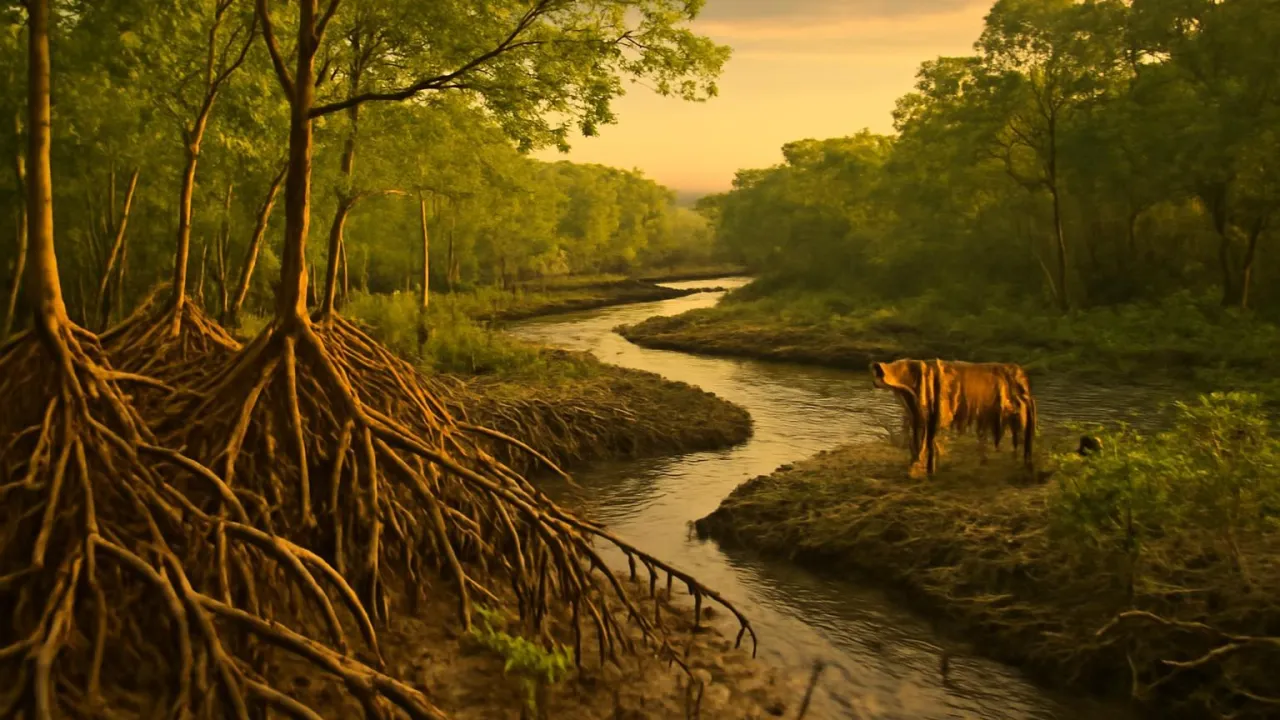
Some Sundarbans trees can breathe through their roots when the tide covers them!
✨ Word Sparks (Grade 2 Glossary)
Tap 🔊 to hear
roots
Parts of plants under the ground
salty
Tastes like ocean water
guide
A person who shows the way
🪝
What would it feel like to float through a forest full of roots and wild sounds?
1
A Forest That Grows in Water
The Sundarbans is a huge forest that grows where rivers meet the sea. Mangrove trees have long that stretch into the muddy water, making a safe place for fish and crabs. Every day, the tides bring water in and out, changing the land.
2
Home to Amazing Animals
Bengal tigers swim across wide rivers and hunt in the thick trees. Crocodiles, deer, and monkeys also live here, sharing the tangled forest together. Many colorful birds sing and fly above the green leaves.
3
People Explore by Boat
Visitors ride in wooden boats to see the Sundarbans up close. Local help people spot animals and learn about the forest. The Sundarbans is both wild and full of life, making every trip exciting.
The Sundarbans has over 260 species of birds living among its trees!
✨ Word Sparks (Grade 3 Glossary)
Tap 🔊 to hear
ecosystem
All living things in one place
erosion
When land is worn away by water
pneumatophores
Roots that stick up to breathe air
🪝
Imagine gliding through winding rivers while the air buzzes with bird calls and the splash of hidden animals.
1
Where Rivers Meet the Sea
The Sundarbans is a vast delta where three major rivers join and flow into the Bay of Bengal. The land is shaped by tides and floods, creating a maze of muddy islands and twisting waterways. Mangrove trees dominate the landscape, with roots that poke up from the mud to breathe. This special is always changing as fresh and salty water mix together.
2
A Wild Home for Many Creatures
The Sundarbans is famous for the Bengal tiger, which can swim across rivers and hunt in the thick forest. Crocodiles, otters, deer, and monkeys all live here, along with hundreds of bird species. Fish and crabs hide among the tangled mangrove roots, safe from bigger animals. Every animal in the Sundarbans depends on the tides and the trees for food and shelter.
3
Mangroves: Nature’s Flood Fighters
Mangrove roots help protect the land from by holding the muddy soil in place. When storms and high tides come, the mangroves slow down the water and keep the islands from washing away. These amazing trees can survive in salty water, thanks to special breathing roots called . The Sundarbans shows how plants and animals can adapt to a changing world.
4
Exploring the Delta
People visit the Sundarbans by boat, guided by local experts who know the safest paths. Tourists hope to spot tigers, birds, and rare plants as they move quietly through the forest. The delta is a UNESCO World Heritage Site, protected for its unique wildlife and beauty. Scientists study the Sundarbans to learn about and how to save them.
Some Sundarbans mangrove seeds can float for months before growing into new trees!
✨ Word Sparks (Grade 4 Glossary)
Tap 🔊 to hear
biodiversity
Many different living things in one place
cyclone
A very strong, swirling storm
conservation
Protecting nature and animals
🪝
What secrets do the tangled roots and shifting tides of the Sundarbans hide beneath their muddy waters?
1
The World’s Largest Mangrove Delta
The Sundarbans stretches across India and Bangladesh, where the Ganges, Brahmaputra, and Meghna rivers meet the Bay of Bengal. Over thousands of years, tides and floods have shaped a vast delta of islands, creeks, and mudflats. This ever-changing landscape is made up of thick mangrove forests, which thrive in salty, shifting waters. The region is recognized as a UNESCO World Heritage Site for its unique and natural beauty.
2
A Web of Life Adapted to Change
The Sundarbans is home to the endangered Bengal tiger, which can swim between islands and hunt in dense mangroves. Crocodiles, otters, spotted deer, and rhesus monkeys live here, along with over 260 bird species. Fish, crabs, and mudskippers fill the muddy creeks, protected by the tangled roots of mangrove trees. Every creature in this ecosystem relies on the daily rhythm of tides and the shelter of the forest.
3
Mangroves: Guardians Against Storms and Erosion
Mangrove trees have specialized roots called pneumatophores that stick up from the mud, allowing them to breathe in waterlogged soil. These roots anchor the trees and trap sediment, reducing erosion and helping new land form. During and tidal surges, the dense mangrove forests slow down waves and protect inland villages from flooding. Scientists study these natural defenses to understand how coastal communities can adapt to climate change.
4
People and Conservation in the Sundarbans
Local communities depend on the Sundarbans for fishing, honey gathering, and wood, but they must follow strict rules to protect the fragile ecosystem. Guided boat tours allow visitors to explore the winding rivers and spot rare wildlife without harming the environment. projects aim to balance human needs with the survival of tigers and other species. The Sundarbans is a living example of how nature and people can share a remarkable, ever-changing world.
1. How do mangroves help protect villages during storms?
2. Why is the Sundarbans important for people and animals?
🤯 Mind-Blowing Fact • Grade 5
The Sundarbans absorbs up to 4.5 million tons of carbon each year, helping slow climate change.
✨ Word Sparks (Grade 5 Glossary)
Tap 🔊 to hear
propagule
A seed that floats and starts a new tree
brackish
Water that is part salty, part fresh
contiguous
All joined together without gaps
🪝
If you could journey by boat at sunrise, what complex natural engineering would you witness in the Sundarbans’ watery maze?
1
A Dynamic Delta Shaped by Rivers and Tides
The Sundarbans Mangrove Delta, spanning southern Bangladesh and eastern India, is the world’s largest tidal mangrove forest. This delta was formed over millennia as the Ganges, Brahmaputra, and Meghna rivers deposited vast amounts of sediment at the Bay of Bengal’s edge. The region’s landscape is in constant flux, sculpted by twice-daily tidal surges, monsoon floods, and shifting river channels. These forces create a mosaic of islands, mudflats, and tidal creeks, making the Sundarbans an ever-evolving natural wonder. Its unique geography supports a rare blend of freshwater and saltwater species, resulting in extraordinary biodiversity.
2
Mangrove Adaptations: Survival in a Salty, Shifting World
Mangrove trees in the Sundarbans have evolved remarkable adaptations to thrive in saline, waterlogged soils. Specialized aerial roots called pneumatophores rise above the mud, allowing the trees to absorb oxygen even when submerged during high tide. Thick, waxy leaves help minimize water loss, while salt-excreting glands remove excess salt absorbed from water. Mangrove seeds, or , can float for months, traveling with the tides before rooting in new soil. These ingenious adaptations enable mangroves to colonize unstable ground and survive powerful cyclones and tidal surges.
3
A Crucial Refuge for Endangered Species
The Sundarbans is the last stronghold of the endangered Bengal tiger, with an estimated 100 individuals adapted to swimming and hunting in tidal forests. Saltwater crocodiles, fishing cats, spotted deer, and over 260 bird species—including kingfishers, storks, and eagles—find shelter in the dense mangroves. The delta’s complex food web is sustained by nutrient-rich sediments and the daily ebb and flow of tides, supporting countless fish, crustaceans, and invertebrates. This intricate ecosystem depends on the delicate balance between land and water, making it highly sensitive to environmental change.
4
Human Life and Conservation Challenges
Millions of people live around the Sundarbans, relying on fishing, honey collection, and wood for their livelihoods. However, overuse and habitat destruction threaten both wildlife and human communities. Conservation efforts include creating protected areas, regulating resource use, and involving local people in sustainable management. Scientists and conservationists study the Sundarbans to understand how climate change, rising sea levels, and increased cyclones affect this fragile region. Balancing human needs with the preservation of this unique ecosystem remains a complex challenge.
5
Global Significance and the Future
As a UNESCO World Heritage Site, the Sundarbans is recognized for its global ecological importance and its role in protecting coastal communities from storms and erosion. The mangrove forests act as natural barriers, absorbing wave energy and trapping sediment, which helps prevent land loss during extreme weather events. The Sundarbans also stores vast amounts of carbon in its soils and vegetation, making it a vital ally in the fight against climate change. Protecting the Sundarbans ensures the survival of countless species and safeguards the lives of millions who depend on its resources.