Sundarbans Mangrove Delta
Where Land, River, and Tiger Meet
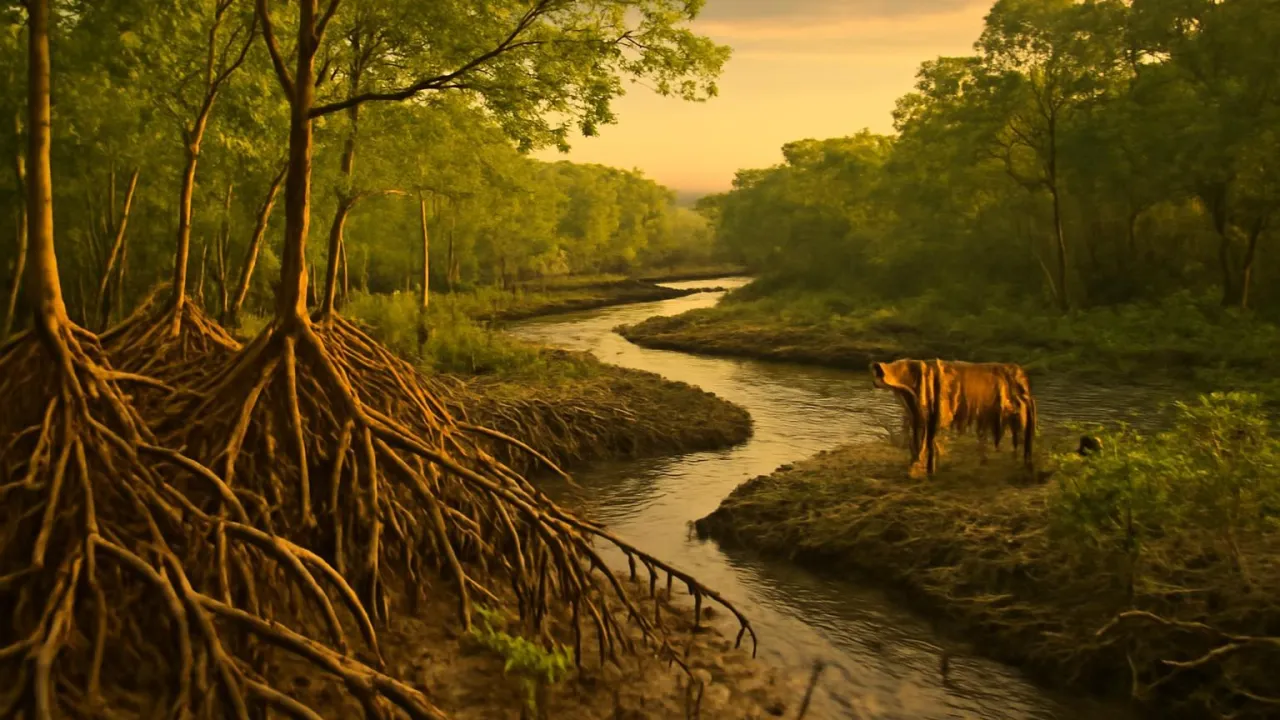
Some Sundarbans mangrove seeds can float for months before growing into new trees!
1 The World’s Largest Mangrove Delta
The Sundarbans stretches across India and Bangladesh, where the Ganges, Brahmaputra, and Meghna rivers meet the Bay of Bengal. Over thousands of years, tides and floods have shaped a vast delta of islands, creeks, and mudflats. This ever-changing landscape is made up of thick mangrove forests, which thrive in salty, shifting waters. The region is recognized as a UNESCO World Heritage Site for its unique and natural beauty.
2 A Web of Life Adapted to Change
The Sundarbans is home to the endangered Bengal tiger, which can swim between islands and hunt in dense mangroves. Crocodiles, otters, spotted deer, and rhesus monkeys live here, along with over 260 bird species. Fish, crabs, and mudskippers fill the muddy creeks, protected by the tangled roots of mangrove trees. Every creature in this ecosystem relies on the daily rhythm of tides and the shelter of the forest.
3 Mangroves: Guardians Against Storms and Erosion
Mangrove trees have specialized roots called pneumatophores that stick up from the mud, allowing them to breathe in waterlogged soil. These roots anchor the trees and trap sediment, reducing erosion and helping new land form. During and tidal surges, the dense mangrove forests slow down waves and protect inland villages from flooding. Scientists study these natural defenses to understand how coastal communities can adapt to climate change.
4 People and Conservation in the Sundarbans
Local communities depend on the Sundarbans for fishing, honey gathering, and wood, but they must follow strict rules to protect the fragile ecosystem. Guided boat tours allow visitors to explore the winding rivers and spot rare wildlife without harming the environment. projects aim to balance human needs with the survival of tigers and other species. The Sundarbans is a living example of how nature and people can share a remarkable, ever-changing world.
1. How do mangroves help protect villages during storms?
2. Why is the Sundarbans important for people and animals?