Sundarbans Mangrove Delta
Where Land, River, and Tiger Meet
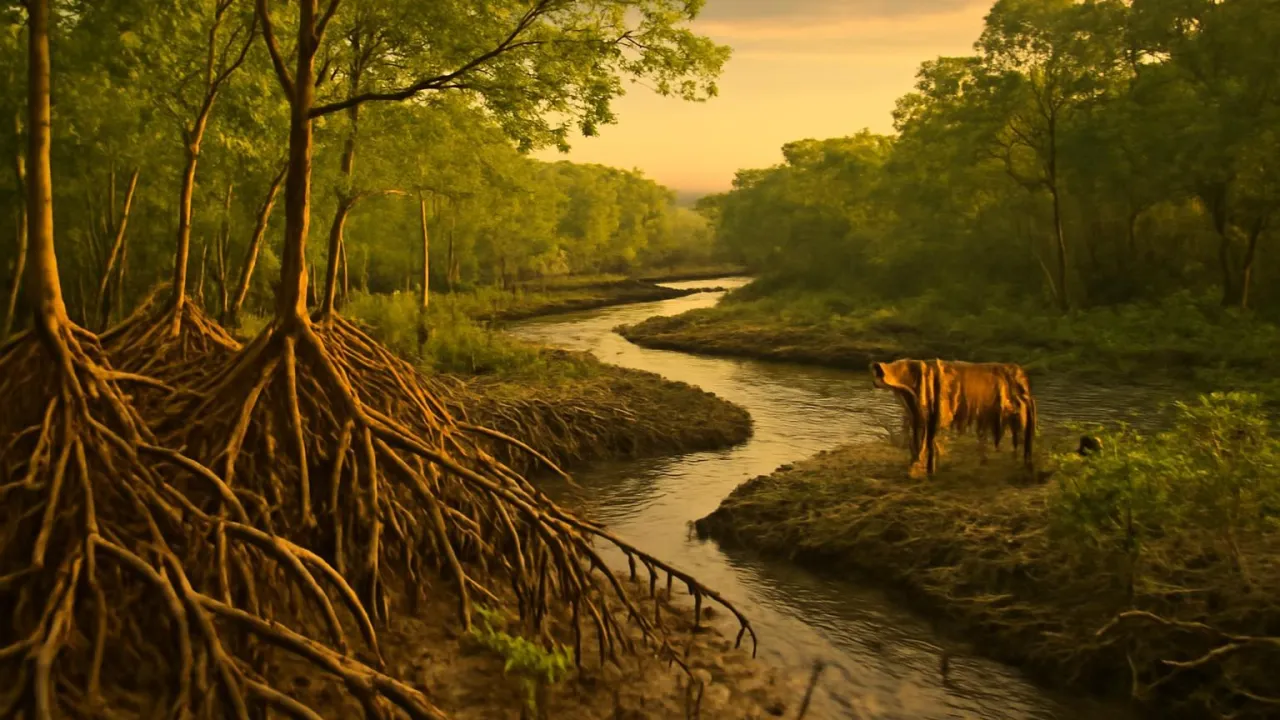
The Sundarbans has over 260 species of birds living among its trees!
1 Where Rivers Meet the Sea
The Sundarbans is a vast delta where three major rivers join and flow into the Bay of Bengal. The land is shaped by tides and floods, creating a maze of muddy islands and twisting waterways. Mangrove trees dominate the landscape, with roots that poke up from the mud to breathe. This special is always changing as fresh and salty water mix together.
2 A Wild Home for Many Creatures
The Sundarbans is famous for the Bengal tiger, which can swim across rivers and hunt in the thick forest. Crocodiles, otters, deer, and monkeys all live here, along with hundreds of bird species. Fish and crabs hide among the tangled mangrove roots, safe from bigger animals. Every animal in the Sundarbans depends on the tides and the trees for food and shelter.
3 Mangroves: Nature’s Flood Fighters
Mangrove roots help protect the land from by holding the muddy soil in place. When storms and high tides come, the mangroves slow down the water and keep the islands from washing away. These amazing trees can survive in salty water, thanks to special breathing roots called . The Sundarbans shows how plants and animals can adapt to a changing world.
4 Exploring the Delta
People visit the Sundarbans by boat, guided by local experts who know the safest paths. Tourists hope to spot tigers, birds, and rare plants as they move quietly through the forest. The delta is a UNESCO World Heritage Site, protected for its unique wildlife and beauty. Scientists study the Sundarbans to learn about and how to save them.
1. How do mangrove roots help the Sundarbans?
2. Why do scientists study the Sundarbans?