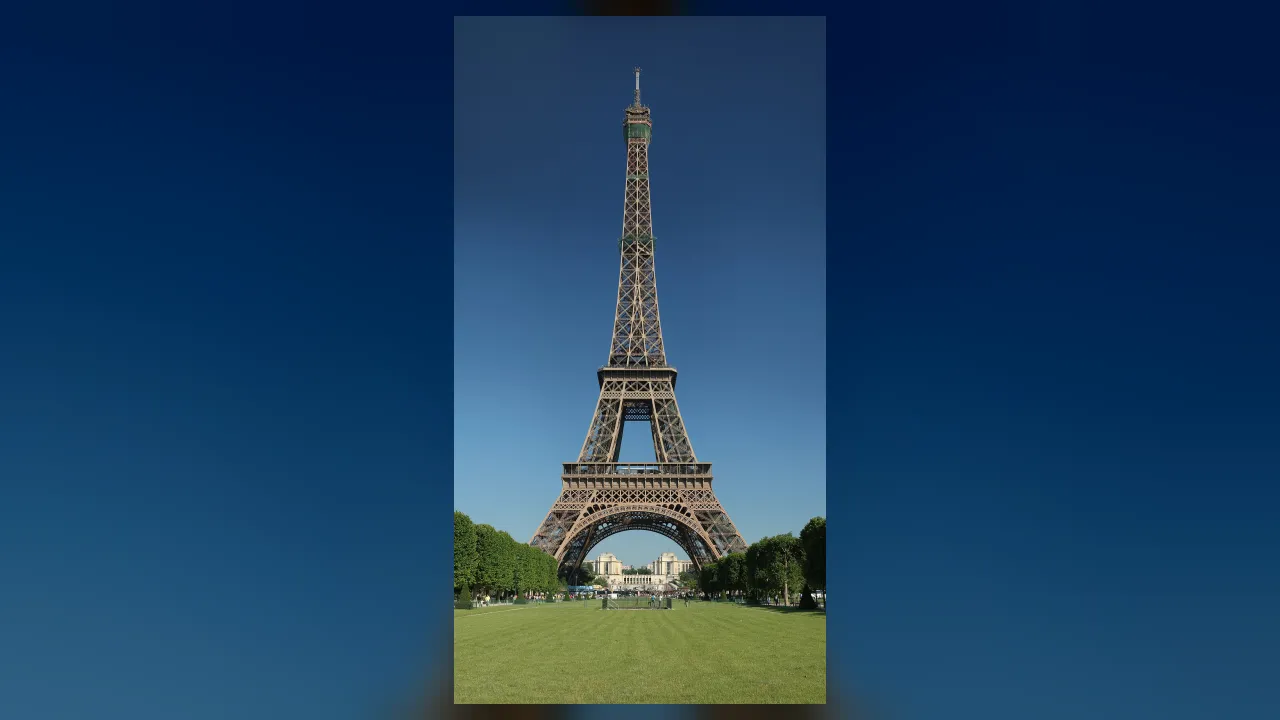
1. Which shape stays stiff instead of squishing flat when heavy weight pushes down?
2. What must a tall bridge stand strong against besides heavy trucks and trains?
🤯 Mind-Blowing Fact • Grade 2
Tall suspension bridges actually grow a little taller in freezing winter weather because cold steel cables shrink tighter and lift the road deck up!
✨ Word Sparks (Grade 2 Glossary)
Tap 🔊 to hear
tension
A pulling force that stretches cables tight
compression
A pushing force that squeezes pillars together
truss
A strong frame built from connected triangles
🪝
How can steel cables hold up thousands of cars high above deep ocean waves?
1
Connecting Two Distant Shores
Stand at the edge of a roaring canyon or a wide bay—how do we get buses, bikes, and freight trains safely across? Solving that giant puzzle is the exciting job of a structural bridge engineer.
2
Pushing and Pulling Forces
Every bridge balances two main forces called and . Tall concrete towers handle pushing forces pressing straight down, while thick braided steel cables handle pulling forces stretching tight overhead.
3
Choosing the Right Bridge Style
Short creeks only need simple beam bridges, rocky gorges fit graceful arches, and wide harbors call for soaring suspension spans. Engineers test scale models in wind tunnels first so real bridges flex safely without breaking.
1. What do bridge engineers call the pulling force inside tight steel cables?
2. Why do engineers test small bridge models inside wind tunnels before building?
🤯 Mind-Blowing Fact • Grade 3
Stretching over seventeen miles across the mouth of the Chesapeake Bay in Virginia, the Chesapeake Bay Bridge-Tunnel combines miles of low trestle bridges with two deep underwater tunnels!
✨ Word Sparks (Grade 3 Glossary)
Tap 🔊 to hear
dead load
The constant weight of the bridge structure itself
live load
Moving weight from traffic, wind, and snow
span
The distance a bridge stretches between supports
🪝
Why must a giant steel bridge be allowed to bend and sway a few feet instead of staying stiff as glass?
1
Balancing Invisible Forces
Picture eighteen-wheel trucks rumbling across a harbor while gale-force winds howl off the Atlantic Ocean! Keeping every bolt, girder, and cable in balance is the specialty of a structural bridge engineer, who applies physics and geometry to conquer gravity.
2
Dead Loads and Live Loads
Engineers add up every ounce a bridge must carry. The '' is the massive weight of the bridge's own steel and concrete deck. The '' includes moving traffic, snowdrifts, hurricane gusts, and even earthquake vibrations shaking the ground below.
3
Four Classic Bridge Families
Depending on the crossing distance, engineers choose beam, truss, arch, cable-stayed, or suspension designs. Arches guide heavy weight outward into canyon walls, while cable-stayed towers fan diagonal steel ropes straight down to hold long decks steady.
4
Strength Through Flexibility
Something completely brittle snaps like a dry cracker! Engineers build calculated flexibility, shock dampers, and sliding bearings into long bridges so they sway gently in storms and bounce right back.
1. Which of these counts as part of a bridge's 'live load'?
2. Why do engineers design long bridges to flex slightly instead of being brittle?
🤯 Mind-Blowing Fact • Grade 4
Just west of the Virginia border, the New River Gorge Bridge arches 876 feet above rushing whitewater—tall enough to stack the Washington Monument underneath with over three hundred feet to spare!
✨ Word Sparks (Grade 4 Glossary)
Tap 🔊 to hear
aerodynamics
How air flows smoothly around solid shapes
factor of safety
Building structures much stronger than expected everyday loads
cable-stayed
A bridge held up by diagonal tower cables
🪝
How did a famous 1940 bridge that twisted in a forty-two-mile-per-hour breeze change engineering forever?
1
Learning From Tacoma Narrows
In November 1940, Washington State's brand-new Tacoma Narrows suspension bridge began twisting like a roller coaster in a steady breeze before collapsing into Puget Sound—fortunately with zero human lives lost. Investigating why wind set off that rhythmic twist transformed how every modern structural bridge engineer designs long spans today.
2
Aerodynamics Above the Water
Engineers discovered that solid flat side girders trapped swirling pockets of air, pushing the deck up and down in a runaway cycle called aerodynamic flutter. Today, bridge decks are shaped like sleek airplane wings or open steel trusses so coastal winds slice cleanly right through without lifting or twisting the roadway.
3
Computer Stress Maps and Safety Factors
Inside the studio, engineers build 3D computer models that divide a bridge into thousands of tiny mesh triangles, coloring high-stress spots bright red long before steel is ordered. Every beam and cable is engineered with a generous ',' meaning it can hold several times more weight than rush-hour traffic will ever place upon it.
4
Inspecting Spans From Sky to Seabed
From historic stone railroad arches in Virginia's Blue Ridge to soaring harbor crossings, bridge engineers also lead ongoing inspections using climbing harnesses, ultrasonic sensors, and camera drones to keep crossings safe for generations.
1. How did lessons from the 1940 Tacoma Narrows Bridge change modern bridge decks?
2. What does building with a generous 'factor of safety' mean?
🤯 Mind-Blowing Fact • Grade 5
The 1915 Çanakkale Bridge spanning the Dardanelles Strait features a record main suspension span of 2,023 meters—well over a mile of highway hanging in midair between just two steel towers!
✨ Word Sparks (Grade 5 Glossary)
Tap 🔊 to hear
equilibrium
Perfect balance where opposing forces cancel each other
resonance
Amplified swaying when outside pushes match natural rhythm
prestressed concrete
Concrete strengthened inside by tightly stretched steel tendons
🪝
How do engineers anchor bridge towers in earthquake zones and hurricane alleys so fifty-thousand-ton spans stand unshaken for a century?
1
Mastering Statics and Dynamics
Every stationary bridge looks peaceful from afar, yet inside its steel and concrete skeleton rages a silent tug-of-war involving millions of Newtons of force. According to Newton's laws of static , the sum of all vertical forces, horizontal forces, and rotational torques must equal exactly zero—a mathematical balance perfected by a structural bridge engineer.
2
Finite Element Analysis and Resonance
Modern engineers test spans virtually using Finite Element Analysis, dividing complex geometry into millions of interconnected mathematical nodes to simulate truck convoys, ice storms, and ship-impact fenders. Equally critical is calculating a bridge's natural vibrational frequency: if rhythmic wind vortices or seismic waves match that exact frequency, can amplify tiny sways dangerously. Tuned mass dampers and fluid shock absorbers dissipate that kinetic energy harmlessly as heat.
3
Prestressed Concrete and High-Tensile Steel
Materials play specialized roles based on atomic structure. Concrete excels under immense crushing compression—withstanding thousands of pounds per square inch—yet cracks easily when pulled apart. Engineers overcome this by threading high-strength steel tendons through concrete girders and stretching them tight before traffic arrives, creating '' that stays permanently locked in strong compression.
4
Seismic Base Isolation and Deep Caissons
Where spans cross active fault lines or deep marine silt, engineers sink watertight caissons down to solid bedrock and mount piers atop lead-rubber seismic isolators, allowing the ground to shift underneath while the superstructure glides calmly.
5
Smart Bridges That Monitor Themselves
Today's landmark spans weave fiber-optic strain gauges, corrosion sensors, and accelerometers directly into cables and decks—streaming live structural health diagnostics so engineers safeguard vital trade and community lifelines for over a hundred years.