⚡ Everyday Impact SparkUncovers microscopic clues that guide roughly 70% of doctors' medical decisions
🤯 Mind-Blowing Fact • Grade 1
A single drop of human blood holds about five million tiny red blood cells for a lab scientist to study!
✨ Word Sparks (Grade 1 Glossary)
Tap 🔊 to hear
microscope
a tool that makes tiny things look big
sample
a small drop or bit tested in labs
germs
tiny living things that can cause sickness
🪝
How can one tiny drop of blood tell a doctor why you feel sick?
1
Tiny Clues Under Glass
Whir! A lab machine spins tiny tubes very fast. Inside a bright hospital room, a scientist peers into a tall . Tiny cells glow in bright colors on a clean glass slide.
2
Helping Doctors Know Why
Doctors send blood and throat swabs to this busy lab. Lab scientists test each with steady hands. They spot sneaky that make kids feel sick.
3
Safe and Clean Gear
They wear white coats, snug gloves, and clear safety glasses. Their careful tests help doctors pick the right medicine so you feel better soon!
1. What tool helps a medical lab scientist see tiny cells up close?
2. Why do doctors send samples to medical lab scientists?
🤯 Mind-Blowing Fact • Grade 2
Spinning machines called centrifuges whirl blood tubes up to four thousand times in just one minute!
✨ Word Sparks (Grade 2 Glossary)
Tap 🔊 to hear
laboratory
a special room equipped for science tests
bacteria
one-celled microscopic organisms found almost everywhere
transfusion
giving healthy donated blood to a patient
🪝
Who works behind hospital doors to solve health mysteries before a doctor picks your medicine?
1
Inside the Hospital Lab
Soft hums and gentle beeps fill a sparkling hospital . Before a doctor can treat a fever or sore throat, someone must discover what is happening inside your body. Behind the scenes, scientists test tiny drops of blood and fluid to uncover hidden health clues.
2
Microscopes and Smart Machines
Using powerful microscopes, these experts zoom in on red blood cells, white blood cells, and tiny . They also run computerized analyzers that check dozens of health clues in minutes, measuring blood sugar, vitamins, and how well organs are working.
3
Behind-the-Scenes Heroes
Even though patients rarely meet them face to face, lab scientists guide most hospital care. They match blood types for safe and help doctors choose exact medicines that get people healthy again.
1. What do computerized analyzers help lab scientists measure in minutes?
2. Why must lab scientists carefully match blood types?
🤯 Mind-Blowing Fact • Grade 3
About seventy out of every one hundred medical decisions made by doctors depend on laboratory test results!
✨ Word Sparks (Grade 3 Glossary)
Tap 🔊 to hear
centrifuge
a fast-spinning machine that separates liquids and cells
specimen
a small biological sample collected for testing
plasma
the pale yellow liquid part of blood
🪝
Imagine solving a mystery where every clue is smaller than a grain of salt—how do lab scientists do it?
1
Detectives of the Microscopic World
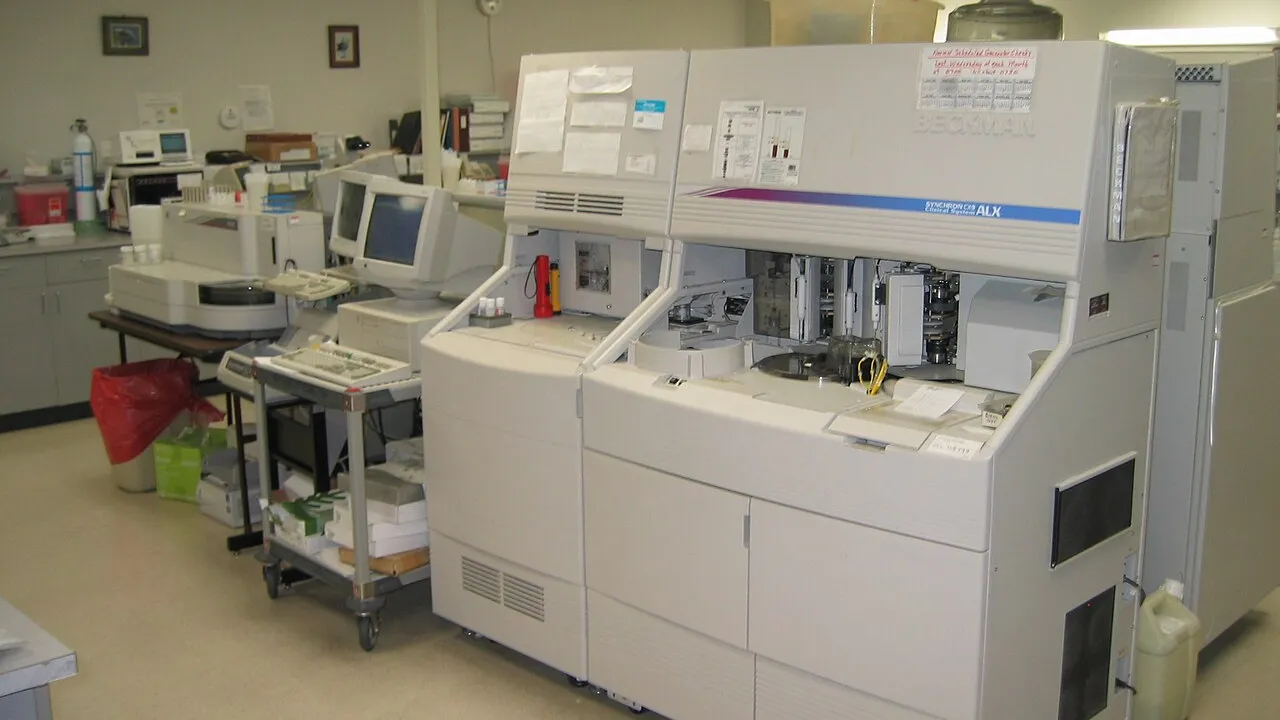
Imagine solving a puzzle where every single clue is invisible to the naked eye! Step inside a clinical laboratory, where rows of automated analyzers hum beside bright microscopes. Here, specialists examine biological —like blood, , and throat swabs—to pinpoint the exact cause of a patient's symptoms.
2
Spinning Samples and Staining Cells
First, a machine called a spins test tubes at thousands of rotations per minute, separating pale liquid from heavier blood cells. Next, the scientist spreads a thin smear on a glass slide and adds colorful dyes. Under magnification, stained bacteria or unusual cell shapes jump into view.
3
Matching Lifesaving Blood
One of the busiest stations in the laboratory is the blood bank. Before surgery or an emergency transfusion, scientists test donor blood for ABO and Rh markers. Careful cross-matching ensures a patient's immune system accepts the donated cells safely.
4
Precision That Protects Communities
Accuracy matters in every tube, so scientists test their instruments daily and double-check surprising results. When seasonal flu or foodborne germs spread, lab reports also alert public health teams so whole communities stay protected.
2. Why do scientists add special dyes to a glass slide?
🤯 Mind-Blowing Fact • Grade 4
Modern automated hospital laboratory tracks can route, uncap, test, and archive thousands of barcoded blood vials every hour without mixing up a single patient!
✨ Word Sparks (Grade 4 Glossary)
Tap 🔊 to hear
hematology
the scientific study of blood and blood cells
reagent
a chemical substance used to trigger lab reactions
calibration
checking and adjusting tools for exact accuracy
🪝
What happens to a tiny vial of blood between the moment a nurse collects it and the moment a doctor shares the diagnosis?
1
Where Every Diagnosis Begins
Down the hall from busy emergency rooms and pediatric clinics, double doors open into a gleaming laboratory where modern medicine's toughest puzzles are solved. Roughly seventy percent of medical diagnoses and treatment plans rely on laboratory data, yet few patients ever glimpse the experts behind those numbers. Clinical laboratory scientists combine biology, chemistry, and advanced engineering to analyze tiny samples from the human body with remarkable speed.
2
Specialized Departments Under One Roof
Because human health is complex, hospital laboratories are organized into distinct scientific sections. In , scientists count oxygen-carrying red cells, infection-fighting white cells, and clotting platelets. In microbiology, they culture bacteria on nutrient agar plates to discover which exact antibiotic stops an infection fastest. Meanwhile, clinical chemistry measures electrolytes, enzymes, and hormones dissolved in blood serum to check kidney, liver, and heart function.
3
Molecular Clues and Blood Banking
Today's lab scientists also read genetic clues in molecular diagnostics. Using polymerase chain reaction—known as PCR—they copy tiny strands of viral DNA or RNA millions of times so hidden infections become unmistakable. Across the room in immunohematology, blood bank specialists verify ABO groups and screen for rare antibodies so trauma patients receive compatible blood within minutes.
4
Quality Control and Lifesaving Accuracy
Every barcode on a specimen tube represents a real patient waiting for answers, so strict quality control guides every step. Scientists run checks with known control samples each morning to verify that lasers, sensors, and chemical perform flawlessly. By catching tiny instrument drifts before results reach a physician's screen, clinical lab teams turn microscopic evidence into safe, dependable care across hospitals everywhere.
1. Which lab department grows bacteria on agar plates to find the best antibiotic?
2. Why do lab scientists test control samples with known values every morning?
🤯 Mind-Blowing Fact • Grade 5
Optical flow cytometers in modern clinical laboratories can illuminate and classify up to ten thousand individual blood cells per second using laser light!
✨ Word Sparks (Grade 5 Glossary)
Tap 🔊 to hear
spectrophotometer
an instrument measuring light absorbed by liquids
pathogen
a bacterium, virus, or microbe causing disease
antigen
a surface marker recognized by the immune system
🪝
How do clinical scientists detect a billionth of a gram of viral RNA or catch early disease markers long before symptoms even appear?
1
The Analytical Engine of Modern Medicine
Behind frosted glass doors in major medical centers, laser scanners read barcoded specimen tubes gliding along robotic tracks while micropipettes dispense microliters of clear reagent. Although physicians and nurses work directly at the bedside, clinical decisions—from emergency sepsis treatment to targeted cancer therapy—depend heavily on objective data generated inside the clinical laboratory. Accredited through rigorous university degrees and national certification exams, these analytical scientists translate subtle cellular and biochemical signals into actionable medical answers.
2
Hematology, Flow Cytometry, and Chemistry
In high-volume core laboratories, optical flow cytometers fire focused laser beams through single-file streams of thousands of blood cells per second. By measuring how light scatters off cell membranes and nuclei, scientists distinguish healthy leukocytes from immature blast cells linked to leukemia. Adjacent shine specific wavelengths of light through serum mixed with chemical substrates, calculating exact concentrations of glucose, cardiac troponin, and liver enzymes down to parts per billion.
3
Microbial Identification and Antimicrobial Stewardship
When bloodstream or respiratory infections strike, every hour counts. Clinical microbiologists pair traditional Gram staining and selective culture media with mass spectrometry, a technique that vaporizes bacterial proteins to identify a 's species fingerprint in minutes rather than days. Next, scientists expose isolated microbes to graded dilutions of antibiotics to determine the minimum inhibitory concentration, empowering doctors to prescribe narrow-spectrum medicines that cure patients without fueling antibiotic resistance.
4
Genomics, PCR, and Transfusion Compatibility
In molecular diagnostics, thermal cyclers perform real-time polymerase chain reaction (PCR), doubling targeted DNA or RNA segments through thirty to forty heating-and-cooling cycles until faint viral loads glow with fluorescent probes. Meanwhile, transfusion medicine specialists look far beyond the four basic ABO blood groups, screening donor plasma against dozens of minor red-cell such as Kell, Duffy, and Kidd so complex surgical and sickle-cell patients avoid dangerous immune reactions.
5
Biosafety, Ethics, and Public Health Surveillance
Working inside laminar-flow biosafety cabinets under Clinical Laboratory Improvement Amendments (CLIA) standards, scientists uphold strict chain-of-custody, patient privacy, and statistical quality-control rules. When unusual clusters of influenza strains, vector-borne viruses, or foodborne Salmonella emerge across regional clinics, hospital lab scientists forward isolates to state public health laboratories, forming the frontline early-warning network that safeguards millions of lives.