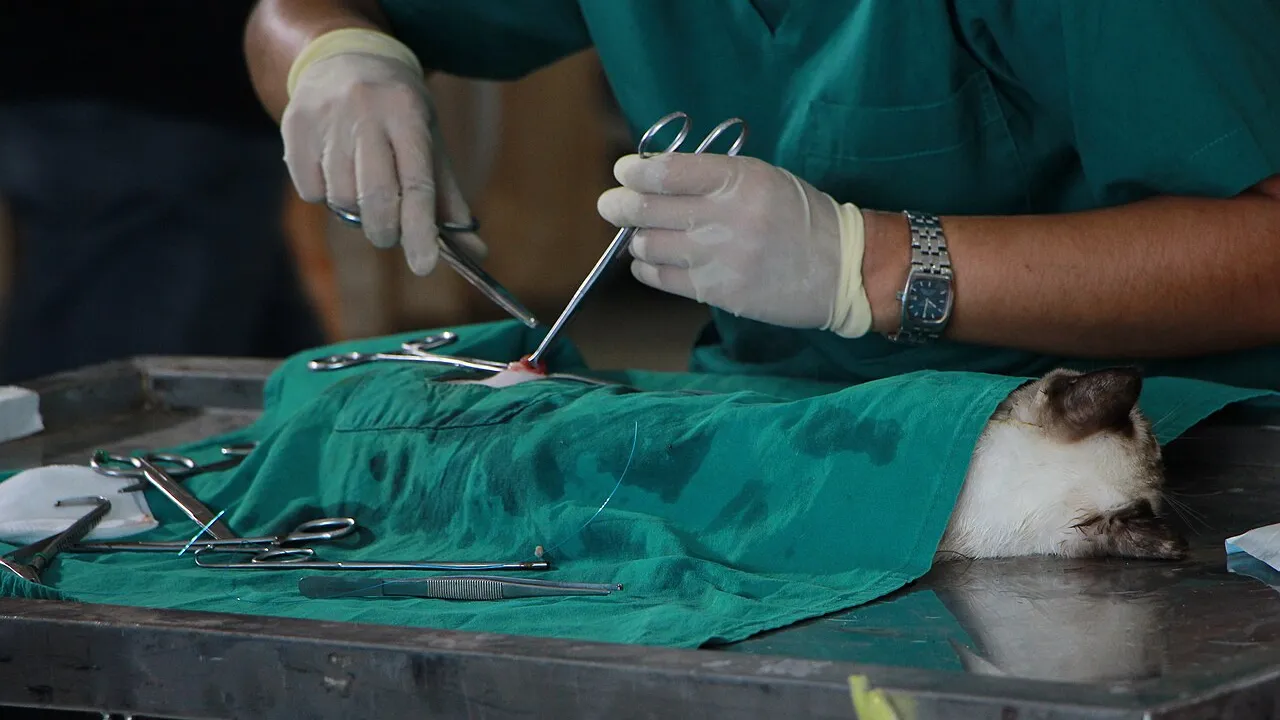
1. Why must a veterinarian be such an observant detective?
2. Where can veterinarians work besides neighborhood pet clinics?
🤯 Mind-Blowing Fact • Grade 2
To weigh a squirmy penguin or koala without stress, zoo vets place a favorite perch or branch right on top of a digital scale so the animal hops on all by itself!
✨ Word Sparks (Grade 2 Glossary)
Tap 🔊 to hear
microchip
Tiny ID tag placed safely under fur
rabies
Dangerous virus prevented by pet vaccines
pasture
Grassy field where farm animals graze
🪝
How can a vet scan a lost dog's shoulder to reunite it with its family in seconds?
1
So Many Different Patients!
Human doctors study just one kind of body, while a veterinarian might see a fluffy rabbit at 9:00, a green parrot at 10:00, and a Great Dane at 11:00! Vets give vaccines like shots, clean animal teeth, mend broken wings or legs, and perform safe surgeries.
2
Magic Rice-Sized Microchips
Beep! Waving a handheld scanner over a lost cat's shoulder reads a tiny rice-grain-sized under the fur, showing an ID number linked to the owner's phone number.
3
Farm and Zoo Vets
Large-animal vets drive trucks packed with portable X-ray gear right out to for horses and dairy cows, while zoo vets care for elephants and penguins!
1. About how big is the identification microchip a veterinarian places under a pet's skin?
2. How do human doctors and veterinarians differ in the number of species they study?
🤯 Mind-Blowing Fact • Grade 3
An adult elephant's heart weighs nearly thirty pounds and beats only about thirty times per minute—fifteen times slower than a hamster's heart!
✨ Word Sparks (Grade 3 Glossary)
Tap 🔊 to hear
comparative
Studying similarities and differences across species
ectothermic
Relying on outside warmth like reptiles
rehabilitate
Heal injured wildlife to return outdoors
🪝
How can one veterinarian understand cows with four stomach chambers, birds with hollow bones, and lizards that need heat lamps?
1
Masters of Comparative Anatomy
Step into a veterinary school lab and marvel at nature's variety! Veterinarians study anatomy—how body systems differ across species. A dairy cow digests grass through four stomach compartments, a parrot breathes with extra air sacs linked to hollow bones, and a bearded dragon relies on warm basking lights to power its cold-blooded digestion!
2
Tools for Tiny and Giant Patients
Working alongside licensed veterinary technicians, vets use tiny infant stethoscopes for kittens and long ultrasound probes for horses. Wildlife vets injured bald eagles or sea turtles entangled in fishing line so they can return to the wild.
3
Protecting Human Health Too
Public-health veterinarians protect people every day by ensuring milk and farm foods are safe and stopping animal illnesses like rabies from spreading to humans.
4
Earning a DVM
Becoming a vet takes four years of college science plus four intense years at an accredited college of veterinary medicine to earn a DVM degree.
1. How many stomach compartments does a dairy cow have to digest tough grass?
2. How do public-health veterinarians protect people who do not even own a pet?
🤯 Mind-Blowing Fact • Grade 4
Zoo veterinarians and keepers train giant rhinos, tigers, and sea lions with positive-reinforcement snacks so the animals willingly lean in for voluntary ultrasounds and blood checks without needing sleep darts!
✨ Word Sparks (Grade 4 Glossary)
Tap 🔊 to hear
zoonotic
Illness able to pass between animals and humans
One Health
Teamwork linking human, animal, and ecosystem health
ruminant
Hoofed plant-eater with four-chambered stomach
🪝
What is the 'One Health' connection linking animals, people, and ecosystems—and why is veterinary school famously competitive?
1
The Power of 'One Health'
Scientists around the globe share an important discovery called '': human health, animal health, and environmental health are woven tightly together! Roughly six out of ten infectious diseases in humans are , meaning they can pass between animals and people. By vaccinating pets against rabies, monitoring migratory wild birds, and keeping livestock herds healthy, veterinarians stand on the front lines of global public health.
2
Species-Specific Pharmacology
Prescribing medicine across species requires razor-sharp biochemistry! A common human pain reliever like acetaminophen is dangerously toxic to cats because feline livers lack a specific enzyme needed to break it down safely, and chocolate's theobromine can poison dogs because canines metabolize it slowly.
3
Positive-Reinforcement Zoo Medicine
How do zoo veterinarians draw a blood sample from a 500-pound tiger or inspect a sea lion's teeth safely? Working with zookeepers, they use clicker training and favorite food rewards so animals voluntarily present a paw or open their jaws at a protective mesh window—avoiding stressful anesthesia whenever possible!
4
Rigorous DVM and VMD Training
With fewer than forty accredited veterinary colleges in the United States, admission is highly competitive. Graduates earn a Doctor of Veterinary Medicine (DVM, or VMD at the University of Pennsylvania) and pass the North American Veterinary Licensing Examination.
1. Why should owners NEVER give human pain medicines or chocolate to cats and dogs without asking a veterinarian?
2. What does the word 'zoonotic' describe in veterinary and public health science?
🤯 Mind-Blowing Fact • Grade 5
Wildlife and zoo veterinarians helped bring North America's rarest mammal—the black-footed ferret, once down to just eighteen surviving individuals in the 1980s—back from the brink of extinction!
✨ Word Sparks (Grade 5 Glossary)
Tap 🔊 to hear
avian
Relating biologically to feathered birds
epidemiology
Tracking how and why diseases spread
pneumatic bone
Lightweight hollow bird bone holding air
🪝
How do comparative physiology, wildlife conservation medicine, and 'One Health' epidemiology make veterinary medicine one of science's broadest disciplines?
1
Comparative Medicine Across Phyla and Classes
Imagine shifting in a single clinical day from auscultating the four-chambered mammalian heart of a Thoroughbred racehorse to anesthetizing an raptor whose unidirectional respiratory system routes air through nine air sacs and hollow , and then hydrating a sea turtle whose renal portal circulation alters where injections can be placed! Doctors of Veterinary Medicine (DVM or VMD) master comparative anatomy, physiology, pathology, and surgery across mammals, birds, reptiles, amphibians, fishes, and invertebrates.
2
Biochemical Nuance and Diagnostics
Because none of their patients can describe symptoms verbally, veterinarians rely on acute observational skill paired with diagnostic technology: digital radiography, endoscopy, ultrasonography, hematology analyzers, and polymerase chain reaction (PCR) pathogen tests. Pharmacological precision is equally critical; feline glucuronyl transferase deficiency renders common human analgesics fatal to cats, while hindgut-fermenting equines require specialized antibiotic selection to protect delicate cecal microbiomes.
3
One Health, Food Security, and Conservation
Beyond companion-animal practice, veterinarians serve in pivotal scientific roles at the U.S. Department of Agriculture, Centers for Disease Control and Prevention, Food and Drug Administration, and Smithsonian conservation centers. Epidemiologist veterinarians track emerging zoonotic viruses, safeguard sustainable agricultural herds, and pioneer assisted reproduction and field medicine to rescue endangered species such as the black-footed ferret, California condor, and Kemp's ridley sea turtle.
4
Pathway to Licensure and Board Specialties
Prospective veterinarians complete rigorous undergraduate coursework in organic chemistry, genetics, physics, and animal science plus hundreds of supervised clinical and farm hours before entering a four-year veterinary medical college, passing the North American Veterinary Licensing Examination (NAVLE), and optionally completing internships and residencies in twenty-two specialties—from zoological medicine to veterinary cardiology and ophthalmology.
5
The Veterinarian's Oath
Guided by their professional oath to relieve animal suffering, conserve animal resources, and promote public health, veterinarians champion every living creature sharing our planet.