1. Why can even a tiny fleck of paint be dangerous in Earth orbit?
2. What does the International Space Station do if radar spots a big piece of junk heading close?
🤯 Mind-Blowing Fact • Grade 2
Space agencies track more than 35,000 pieces of orbital debris bigger than a softball circling Earth right now!
✨ Word Sparks (Grade 2 Glossary)
Tap 🔊 to hear
booster
rocket stage that lifts spacecraft upward
crater
bowl-shaped pit left by an impact
atmosphere
thick layer of air around Earth
🪝
How could a speck of white paint no bigger than an eyelash crack a Space Shuttle window?
1
Decades of Space Leftovers
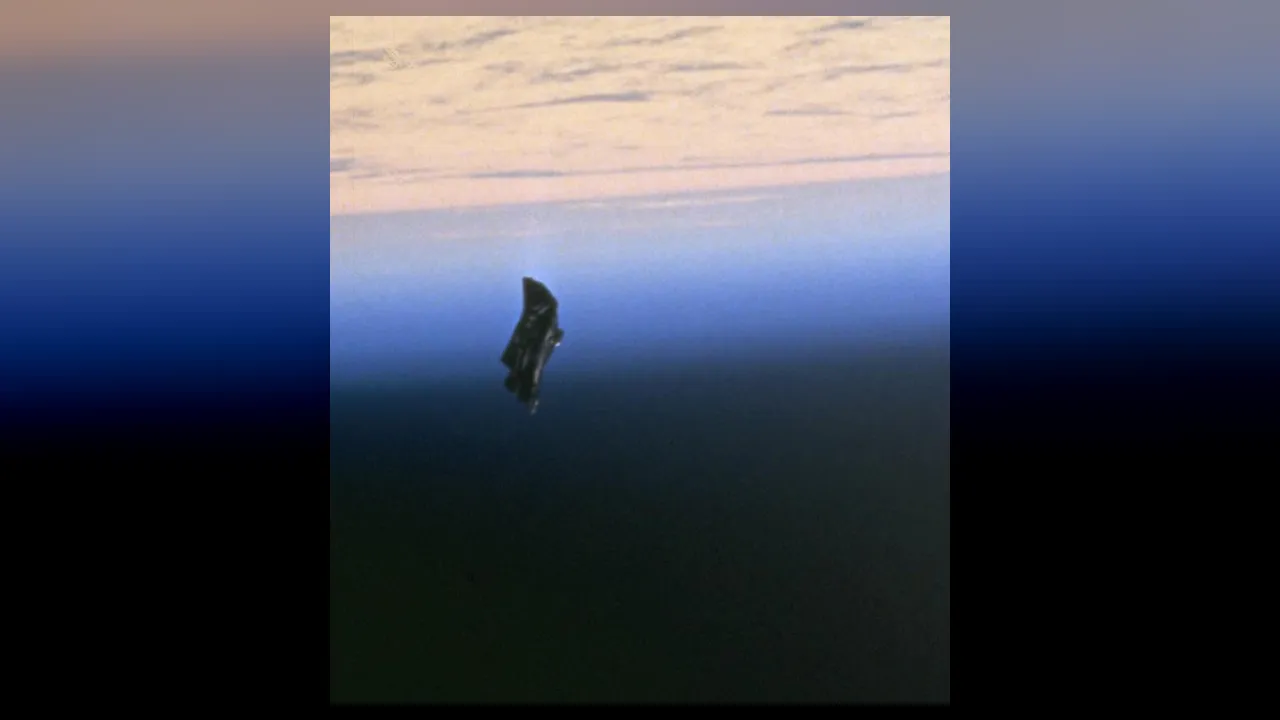
Ever since the first satellite launched in 1957, humans have sent thousands of rockets into orbit! Along with working satellites, space now holds dead spacecraft, empty rocket , loose bolts, and even a lost astronaut glove.
2
Faster Than a Speeding Bullet
In Low-Earth Orbit, objects whip around our planet at 17,500 miles per hour! In 1983, a tiny chip of satellite paint hit Space Shuttle Challenger's thick outer window pane and left a quarter-inch .
3
Cleaning Up Our Orbit
Today, engineers build armor shields around spacecraft and design new satellites to drop down and burn up harmlessly in Earth's upper air when their jobs finish!
1. About how fast does orbital junk travel in Low-Earth Orbit?
2. What happens when an old satellite is steered down into Earth's thick upper air?
🤯 Mind-Blowing Fact • Grade 3
High-altitude satellites 22,236 miles up don't burn up in the air—instead, they boost into a special 'graveyard orbit' 200 miles higher when they retire!
✨ Word Sparks (Grade 3 Glossary)
Tap 🔊 to hear
shrapnel
flying broken fragments from a crash
Kessler Syndrome
runaway chain reaction of space collisions
graveyard orbit
safe high parking zone for retired satellites
🪝
What happens if two dead satellites crash into each other 500 miles above Siberia?
1
A Real-Life Orbital Crash
In February 2009, an active communications satellite and a retired Russian satellite slammed together at a combined speed of 26,000 miles per hour! Instead of crumpling like cars in a parking lot, both spacecraft shattered into more than two thousand trackable clouds of .
2
The Kessler Domino Effect
Back in 1978, NASA scientist Donald Kessler warned about a chain reaction now called the . If too much junk crowds Low-Earth Orbit, one crash creates thousands of fragments that trigger even more crashes—like cosmic dominoes!
3
Whipple Bumper Shields
Radar can track softball-sized debris, but over 100 million millimeter-sized flecks are too small to spot. To protect astronauts, the International Space Station wears 'Whipple shields'—layered metal bumpers that shatter tiny specks into harmless vapor before they reach the inner hull.
4
Space Tow Trucks
Engineers are now testing robotic claw satellites, nets, and magnetic tugboats to grab dead rockets and keep Earth's orbital highways clear!
1. What is the 'Kessler Syndrome' that NASA scientist Donald Kessler warned about?
2. How does a Whipple shield protect the International Space Station from tiny unspotted flecks?
🤯 Mind-Blowing Fact • Grade 4
Launched in March 1958, the grapefruit-sized Vanguard 1 satellite is the oldest piece of human-made space junk still in orbit—and it won't fall back for nearly two hundred more years!
✨ Word Sparks (Grade 4 Glossary)
Tap 🔊 to hear
kinetic energy
energy an object has from motion
atmospheric drag
air friction slowing an orbiting object
deorbit
steer a spacecraft down from orbit
🪝
Why does a half-ounce piece of aluminum in orbit hit as hard as a 400-pound safe at highway speed?
1
The Physics of Hypervelocity
In physics, grows with the square of velocity—meaning doubling speed quadruples impact punch! In Low-Earth Orbit between 160 and 1,200 miles up, objects race at roughly 7.8 kilometers per second, or 17,500 miles per hour. When two crossing orbits collide head-on, relative speeds can top 30,000 miles per hour, turning a marble-sized aluminum bolt into an explosive projectile.
2
Tracking Crowded Orbital Shells
Global Space Surveillance Network radars and optical telescopes continuously catalog over 35,000 objects wider than 10 centimeters—from 1958's still-orbiting Vanguard 1 satellite to spent upper rocket stages. Whenever computer models predict a close conjunction near the International Space Station, Mission Control fires thrusters to shift altitude, a maneuver performed more than thirty times since 1999!
3
Natural Atmospheric Drag vs. High Orbits
Below 350 miles altitude, wispy traces of upper atmosphere create drag that naturally pulls debris down to burn up within a few years. Above 600 miles, however, air is so thin that dead satellites linger for centuries!
4
Five-Year Deorbit Rules and Active Cleanup
New international guidelines require low-orbit satellites to within five years of retirement instead of lingering for decades. Meanwhile, pioneering missions like the European Space Agency's ClearSpace-1 and Astroscale's service craft test four-armed robotic claws, nets, and magnetic docking plates to haul dangerous dead rocket bodies down out of busy orbital lanes.
1. Why does space junk orbiting above 600 miles stay aloft for centuries while junk below 350 miles falls within years?
2. Why does doubling an orbiting fragment's speed make its crash four times more energetic?
🤯 Mind-Blowing Fact • Grade 5
An electrodynamic tether unspooled from a retiring satellite can push against Earth's magnetic field to drag the spacecraft safely down out of orbit without burning a single drop of rocket fuel!
✨ Word Sparks (Grade 5 Glossary)
Tap 🔊 to hear
passivation
draining leftover fuel and batteries safely
conjunction
close pass between two orbiting objects
electrodynamic tether
conducting wire using magnetism for drag
🪝
With tens of thousands of new broadband satellites launching into Low-Earth Orbit, how do space agencies prevent a global Kessler cascade?
1
Anatomy of the Orbital Debris Population
Six decades of spaceflight have surrounded Earth with an anthropogenic cloud of roughly 11,000 metric tons of hardware. Phased-array radars and electro-optical sensors of the U.S. Space Surveillance Network and ESA's Space Debris Office maintain precise orbital elements for over 36,000 objects exceeding 10 centimeters, while statistical models indicate roughly one million lethal fragments between 1 and 10 centimeters and 130 million sub-centimeter particles from solid-rocket slag, paint delamination, and battery or propellant tank explosions.
2
Hypervelocity Physics and Kessler Thresholds
At average Low-Earth Orbit collision velocities near 10 to 14 kilometers per second, specific impact energy far exceeds the structural binding energy of titanium or aluminum alloys, vaporizing contact zones into expanding plasma clouds and thousands of shrapnel fragments. In 1978, Donald J. Kessler and Burton Cour-Palais demonstrated that once spatial density in busy sun-synchronous bands—around 750 to 1,000 kilometers altitude—surpasses a critical threshold, collisional fragmentation outpaces atmospheric drag decay.
3
Passivation and Post-Mission Disposal
Modern orbital sustainability begins with '': venting residual rocket propellants and discharging batteries at end-of-life so derelict stages cannot explode years later. In 2022, the U.S. Federal Communications Commission tightened Low-Earth Orbit disposal rules from 25 years down to just 5 years, while geostationary satellites at 35,786 kilometers must reserve fuel to climb at least 300 kilometers into a super-synchronous graveyard ring.
4
Active Debris Removal (ADR) Technologies
Preventing long-term cascades also requires removing massive legacy rocket bodies already aloft. Missions like Astroscale's ADRAS-J and ESA's ClearSpace-1 pioneer autonomous rendezvous around tumbling targets using multi-arm robotic grapples, that tap Earth's magnetic field to generate drag without fuel, and drag-enhancing inflatable sails.
5
Space Traffic Coordination
As mega-constellations expand, automated AI screening and international space traffic treaties are essential to safeguard weather forecasting, GPS navigation, and human spaceflight for generations to come.