🌌 COSMOS
🔭 Luna • Earth's Natural Satellite
VA Science SOL 1.6, 4.5, 4.6 (Solar System, Stars & Space Exploration)
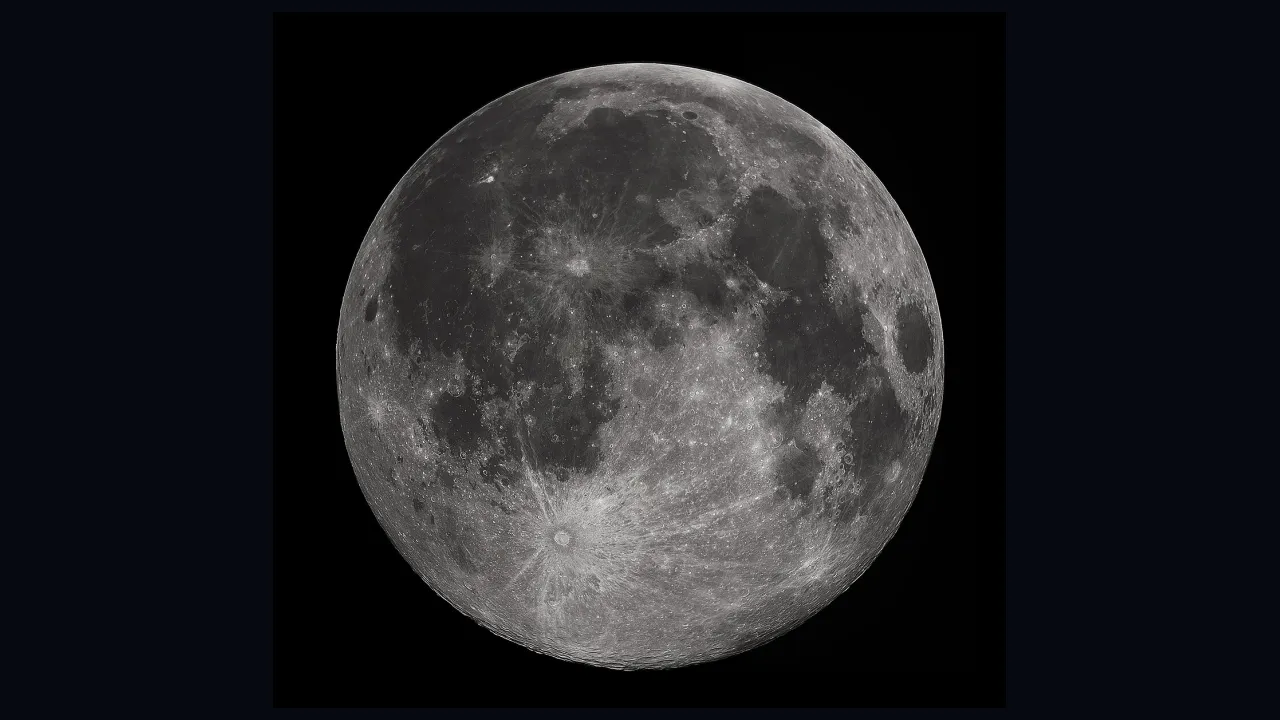
The Moon
Earth's Cratered Companion Guiding Ocean Tides
Grade 3 • Fluent • 146 words
🌌 Cosmic Location & DistanceOrbits Planet Earth • Avg 238,855 mi (384,400 km) away
🪐 Scale / Diameter2,159 mi (3,475 km) diameter • About 1/4 width of Earth
☄️ Composition & OrbitSilicate Crust & Small Iron Core • 27.3-day synchronous orbit
⚡ Cosmic SparkDrives Earth's ocean tides and is the only other world humans have walked on
🤯 Mind-Blowing Fact • Grade 1
On the Moon, your body weighs only one-sixth as much—so you could jump six times higher than on a playground!
✨ Word Sparks (Grade 1 Glossary)
Tap 🔊 to hear
crescent
a curved thin sliver shape like bananas
phases
changing sunlit shapes of the Moon monthly
bootprints
shoe tracks pressed into soft dusty ground
🪝
Why does the Moon seem to change shape every week?
1
Borrowed Sunlight
Peek out your bedroom window at night! Glowing silver in the dark sky hangs our closest neighbor in space, the Moon. Instead of making its own light, its gray rocks bounce bright sunlight down to us!
2
Changing Moon Shapes
Each month, the Moon circles Earth. As sunlight hits different angles, we see thin , half circles, and bright full moons!
3
Boots in Dusty Soil
Twelve astronauts have hopped across its dusty craters! With no wind or rain there, their stay crisp for millions of years.
2. Why haven't Apollo astronaut footprints blown away on the Moon?
🤯 Mind-Blowing Fact • Grade 2
Every year, the Moon slowly inches about 1.5 inches farther away from Earth!
✨ Word Sparks (Grade 2 Glossary)
Tap 🔊 to hear
tides
daily rise and fall of ocean water
maria
dark smooth plains of cooled Moon lava
satellite
any moon or spacecraft orbiting a planet
🪝
How does the Moon far up in space move ocean waves at the beach?
1
Pulling Ocean Tides
Build a sandcastle near the ocean and watch waves creep closer a few hours later! Even from 239,000 miles away, the Moon's gravity gently tugs Earth's oceans into two bulges, creating rising high and falling low tides every day.
2
Ancient Lava 'Seas'
Long ago, stargazers thought the dark patches on the Moon's face were real water oceans and named them ',' Latin for seas! Today we know those smooth dark plains are ancient cooled volcanic lava.
3
Always Facing Home
Because the Moon spins once in the exact time it orbits Earth, the same familiar near side always faces us!
1. What are the dark smooth patches called 'maria' on the Moon really made of?
2. Why do we always see the same side of the Moon from Earth?
🤯 Mind-Blowing Fact • Grade 3
The Sun is 400 times wider than the Moon AND 400 times farther away, making them match perfectly in Earth's sky during total eclipses!
✨ Word Sparks (Grade 3 Glossary)
Tap 🔊 to hear
protoplanet
a young growing world in early space
regolith
layer of powdery crushed rock and dust
eclipse
one space body casting shadow on another
🪝
Is the 'dark side' of the Moon really dark—or does it get just as much sunshine?
1
Busting the 'Dark Side' Myth
People often say 'the dark side of the Moon,' yet astronomers call it the 'far side' for a smart reason! During a New Moon—when the near side facing Earth looks dark—bright afternoon sunlight blazes all across the Moon's far side! Both halves receive equal daylight.
2
Born in a Giant Splash
Where did our oversized Moon come from? Moon rocks brought back by Apollo astronauts revealed that 4.5 billion years ago, a Mars-sized named Theia sideswiped young Earth, flinging molten rock into orbit that clumped into the Moon!
3
Powdery Glass Regolith
Billions of years of tiny micrometeorites smashing into airless Moon rocks pulverized the surface into fine, sharp-edged gray powder called that smells faintly like spent fireworks inside a lunar lander!
4
Solar and Lunar Eclipses
By a magical cosmic coincidence, the Sun is 400 times wider than the Moon and also 400 times farther away—making both disks look the exact same size during total solar !
1. How do scientists think the Moon formed 4.5 billion years ago?
2. How much sunlight does the far side of the Moon actually receive?
🤯 Mind-Blowing Fact • Grade 4
Laser beams bounced off mirrors placed by Apollo astronauts prove the Moon drifts away from Earth by 3.8 centimeters every year—slowly lengthening Earth's day!
✨ Word Sparks (Grade 4 Glossary)
Tap 🔊 to hear
highlands
bright, cratered mountainous regions on the Moon
seismometers
sensitive instruments measuring ground shakes and quakes
retroreflector
special mirror bouncing laser beams straight back
🪝
Why does the Moon's far side look rugged and cratered while the near side wears smooth dark plains?
1
A Tale of Two Hemispheres
In 1959, the Luna 3 probe snapped humanity's first blurry photos behind the Moon—and stunned astronomers! While the near side facing Earth displays vast dark basaltic maria ('Man in the Moon' shapes), the far side is almost entirely rugged, pale packed with craters and a thicker crust! Planetary scientists suspect radiant heat glowing off young molten Earth kept the Moon's near-side crust thinner while the far side cooled thick and solid.
2
South Pole-Aitken Basin and Hidden Water Ice
Tucked near the lunar south pole sprawling onto the far side sits the South Pole-Aitken Basin—one of the Solar System's largest impact craters at 1,550 miles wide and five miles deep! Inside permanently shadowed polar craters where temperatures plunge to minus 400 °F, NASA's LCROSS and LRO missions confirmed millions of tons of frozen water ice.
3
Moonquakes and Laser Mirrors
Apollo astronauts left and Suitcase-sized mirrors on the lunar soil! Bouncing Earth lasers off those mirrors measures the Moon's distance to the millimeter, while seismometers detected surprising shallow 'moonquakes' ringing the dry rocky crust like a bell for minutes.
4
Returning With Artemis
Today, international lunar probes and NASA's Artemis program aim to explore those icy south-polar rims, where frozen water can supply drinking water, breathable oxygen, and rocket fuel!
1. How does the Moon's far side look different from the near side we see each night?
2. Why are future Artemis astronauts targeting the Moon's south polar craters?
🤯 Mind-Blowing Fact • Grade 5
Fossil corals prove that 400 million years ago—when the Moon orbited closer—an Earth day lasted only 22 hours and a year had 400 days!
✨ Word Sparks (Grade 5 Glossary)
Tap 🔊 to hear
anorthosite
pale igneous rock forming bright lunar highlands
libration
gentle rocking letting us see 59% of Moon
breccias
rocks welded together from impact-shattered fragments
🪝
What secrets did 842 pounds of Apollo Moon rocks unlock about the violent birth of the Earth-Moon system?
1
Isotopic Fingerprints of the Giant Impact
Between July 1969 and December 1972, twelve Apollo astronauts collected 382 kilograms (842 pounds) of lunar basalts, , and highland —joined more recently by younger volcanic samples returned by China's robotic Chang'e-5 and far-side samples from Chang'e-6! Mass-spectrometer analyses revealed two decisive clues: Moon rocks are bone-dry in volatile elements compared to Earth, yet share virtually identical oxygen-16, oxygen-17, and titanium isotope ratios with Earth's mantle. Together with its tiny 350-kilometer iron core, these signatures validate the Giant Impact Hypothesis—in which proto-Earth and Mars-sized Theia vaporized silicate mantles into a circumterrestrial magma disk 4.51 billion years ago.
2
A Global Lunar Magma Ocean
As the newly accreted Moon melted into a global magma ocean hundreds of kilometers deep, dense iron and olivine crystals sank inward while buoyant white plagioclase feldspar crystals floated upward like icebergs—solidifying into the bright anorthositic crust of the lunar highlands! Later asteroid bombardments between 4.1 and 3.8 billion years ago excavated colossal basins that filled with dark, iron-rich mare flood basalts.
3
Tidal Locking, Libration, and Angular Momentum
Although synchronous rotation locks the Moon's 27.32-day sidereal spin to its orbital period, its slightly elliptical, five-degree-inclined orbit produces 'lunar '—a gentle rocking motion allowing Earth observers to peek across 59 percent of the lunar globe over time! Meanwhile, tidal friction transfers Earth's rotational angular momentum outward to the Moon: four hundred million years ago during the Devonian Period, fossil coral growth bands show Earth spun in a 22-hour day with roughly 400 days per year!
4
Lunar Lava Tubes and Tectonic Scarps
High-resolution Lunar Reconnaissance Orbiter imagery has identified skylight pits opening into vast underground volcanic lava tubes—natural radiation shields against cosmic rays and micrometeoroids—alongside fresh thrust-fault scarps proving the cooling Moon still shrinks and triggers magnitude-5 shallow moonquakes.
5
Gateway to Deep Space
Because launching from the Moon's 1.62 m/s² surface gravity requires less than one-twentieth the kinetic energy needed to escape Earth's deep gravity well, cis-lunar orbit and south-polar ice deposits form humanity's stepping-stone to Mars and beyond.