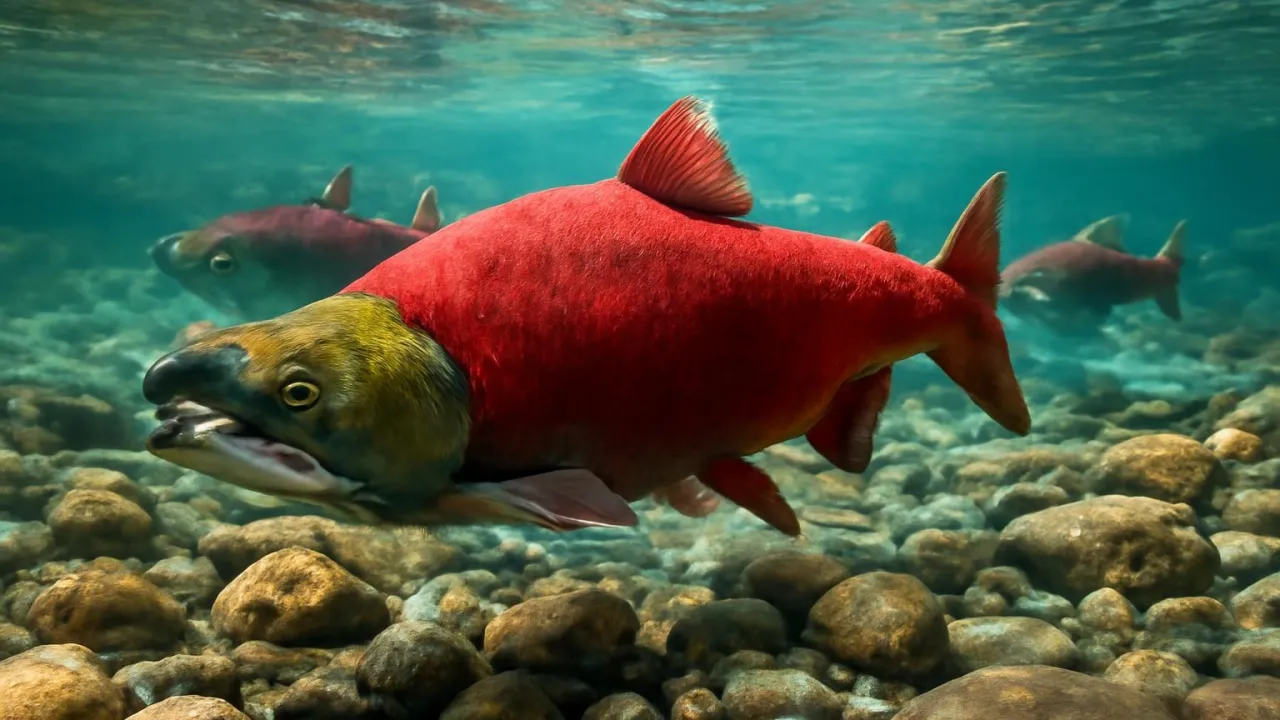
Sockeye salmon can swim hundreds of miles upstream to lay their eggs!
✨ Word Sparks (Grade 2 Glossary)
Tap 🔊 to hear
spawn
When fish lay eggs in water
plankton
Tiny water animals that fish eat
currents
Water that moves in rivers or oceans
🪝
How do sockeye salmon find their way home through big rivers?
1
Bright Red Swimmers
Sockeye salmon turn bright red when they swim back to their home rivers. Their heads turn green during this time. This color change helps them prepare for spawning. They live in the North Pacific Ocean and freshwater rivers.
2
Life Cycle Journey
Sockeye salmon hatch from eggs in rivers and lakes. They grow as young fish in freshwater. Then they swim to the ocean to eat and small insects. After several years, they return to freshwater to lay eggs.
3
Strong and Fast
These fish are strong swimmers and can jump over waterfalls. They use their tails to swim upstream against strong . Their bodies are shaped to help them swim fast. This helps them reach their spawning grounds.
Sockeye salmon use color change and group swimming to survive predators on their journey!
✨ Word Sparks (Grade 3 Glossary)
Tap 🔊 to hear
camouflage
Colors that help animals hide
nutrients
Food parts animals need to grow
predator
An animal that hunts other animals
🪝
What special changes help sockeye salmon survive their long journey home?
1
Color Change and Camouflage
Sockeye salmon change from silver to bright red during spawning. This color change helps them attract mates. Their green heads also help them blend into river plants. This protects them from during this vulnerable time.
2
Life Cycle and Growth
These fish hatch from eggs in freshwater streams or lakes. Young sockeye grow in these habitats before migrating to the ocean. In the ocean, they feed on plankton and small insects to gain . After two to three years, they return to spawn in their birth rivers.
3
Adaptations for Swimming
Sockeye salmon have streamlined bodies that reduce water resistance. Their strong tails provide powerful thrust to swim upstream. They can leap over obstacles like waterfalls during migration. These adaptations help them reach spawning grounds despite strong currents.
4
Predators and Protection
During migration, sockeye salmon face like bears and eagles. Their bright red color can make them more visible to predators. However, swimming in large groups helps protect individuals. This group behavior is a survival strategy against predators.
1. How does the sockeye salmon’s body help it swim upstream?
2. Why do sockeye salmon swim in groups?
🤯 Mind-Blowing Fact • Grade 4
Sockeye salmon bring ocean nutrients to rivers, helping many plants and animals grow!
✨ Word Sparks (Grade 4 Glossary)
Tap 🔊 to hear
migration
Long travel to a special home
symbiosis
When animals help each other live
ecosystem
A place where plants and animals live
🪝
How do sockeye salmon impact their ecosystems and survive tough journeys?
1
Color Change and Spawning
Sockeye salmon undergo a dramatic color change from silver to bright red when spawning. This transformation signals readiness to reproduce and attracts mates. The green head color helps them blend with river vegetation, providing camouflage from predators. This color shift is a key adaptation for their survival during spawning.
2
Migration and Ecosystem Role
Sockeye salmon migrate hundreds of miles from ocean to freshwater spawning grounds. This journey requires strong swimming and jumping abilities to overcome obstacles like waterfalls. Their transfers nutrients from the ocean to freshwater , supporting many plants and animals. After spawning, their bodies decompose and enrich river habitats.
3
Predators and Symbiosis
Predators such as bears, eagles, and otters rely on sockeye salmon as a food source during . The salmon’s bright red color increases visibility, but swimming in large schools reduces individual risk. This predator-prey relationship supports healthy and maintains balance. Additionally, decomposed salmon provide nutrients that benefit aquatic plants and insects.
4
Geographic Distribution and Human Impact
Sockeye salmon are native to the North Pacific Ocean and rivers of Alaska, Canada, and Russia. Human activities like dam building and overfishing threaten their routes and populations. Conservation efforts focus on habitat restoration and sustainable fishing to protect sockeye salmon. Healthy salmon populations are vital for indigenous cultures and commercial fisheries.
1. Why is sockeye salmon migration important for rivers?
2. What human action can harm sockeye salmon migration?
🤯 Mind-Blowing Fact • Grade 5
Sockeye salmon can swim over 900 miles upstream and use their sense of smell to find home!
✨ Word Sparks (Grade 5 Glossary)
Tap 🔊 to hear
anadromous
Fish that swim from ocean to rivers to spawn
osmoregulation
How fish balance salt and water in their bodies
aerobic
Using oxygen to make energy for muscles
🪝
What scientific marvels enable sockeye salmon to complete their epic life cycle journeys?
1
Taxonomy and Scientific Context
Sockeye salmon, scientifically named Oncorhynchus nerka, belong to the family Salmonidae. They are fish, meaning they migrate from ocean to freshwater to spawn. This species is closely related to other Pacific salmon like chinook and coho. Their evolutionary adaptations reflect millions of years of survival in diverse aquatic environments.
2
Physiological Mechanics of Migration
Sockeye salmon undergo remarkable physiological changes to survive migration, including adjustments from saltwater to freshwater. Their muscular bodies and streamlined shape reduce drag, enabling efficient upstream swimming. They generate high capacity to sustain long-distance travel against strong currents. Additionally, their sensory systems guide them using smell to locate natal streams.
3
Conservation and Historical Significance
Historically, sockeye salmon have been vital to indigenous peoples of the Pacific Northwest for food and culture. Overfishing, habitat destruction, and climate change have caused population declines. Conservation programs now emphasize habitat restoration, fish passage improvements, and sustainable fisheries management. Scientific monitoring helps track population health and supports recovery efforts.
4
Quantitative Comparisons and Records
Adult sockeye salmon typically measure 20 to 33 inches long and weigh between 4 and 15 pounds. They can swim upstream distances exceeding 900 miles during migration. Their swimming speed can reach up to 8 miles per hour in strong currents. Spawning occurs in water temperatures ranging from 42 to 58 degrees Fahrenheit.
5
Ecological Impact and Future Challenges
Sockeye salmon play a crucial role in nutrient cycling by transporting marine nutrients to freshwater ecosystems. Their carcasses fertilize river habitats, supporting aquatic insects and plants. Climate change threatens migration timing and water temperatures, posing risks to survival. Continued research and adaptive management are essential to preserve this keystone species for future generations.