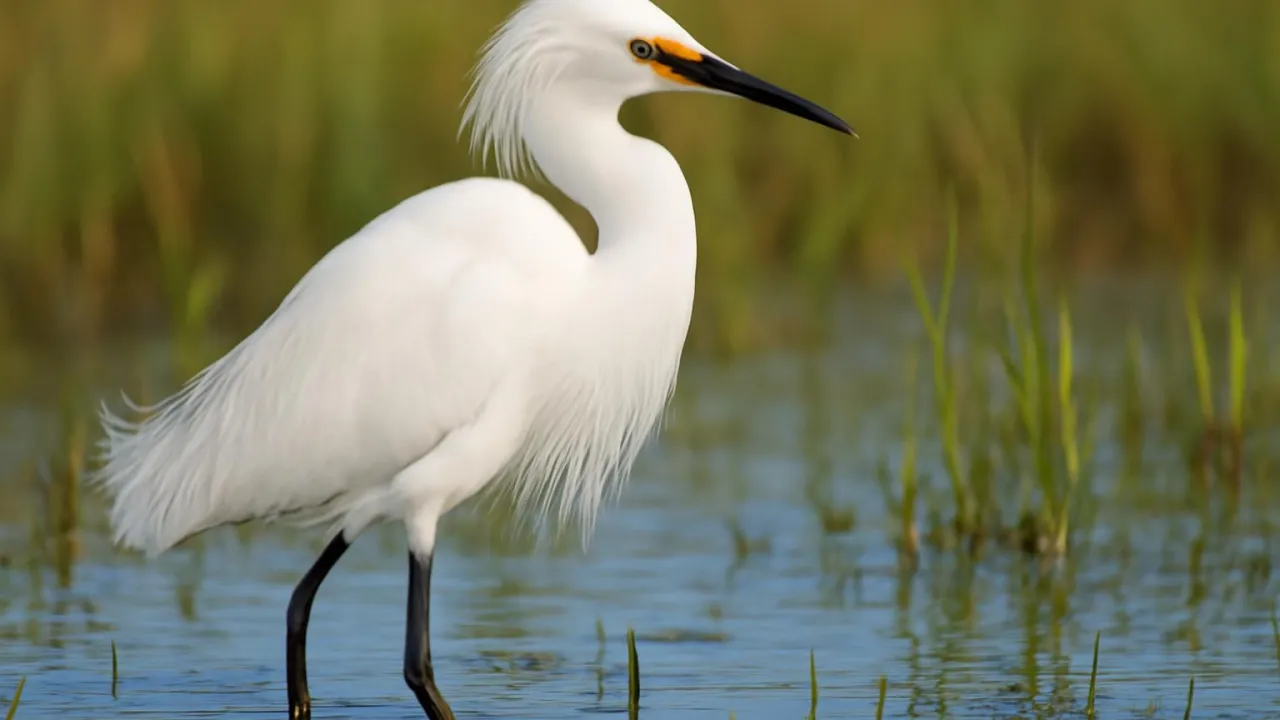
Snowy egrets wave their yellow feet to scare fish into moving!
✨ Word Sparks (Grade 2 Glossary)
Tap 🔊 to hear
wetlands
Land with water like marshes and swamps
prey
Animals that other animals hunt and eat
feathers
Soft parts that cover a bird’s body
🪝
Have you seen a bird with bright yellow feet that help it hunt?
1
Snowy Egret’s White Feathers
The snowy egret has bright white that shine in the sunlight. It uses its feathers to stay warm and dry. These feathers make it easy to spot near water. The bird looks very graceful when it flies.
2
Yellow Feet Help Catch Food
This bird has bright yellow feet that it uses to catch fish. It walks slowly in shallow water and stirs up small animals. The yellow feet scare fish and make them move closer. Then the egret quickly grabs its with its sharp beak.
3
Where Snowy Egrets Live
Snowy egrets live in , marshes, and near lakes. They build nests in trees or bushes close to water. These places give them plenty of fish and insects to eat. The birds like warm places but can live in many regions.
1. How do snowy egrets use their feet to catch food?
2. Where do snowy egrets build their nests?
🤯 Mind-Blowing Fact • Grade 3
Snowy egrets use their yellow feet to stir water and catch hidden prey faster!
✨ Word Sparks (Grade 3 Glossary)
Tap 🔊 to hear
camouflage
Colors that help animals hide in nature
predator
An animal that hunts other animals for food
nutrients
Food parts animals need to grow and live
🪝
Did you know snowy egrets use their bright yellow feet to catch slippery fish?
1
Bright White Feathers and Camouflage
Snowy egrets have bright white feathers that help them blend into cloudy skies. This protects them from while they hunt. Their feathers also keep them warm and dry in wet environments. These adaptations help them survive in many habitats.
2
Using Yellow Feet to Catch Prey
The snowy egret’s yellow feet are a unique adaptation to find food. It stirs the water with its feet to scare small fish and insects. This movement makes prey easier to catch with its sharp, pointed beak. This clever hunting method improves its chances of getting enough .
3
Habitat and Life Cycle
These birds live in wetlands, marshes, and coastal areas where food is plentiful. Snowy egrets build nests in trees or shrubs, often near other birds. They lay eggs that hatch into chicks needing care from both parents. This life cycle ensures young birds learn to survive in their environment.
4
Role in the Ecosystem
Snowy egrets are important that help control small fish and insect populations. They are part of a food web that includes bigger predators like hawks and alligators. Their presence shows a healthy wetland ecosystem. Humans impact these habitats, so protecting wetlands helps snowy egrets thrive.
1. How do snowy egrets use their yellow feet when hunting?
2. Why are snowy egrets important in wetlands?
🤯 Mind-Blowing Fact • Grade 4
Snowy egrets’ yellow feet are a clever tool to stir water and catch prey faster!
✨ Word Sparks (Grade 4 Glossary)
Tap 🔊 to hear
ecosystem
A community of plants and animals living together
conservation
Protecting nature and animals from harm
predator
An animal that hunts other animals for food
🪝
Have you ever wondered how snowy egrets use their bright feet to thrive in wetlands?
1
Feathers, Camouflage, and Survival
The snowy egret’s pure white feathers provide excellent camouflage against cloudy skies and water reflections, helping it avoid . These feathers also insulate the bird, keeping it warm during cold weather and dry in wet conditions. This combination of traits is vital for survival in diverse wetland . As a result, the egret can hunt effectively and stay safe.
2
Feet That Stir and Scare Prey
Snowy egrets use their bright yellow feet to stir up water and scare small fish and insects into movement, making them easier to catch. This specialized hunting technique increases their feeding success and helps them obtain enough nutrients. The feet’s color may also confuse prey, giving the egret an advantage. Such adaptations show how evolution shapes behavior and anatomy for survival.
3
Wetlands Habitat and Nesting
These birds inhabit wetlands, marshes, and coastal regions across the Americas, favoring shallow waters rich in fish and aquatic insects. They build nests in trees or shrubs, often in colonies with other water birds, which provides protection through safety in numbers. Human activities like wetland drainage threaten their habitats, making efforts crucial. Healthy wetlands support snowy egrets and many other species.
4
Ecosystem Role and Human Impact
As mid-level , snowy egrets regulate populations of small fish and insects, maintaining ecological balance in wetland food webs. Their presence indicates a healthy , as they rely on clean water and abundant prey. However, pollution and habitat loss from human development endanger these birds. Protecting wetlands benefits snowy egrets and preserves biodiversity for future generations.
1. Why do snowy egrets use their yellow feet in water?
2. What human activity threatens snowy egret habitats?
🤯 Mind-Blowing Fact • Grade 5
Snowy egrets were once hunted nearly to extinction for their beautiful feathers but have since recovered thanks to conservation!
✨ Word Sparks (Grade 5 Glossary)
Tap 🔊 to hear
taxonomy
How scientists group and name living things
physiology
How a body works and its special parts
conservation
Protecting animals and their homes from harm
🪝
How do snowy egrets use their unique physical traits to thrive in wetland ecosystems?
1
Taxonomy and Scientific Classification
The snowy egret, scientifically named Egretta thula, belongs to the family Ardeidae, which includes herons and bitterns. This species is part of the order Pelecaniformes, known for long-legged wading birds. Its classification reflects evolutionary adaptations for hunting in aquatic environments. Understanding helps scientists study its relationships with other birds.
2
Physiological Adaptations for Hunting
Snowy egrets possess slender bodies and long legs that allow them to wade through shallow waters efficiently. Their bright yellow feet serve as lures, stirring sediment and startling prey such as small fish and aquatic insects. The bird’s sharp, pointed beak enables quick and precise captures. These combined traits optimize energy use and feeding success in diverse wetland habitats.
3
Conservation Status and History
Once heavily hunted for their beautiful plumes during the late 19th and early 20th centuries, snowy egrets faced near extinction. laws and habitat protection have helped their populations recover. Today, they are listed as Least Concern but remain vulnerable to wetland loss and pollution. Ongoing conservation efforts focus on preserving critical habitats across the Americas.
4
Ecological Role and Food Web Dynamics
Snowy egrets act as mid-level predators within wetland food webs, controlling populations of small fish and aquatic invertebrates. Their feeding behavior influences prey distribution and supports ecosystem balance. Predators such as hawks and alligators prey on snowy egrets, linking multiple trophic levels. This ecological role highlights the importance of protecting interconnected species and habitats.
5
Quantitative Comparisons and Habitat Range
Snowy egrets typically stand about 24 inches (61 centimeters) tall and weigh approximately 12 ounces (340 grams). They can fly at speeds up to 30 miles per hour (48 kilometers per hour) during migration. Their range extends from the United States through Central and South America, inhabiting wetlands with temperatures from near freezing to tropical warmth. These quantitative traits demonstrate their adaptability.