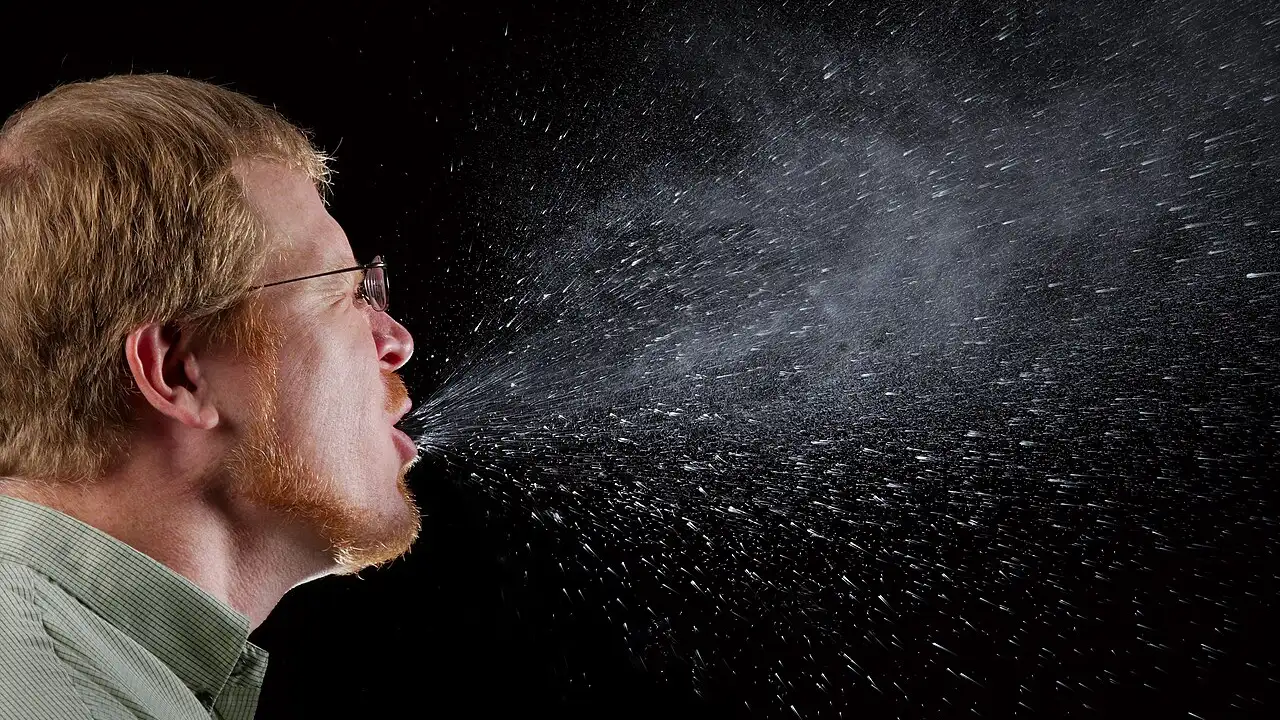
2. Where is the smartest place to aim a sudden sneeze?
🤯 Mind-Blowing Fact • Grade 2
About one out of every four people sneezes when stepping into bright sunlight, a quirk called the sun-sneeze reflex!
✨ Word Sparks (Grade 2 Glossary)
Tap 🔊 to hear
mucus
Slippery nose fluid that traps dusty specks
lungs
Two spongy chest organs that breathe air
droplets
Tiny specks of liquid sprayed in air
🪝
How do your nose, brain, and lungs team up in one second to make you sneeze?
1
The Nasal Alarm
Tickle, wiggle, ACHOO! When pepper, dust, or flower pollen lands inside your nose, the soft wet lining feels it right away. Tiny nerve sensors ring an alarm and zip a fast signal straight to your brain.
2
Teamwork in Your Chest
Your brain tells many muscles to work together at once. First, your gulp a huge breath of air. Next, your throat closes for a split second while your belly and chest muscles squeeze hard.
3
Clean and Clear Again
Suddenly, your throat pops open and air rockets out through your nose and mouth! That powerful gust carries away the tickly invaders. Remember to tuck your nose into your elbow or a tissue every time.
1. Which body part coordinates your lungs and muscles during a sneeze?
2. What triggers the sun-sneeze reflex in some people?
🤯 Mind-Blowing Fact • Grade 3
A single powerful sneeze can launch roughly 40,000 microscopic droplets up to 20 feet across a room if left uncovered!
✨ Word Sparks (Grade 3 Glossary)
Tap 🔊 to hear
cilia
Microscopic waving hairs that sweep out mucus
irritant
A particle that bothers or tickles tissue
sternutation
The scientific medical name for sneezing
🪝
What secret chain reaction happens between your nose hairs and brainstem before every sneeze?
1
Tiny Guards in Your Nose
Imagine walking through a dusty attic when a sudden itch builds behind your nostrils. Inside your nasal cavity, millions of microscopic hair-like structures called wave back and forth in sticky mucus. They trap floating dust, pet dander, and chilly viruses before those particles reach your lungs.
2
Signal to the Sneeze Center
When bother your nasal lining, nerve endings release a chemical messenger called histamine. That spark travels along the trigeminal nerve straight to a special command hub in your brainstem. Scientists call this whole automatic process .
3
Building Air Pressure
Your brainstem instantly orders a coordinated muscle sequence. Your diaphragm pulls downward so your lungs fill completely, your eyelids clamp shut, and your vocal cords briefly seal the windpipe to build strong air pressure inside your chest.
4
A High-Speed Reset
In a flash, the airway opens and pressurized air rushes out at speeds reaching 100 miles per hour! Even better, a sneeze stimulates fresh mucus movement, giving your nose's a clean, healthy reset for the next breath.
1. What do microscopic cilia inside your nasal cavity do?
2. What is the scientific name doctors use for the sneezing reflex?
🤯 Mind-Blowing Fact • Grade 4
Contrary to an old playground myth, your heart never stops during a sneeze—chest pressure only briefly shifts blood flow for a beat!
✨ Word Sparks (Grade 4 Glossary)
Tap 🔊 to hear
trigeminal nerve
Major facial nerve carrying nose tickle signals
involuntary
Happening automatically without your conscious choice
glottis
Opening between vocal cords controlling airflow
🪝
Why can't you easily stop a sneeze once the brainstem hits the launch button?
1
First Line of Airway Defense
Picture taking a deep sniff of freshly cracked black pepper—within moments, an unstoppable tingle spreads across your nose. Every day, you inhale thousands of liters of air packed with dust mites, mold spores, pollen grains, and microbes. Your nasal mucosa acts as an air-filtering fortress, using sticky mucus and beating cilia to capture debris before it can travel deeper into delicate lung passages.
2
The Trigeminal Nerve Highway
When chemical irritants like piperine in pepper or allergens trigger mast cells in the nasal lining, histamine stimulates branches of the . Electrical impulses race into the lateral medulla of the brainstem. Once those signals pass a certain threshold, the reflex becomes , meaning your conscious brain can rarely cancel the launch.
3
Two Phases of Sternutation
Physiologists divide a sneeze into two rapid phases. During the nasal and inspiratory phase, you inhale about 2.5 liters of air while the soft palate lifts and the closes, trapping high pressure inside the thorax. During the expiratory phase, abdominal and intercostal muscles contract violently, opening the glottis and channeling turbulent air across the nasal passages.
4
Why Holding It In Backfires
Pinching your nose and clamping your mouth shut during a sneeze traps enormous air pressure that gets redirected up the Eustachian tubes toward your middle ears. Letting a sneeze out safely into a tissue or bent elbow protects both your eardrums and everyone nearby.
1. Why do doctors warn against pinching your nose and closing your mouth during a sneeze?
2. Which nerve carries the initial tickle signal from the nasal lining to the brainstem?
🤯 Mind-Blowing Fact • Grade 5
In 2012, researchers at the University of Pennsylvania discovered that a sneeze chemically accelerates nasal cilia for minutes afterward, acting like a biological reboot button for clogged airways!
✨ Word Sparks (Grade 5 Glossary)
Tap 🔊 to hear
photic sneeze reflex
Inherited trait causing sneezes in bright light
mucociliary clearance
Self-cleaning airway system of mucus and cilia
aerosol
Microscopic droplets suspended inside floating gas clouds
🪝
How do high-speed fluid dynamics cameras reveal that a sneeze is actually a multiphase turbulent cloud—and a biochemical reboot for your nose?
1
Sentinel Architecture of the Nasal Mucosa
Step from a darkened movie theater into dazzling noon sunlight, or inhale a stray grain of ragweed pollen, and within seconds your respiratory tract primes an explosive defense. Far more than a noisy inconvenience, sternutation is an ancient neuro-respiratory reflex engineered to safeguard the upper airway. The respiratory epithelium lining the nasal turbinates is blanketed in a dual-layer mucus gel propelled by microscopic cilia beating roughly 12 to 15 times per second.
2
Neural Circuitry and Optical Cross-Talk
When foreign particles, viral proteins, or pungent molecules stimulate free nerve endings and histamine receptors, sensory fibers of the maxillary and ophthalmic branches of cranial nerve V—the trigeminal nerve—transmit action potentials to the spinal trigeminal nucleus and lateral medulla. Fascinatingly, in 18 to 35 percent of humans, an autosomal-dominant trait called the (ACHOO syndrome) allows sudden optic nerve constriction signals to cross-excite neighboring trigeminal pathways.
3
Biomechanics and Multiphase Fluid Plumes
Once the medullary sneeze center fires motor commands via the phrenic, vagus, and intercostal nerves, the diaphragm draws in roughly 2.5 liters of air. The glottis seals until intrathoracic pressure surges, then snaps open as abdominal muscles contract. High-speed imaging at MIT by Lydia Bourouiba revealed that sneezes do not merely spray large drops that fall nearby; instead, warm, moist turbulent gas clouds keep microscopic droplets suspended across distances of 7 to 8 meters.
4
The Mucociliary Reboot Discovery
In 2012, otolaryngologists discovered that the pressure wave of a sneeze triggers a cascade of calcium signaling inside nasal epithelial cells. This biochemical surge accelerates ciliary beating for several minutes afterward, functioning like pressing 'control-alt-delete' to reboot sluggish —which explains why people often sneeze twice or three times in a row when clearing stubborn debris.
5
REM Atonia and Public Health Physics
During rapid-eye-movement sleep, brainstem neurotransmitters inhibit motor neurons, silencing the sternutation reflex unless irritation wakes the sleeper first. Understanding plume physics also explains why elbow barriers and tissues dramatically cut viral transmission indoors.