🧬 HUMAN BODY
🧬 Intestinum Tenue • Digestive System
VA Science & Health SOL 1.1, 3.1, 4.2, 5.1 (Cells, Organs & Body Systems)
Small Intestine
Twenty Coiled Feet of Nutrient-Unlocking Digestive Power
Grade 5 • Advanced • 264 words
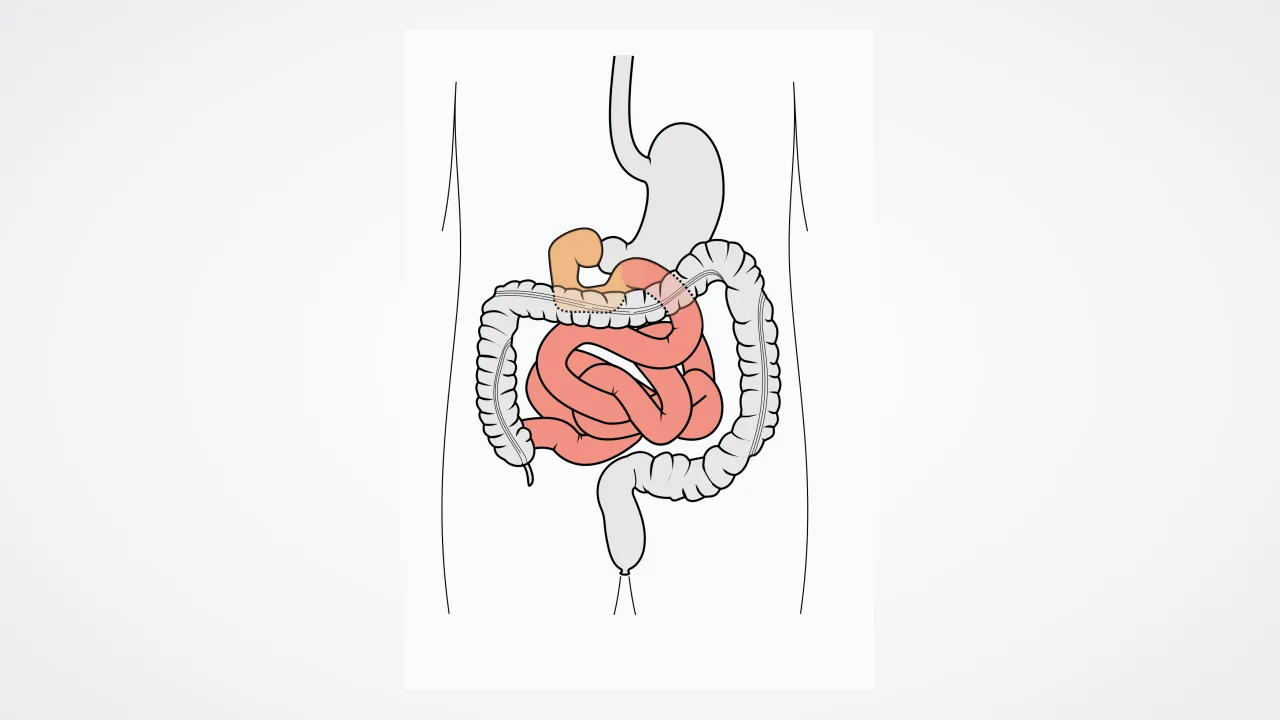
🩺 Body System & LocationDigestive System • Neatly coiled in the center of your belly below the stomach
🔬 Size / Cell Count~20 feet (6 meters) long in adults • ~1 inch (2.5 cm) wide
⚙️ Core JobFinishes digesting carbs, proteins, and fats and absorbs ~90% of all food nutrients
⚡ Body SuperpowerCoils a tube taller than a giraffe neatly inside your belly to power your entire body!
🤯 Mind-Blowing Fact • Grade 1
Unwound in a straight line, an adult's 'small' intestine stretches roughly 20 feet—longer than a family minivan!
✨ Word Sparks (Grade 1 Glossary)
Tap 🔊 to hear
Intestine
Long winding belly tube that digests food
Coil
To loop neatly back and forth inside
Absorb
To soak something inward like a sponge
🪝
Why is the longest tube in your belly called the 'small' intestine?
1
Skinny, Not Short!
Surprise! Your small is actually the longest tube inside your whole body! Stretched out straight, a grown-up's small intestine is taller than a giraffe. We only call it 'small' because it is skinny like a garden hose!
2
Coiled Neatly Inside
How does such a long tube fit in your tummy? It folds back and forth in soft, cozy loops right behind your belly button.
3
Collecting Food Energy
As soupy food winds down this long trail, your small soaks up vitamins and energy for your whole body!
1. Why is the 20-foot small intestine called 'small'?
2. What is the biggest job of your small intestine?
🤯 Mind-Blowing Fact • Grade 2
Roughly 90 percent of all the nutrients and minerals your body gets from breakfast, lunch, and dinner are absorbed inside your small intestine!
✨ Word Sparks (Grade 2 Glossary)
Tap 🔊 to hear
Pancreas
Organ behind stomach sending helpful digestive enzymes
Bile
Liver liquid that breaks fat drops smaller
Digestion
Breaking food into tiny pieces cells use
🪝
If your stomach mashes lunch into soup, where does the food energy actually enter your blood?
1
The Real Star of Digestion
Many kids guess the stomach does most of our digesting, yet your stomach is really just the opening mixer! Once food turns into creamy soup, your stomach squirts tiny spoonfuls at a time into your twenty-foot small intestine—where ninety percent of and nutrient absorption truly happen!
2
Helpful Juices From Neighbors
Right near the entrance, two friendly neighbor organs pitch in! Your sends baking-soda juice to calm down sour stomach acid plus fresh enzymes, while your liver sends greenish to break apart greasy fats.
3
A Three-to-Five-Hour Trip
Gentle muscle waves nudge the meal through winding loops, soaking sugars, proteins, fats, and vitamins into your bloodstream!
1. Where does about 90 percent of nutrient absorption take place in your body?
2. Which two neighbor organs squirt helpful juices into the start of your small intestine?
🤯 Mind-Blowing Fact • Grade 3
The first section of your small intestine—the duodenum—got its Latin name because ancient doctors measured it as 'twelve fingers' wide in length!
✨ Word Sparks (Grade 3 Glossary)
Tap 🔊 to hear
Duodenum
Short first C-shaped curve after the stomach
Jejunum
Middle section absorbing most sugars and proteins
Ileum
Final stretch absorbing vitamin B12 and bile
🪝
Why is your 20-foot small intestine divided into three distinct neighborhoods?
1
Neighborhood One: The Duodenum
Follow a spoonful of soupy chyme out the bottom valve of your stomach! Welcome to the —a C-shaped ten-inch curve whose name means 'twelve finger-widths long.' Here, pancreatic bicarbonate instantly neutralizes harsh stomach acid so delicate intestinal walls stay comfortable, while bile emulsifies fats like dish soap breaking up grease!
2
Neighborhood Two: The Jejunum
Next comes an eight-foot middle stretch called the . Deep circular folds line its plush red walls, working full speed to absorb simple sugars, amino acids from proteins, fatty acids, and water-soluble vitamins into waiting blood capillaries.
3
Neighborhood Three: The Ileum
The final eleven-foot stretch, the , finishes absorbing leftover nutrients—especially vitamin B12 and recycled bile salts—before passing indigestible fiber and water through a one-way valve into the large intestine!
4
Mixing AND Moving
Alternating ring squeezes mix food thoroughly against the walls before sweeping waves nudge it gently onward.
1. What is the correct order of the three sections of your small intestine from start to finish?
2. How does bile from your liver help inside the duodenum?
🤯 Mind-Blowing Fact • Grade 4
A fan-shaped tissue curtain called the mesentery anchors all 20 feet of your small intestine so you can jump, tumble, and cartwheel without a single loop tangling!
Back-and-forth pinching squeezes that mix intestinal soup
Secretin
Gut hormone ordering acid-calming juice from pancreas
🪝
How do twenty feet of twisting loops stay neatly organized inside your abdomen without ever tangling into knots when you do cartwheels?
1
Anchored by the Mesentery Fan
If you stuffed twenty feet of loose garden hose into a backpack and jumped on a trampoline, it would tangle in seconds! Inside your abdomen, your jejunum and ileum never tie into knots because they are suspended from your back body wall by a fan-shaped double fold of tissue called the . Like a graceful pleated curtain, the mesentery holds every loop in sequence while routing arteries, nutrient-rich veins, nerves, and lymph vessels cleanly to every inch of gut!
2
Segmentation Versus Peristalsis
During a meal, your small intestine actually uses two different muscle dances! Rather than rushing food straight to the exit, rhythmic ring contractions called '' pinch and release adjacent pockets back and forth like kneading bread dough—sloshing chyme thoroughly with pancreatic amylase, trypsin, and lipase while pressing nutrients repeatedly against absorptive walls. Gradual peristalsis then inches the mixture forward.
3
Smart Hormone Text Messages
How do the pancreas and gallbladder know the exact minute lunch arrives in the duodenum? Sensory cells in the duodenal lining taste incoming acid and fat, releasing two hormones into the blood: (ordering baking-soda bicarbonate from the pancreas) and cholecystokinin, or CCK (squeezing stored bile from the gallbladder)!
4
Immune Guards in the Ileum
Down in the ileum, oval clusters of white blood cells called Peyer's patches stand guard before the neighboring bacteria-rich large intestine!
How did discovering a messenger chemical in the duodenum in 1902 give birth to the entire science of hormones?
1
Living Tonus Versus Postmortem Length
Interestingly, anatomy textbooks sometimes list different lengths for the small intestine—three to five meters in a living person versus six to seven meters at autopsy! Why? During life, tonic contraction of longitudinal smooth muscle in the muscularis externa keeps the duodenum (~25 cm, largely retroperitoneal), jejunum (~2.5 m), and ileum (~3.5 m) springily compact. Together, they reabsorb not only dietary nutrients but roughly seven to eight liters of water daily from ingested drinks plus salivary, gastric, biliary, and pancreatic secretions!
2
Luminal and Brush-Border Hydrolysis
Digestion unfolds in two coordinated biochemical stages. Inside the duodenal lumen, pancreatic juice entering via the Hepatopancreatic Ampulla of Vater supplies trypsin, chymotrypsin, pancreatic alpha-amylase, and colipase-assisted lipase, while amphipathic bile salts emulsify triglycerides into microscopic . Final cleavage happens directly on membranes, where tethered 'brush-border' enzymes (maltase, sucrase-isomaltase, lactase, and enteropeptidase) snip dimers into monosaccharides and single amino acids millisecond before absorption!
3
Hepatic Portal First-Pass Inspection
Once absorbed, water-soluble sugars and amino acids do not enter general circulation right away! Instead, mesenteric veins funnel them through the hepatic straight to the liver, which stores excess glucose as glycogen and detoxifies trace compounds before blood reaches the heart.
4
Bayliss, Starling, and the First Hormone (1902)
In 1902, British physiologists William Bayliss and Ernest Starling severed all nerves to a duodenal loop yet watched pancreatic juice gush the moment mild acid touched the duodenal mucosa! Realizing a blood-borne chemical messenger—secretin—carried the order, Starling coined the word 'hormone' (from Greek 'to excite'), founding modern endocrinology.
5
Migrating Motor Complex Housekeeping
Between meals during fasting, enteric pacemaker cells (interstitial cells of Cajal) trigger sweeping ninety-minute 'migrating motor complexes' that clear residual fiber and microbes through the ileocecal valve into the cecum.