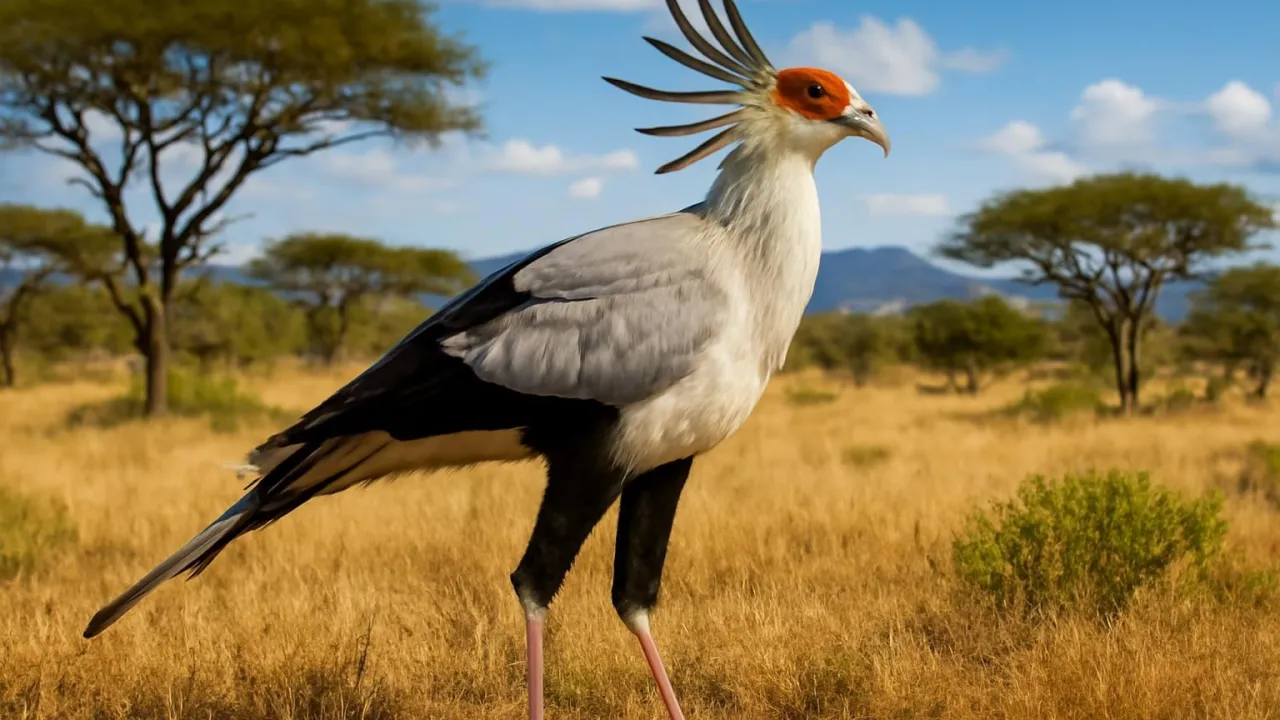
Secretarybirds can stomp prey with kicks that move faster than a human blink!
✨ Word Sparks (Grade 2 Glossary)
Tap 🔊 to hear
prey
Animals that other animals eat for food
crest
A group of feathers on a bird’s head
savanna
A hot, grassy place with few trees
🪝
Have you ever seen a bird that hunts by stomping its prey?
1
Strong Legs and Feathers
The secretarybird has very long legs that help it walk fast. Its feathers are gray with black tips on the wings. It stands tall and looks different from other birds. Its feathers on the head are long and thin.
2
Hunting and Eating
This bird hunts snakes, insects, and small animals on the ground. It uses its strong legs to stomp and kill its quickly. The secretarybird can run fast to catch food in open grasslands. It is a skilled hunter that uses its feet as weapons.
3
Where It Lives
The secretarybird lives in the and open grasslands of Africa. It prefers wide spaces where it can walk and hunt easily. This bird builds nests in tall trees or bushes. It spends most of its time on the ground searching for food.
Secretarybirds can stomp prey more than ten times every second to catch them fast!
✨ Word Sparks (Grade 3 Glossary)
Tap 🔊 to hear
adaptation
A body part that helps an animal survive
ecosystem
All living things in one place together
predator
An animal that hunts other animals for food
🪝
What makes the secretarybird’s long legs perfect for hunting on the ground?
1
Body and Feather Features
The secretarybird has long legs that help it walk through tall grass easily. Its feathers are gray with black wings and a crest on its head. The crest feathers may help scare enemies or attract mates. Its tall legs keep its body far from the ground.
2
How It Hunts Prey
This bird hunts by stomping snakes and insects with its strong legs. Its legs protect it from snake bites while it hunts on the ground. The secretarybird has sharp eyes to spot prey from far away. This special hunting method is different from other birds of prey.
3
Where It Lives and Why
Secretarybirds live in open African grasslands called savannas where they can walk easily. They help control snake and insect numbers in their habitat. By hunting, they keep the balanced and healthy. They build nests high in trees but spend most time on the ground.
4
Life and Behavior
These birds are usually alone or in pairs during breeding season. They lay eggs in nests built high in trees or bushes. Young birds learn to hunt by watching adults stomp prey. Their survival depends on finding enough food and safe places.
Secretarybirds can deliver stomping kicks at speeds faster than a human blink, stunning prey instantly.
✨ Word Sparks (Grade 4 Glossary)
Tap 🔊 to hear
evolutionary
Changes over time to help animals survive
territorial
Protecting an area from other animals
conservation
Protecting animals and their homes
🪝
How does the secretarybird’s hunting style impact the balance of its ecosystem?
1
Physical Traits and Adaptations
The secretarybird’s long legs and sharp claws allow it to hunt dangerous prey like snakes safely. Its crest feathers may serve as communication signals during mating or displays. Its strong legs are an adaptation that helps it stomp and kill prey quickly. The bird’s height gives it an advantage in spotting prey across open grasslands.
2
Hunting Behavior and Food Web Role
Secretarybirds hunt primarily by walking through grasslands and stomping their prey with powerful kicks. This unique hunting style helps control populations of snakes, insects, and small mammals. By reducing these populations, secretarybirds help maintain balance in the food web. Their presence benefits many other species by preventing overpopulation of certain animals.
3
Habitat and Geographic Distribution
Secretarybirds are found across sub-Saharan Africa, thriving in savannas and open grasslands. They prefer habitats with tall grasses and scattered trees that allow easy walking and hunting. Human activities such as farming and development can reduce their habitat size. efforts focus on protecting these open landscapes to support healthy secretarybird populations.
4
Reproduction and Life Cycle
During breeding season, secretarybirds build large nests high in trees or bushes to protect their eggs. They lay two to three eggs, and both parents help care for the chicks. The young learn to hunt by observing adults stomp prey in the grass. Their survival depends on the availability of prey and safe habitat.
1. What helps secretarybirds kill dangerous prey like snakes?
2. Why is conservation important for secretarybirds?
🤯 Mind-Blowing Fact • Grade 5
Secretarybirds can stomp prey at speeds exceeding 20 miles per hour, delivering lethal blows instantly.
✨ Word Sparks (Grade 5 Glossary)
Tap 🔊 to hear
apex predator
Top animal hunter in an ecosystem
plumage
The feathers covering a bird’s body
savanna
A grassy plain with few trees
🪝
What makes the secretarybird’s hunting technique unique among birds of prey?
1
Scientific Classification and Physical Description
The secretarybird, scientifically named Sagittarius serpentarius, belongs to the family Sagittariidae. It is a large terrestrial bird standing about 1.3 meters tall, with long legs adapted for walking and hunting on the ground. Its is mostly gray with black flight feathers and a distinctive crest of elongated feathers on its head. Unlike most raptors, it hunts by stomping prey rather than swooping from the air.
2
Physiological Mechanics of Hunting
Secretarybirds use powerful leg muscles to deliver rapid, forceful stomps capable of stunning or killing snakes and other prey. Their long legs provide a safe distance from venomous bites while hunting. Their keen eyesight allows them to detect prey from afar across open . This unique combination of speed, strength, and vision makes them effective ground hunters.
3
Ecological Role and Conservation Status
As in African grasslands, secretarybirds help regulate populations of snakes, insects, and small mammals, maintaining ecosystem balance. Habitat loss due to agriculture and urbanization threatens their populations in some regions. Conservation programs focus on protecting open habitats and educating local communities about their ecological importance.
4
Botanical and Zoological History
The secretarybird was first described scientifically in the 18th century and has fascinated ornithologists due to its unusual hunting behavior. Its name likely comes from the quill-like crest feathers resembling old-fashioned secretary’s pens. Over centuries, it has become a symbol of protection and vigilance in some African cultures.
5
Quantitative Comparisons and Unique Traits
Secretarybirds can deliver stomping kicks that reach speeds over 20 miles per hour and strike with enough force to kill prey instantly. They stand taller than most other birds of prey, reaching heights of up to 4.3 feet. Their legs are longer than those of many mammals their size, enabling swift ground movement across vast landscapes. These traits make them unique among raptors worldwide.