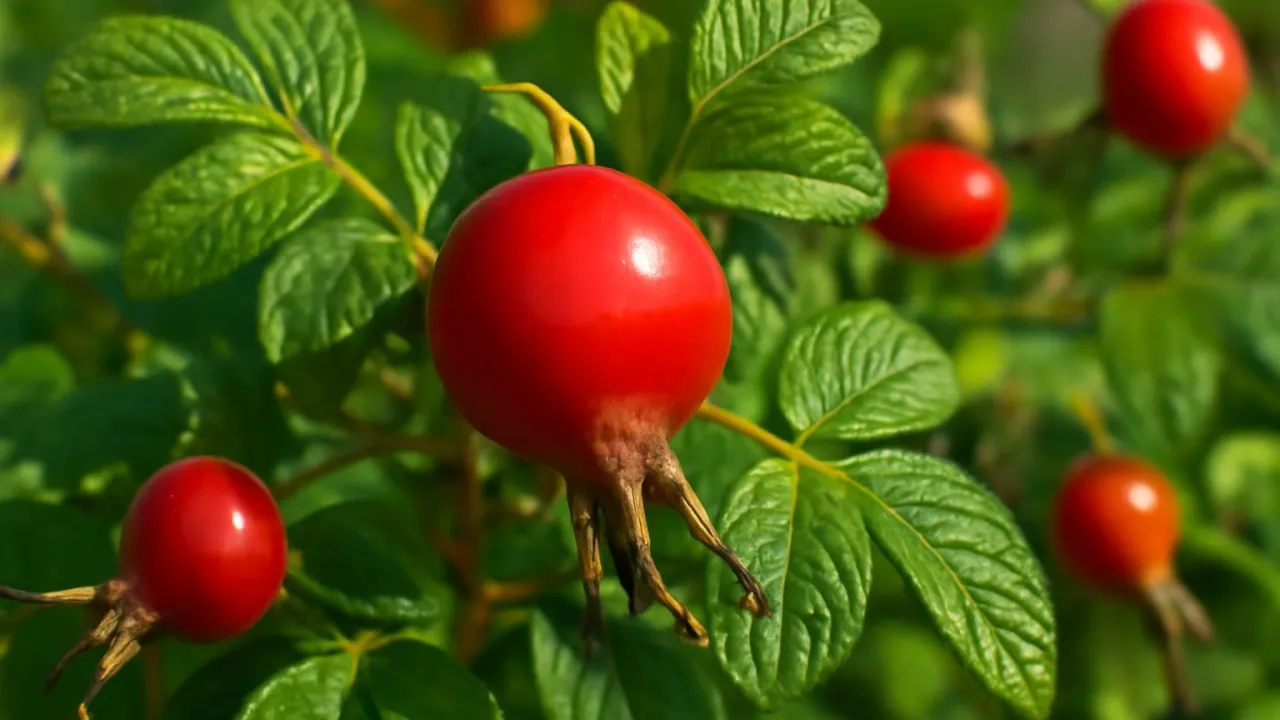
Rosehips contain more vitamin C than oranges, making them a powerful natural remedy.
✨ Word Sparks (Grade 3 Glossary)
Tap 🔊 to hear
adaptation
A change that helps plants or animals survive
symbiosis
A helpful relationship between living things
seed disperser
An animal that spreads plant seeds to new places
🪝
Did you know rosehips help plants survive cold winters and feed animals?
1
Rosehip Appearance and Function
Rosehips are bright red fruits that grow on wild rose bushes. Their bright color helps attract birds, which spread the seeds. The fruit’s smooth skin protects the seeds inside from cold weather. This helps the plant reproduce.
2
Where Rosehips Grow
Rosehips grow mostly in temperate regions with cool winters and warm summers. They thrive in sunny fields, forest edges, and gardens. These habitats provide enough sunlight and nutrients for the rose bushes to grow strong.
3
Rosehip Role in Ecosystems
Rosehips provide food for many animals, including birds and small mammals. These animals act as by eating the fruit and spreading seeds. This symbiotic relationship helps both the plants and animals survive.
4
Human Uses and Benefits
Humans harvest rosehips to make teas, jams, and syrups rich in vitamin C. Vitamin C is important for fighting infections and healing wounds. Rosehips are also studied for their antioxidant properties that protect cells.
Rosehips support ecosystems by feeding animals and aiding plant reproduction through seed dispersal.
✨ Word Sparks (Grade 4 Glossary)
Tap 🔊 to hear
biodiversity
Many different kinds of plants and animals living together
pollinator
An animal that helps flowers make seeds
habitat
The natural home of a plant or animal
🪝
How do rosehips help both plants and animals survive in nature’s food web?
1
Rosehip Adaptations and Survival
Rosehips develop bright red colors to attract birds, which eat the fruit and disperse seeds far away. Their tough skin protects seeds during cold winters, ensuring new plants can grow in spring. This adaptation increases the rose plant’s chances of survival in temperate climates. Additionally, the seeds inside remain safe from harsh weather until conditions improve.
2
Ecosystem Role of Rosehips
Rosehips are an important food source for birds and small mammals during fall and winter when other foods are scarce. By feeding on rosehips, animals gain nutrients and help spread seeds, creating a symbiotic relationship that supports . This role strengthens the local ecosystem’s health and helps maintain balance among species.
3
Human Impact and Uses
Humans harvest rosehips for their high vitamin C content, using them in teas, jams, and herbal remedies. Cultivating rose bushes also supports like bees, which are essential for many crops. However, loss and urban development can reduce wild rosehip populations, affecting ecosystem balance and .
4
Where Rosehips Grow Worldwide
Rosehips naturally grow across temperate zones in North America, Europe, and Asia. They prefer sunny, well-drained soils found in meadows, forest edges, and gardens. Their wide distribution shows their adaptability to different environments and climates, which helps them survive in many places.
Rosehips can contain up to ten times more vitamin C than oranges, making them a powerful natural supplement.
✨ Word Sparks (Grade 5 Glossary)
Tap 🔊 to hear
accessory fruit
Fruit made from parts besides the seed container
carotenoid
Pigment that gives plants red, orange, or yellow color
antioxidant
A substance that protects cells from damage
🪝
What makes rosehips a vital fruit in plant biology and human nutrition?
1
Taxonomy and Botanical Context
Rosehips are the fruit of plants in the genus Rosa, belonging to the Rosaceae family. Botanically, rosehips are classified as because they develop from the flower’s hypanthium, not just the ovary. This unique structure protects the seeds inside and aids in seed dispersal.
2
Physiological Mechanics and Adaptations
The bright red color of rosehips results from pigments that attract birds for seed dispersal. Their tough outer skin provides frost resistance, allowing seeds to survive cold winter temperatures as low as -30 degrees Celsius. This physiological adaptation ensures successful germination in spring.
3
Ecological Role and Conservation
Rosehips serve as a crucial food source for many bird species and small mammals during scarce winter months, supporting local food webs. Human cultivation of rose bushes promotes pollinator health, but habitat destruction threatens wild rosehip populations. Conservation efforts focus on protecting natural habitats and promoting sustainable harvesting.
4
Nutritional and Medicinal Importance
Rosehips contain exceptionally high levels of vitamin C, ranging from 200 to 1000 milligrams per 100 grams, far exceeding citrus fruits. They also provide like flavonoids and , which help reduce inflammation and support immune function. Historically, rosehips were used in traditional medicine to treat colds and skin conditions.
5
Quantitative Comparisons and Global Distribution
Rosehips grow primarily in temperate zones across North America, Europe, and Asia, thriving in well-drained soils with full sun exposure. The fruit typically measures about 1 inch (2.5 centimeters) in diameter and can weigh up to 2 grams. Compared to other fruits, rosehips’ vitamin C content is up to ten times higher than oranges.