1. What do rockhopper penguins use to build nests?
2. Why do rockhopper penguins have yellow eyebrows?
🤯 Mind-Blowing Fact • Grade 3
Rockhopper penguins can jump three feet high to cross rocky shores safely.
✨ Word Sparks (Grade 3 Glossary)
Tap 🔊 to hear
adaptation
A body change that helps animals survive
camouflage
Colors or shapes that help hide animals
predator
An animal that hunts other animals
🪝
Have you ever seen a penguin that uses its strong legs to jump over sharp rocks?
1
Habitat and Adaptations
Rockhopper penguins live on rocky islands in cold ocean regions. Their strong legs help them jump over jagged rocks to reach the sea. This protects them from and rough terrain.
2
Life Cycle and Growth
These penguins lay eggs in nests made of stones. After hatching, chicks are covered with soft down feathers. As they grow, they develop waterproof feathers for swimming and jumping.
3
Physical Features and Survival
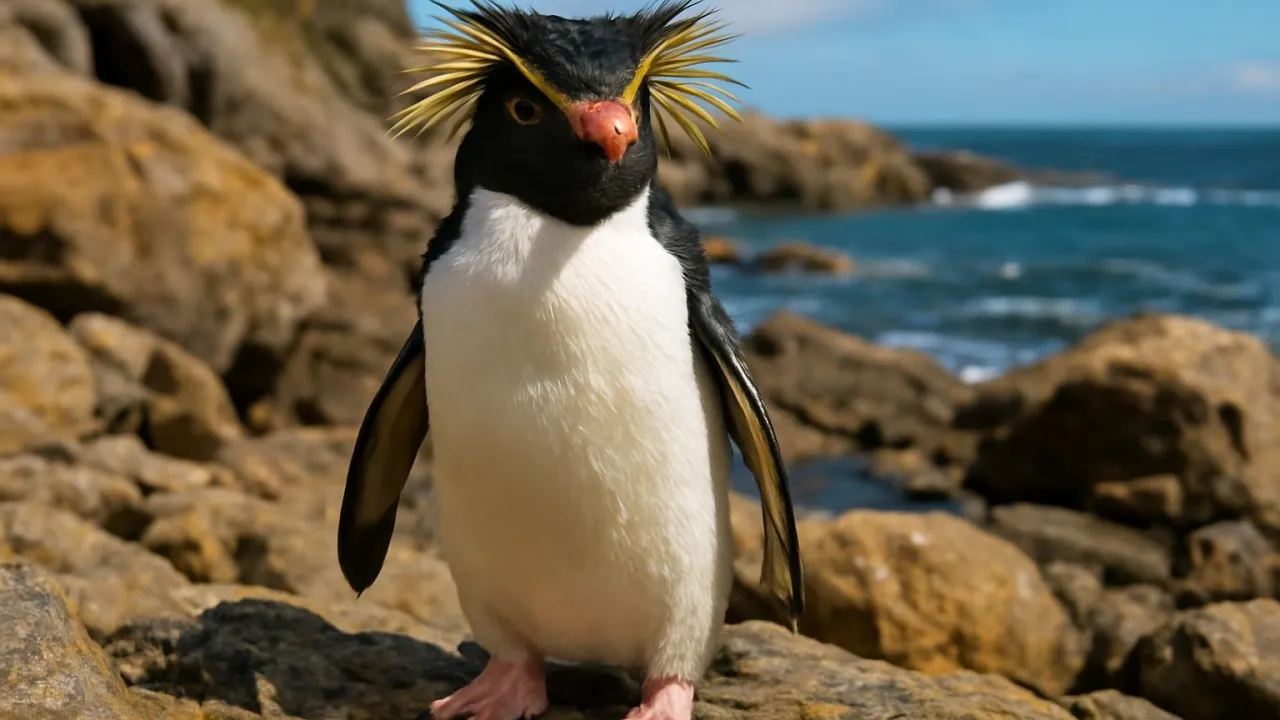
Their bright yellow crests above the eyes act as among rocky cliffs. This helps hide them from . Their sharp beaks catch slippery fish and krill in cold waters.
4
Feeding and Behavior
Rockhopper penguins hunt by diving underwater to catch small fish and squid. They use their agility to avoid larger . Their social groups help protect each other during feeding.
1. What helps rockhopper penguins hide from predators?
2. Why do rockhopper penguins jump over rocks?
🤯 Mind-Blowing Fact • Grade 4
Rockhopper penguins can leap up to three feet high, helping them cross dangerous rocky shores safely.
✨ Word Sparks (Grade 4 Glossary)
Tap 🔊 to hear
ecosystem
A community of animals and plants living together
conservation
Protecting animals and nature from harm
predator
An animal that hunts other animals for food
🪝
Did you know rockhopper penguins play an important role in their ecosystem by eating small fish and krill?
1
Habitat and Distribution
Rockhopper penguins live on subantarctic islands with rocky coastlines, primarily in the Southern Hemisphere. Their habitat includes places like the Falkland Islands and New Zealand's Auckland Islands. These locations provide the cold ocean waters rich in food they need to survive. The rocky shores challenge them to be excellent climbers and jumpers.
2
Physical Adaptations and Behavior
Their strong legs and sharp claws allow them to hop over rocks and climb steep cliffs with ease. The bright yellow crests on their heads serve both as a way to attract mates and to warn rivals. These physical traits help them survive in harsh, rocky environments and during breeding seasons.
3
Ecosystem Role and Food Web
As mid-level , rockhopper penguins help control populations of small fish and krill. They are prey for larger animals like seals and seabirds, which keeps the food web balanced. Their feeding habits influence the health of marine around their islands, supporting biodiversity.
4
Human Impact and Conservation
Human activities such as fishing and pollution threaten rockhopper penguin populations by reducing their food sources. efforts focus on protecting their habitats and regulating fishing near breeding colonies. These actions help maintain healthy penguin numbers and balance, ensuring future survival.
1. What do rockhopper penguins eat to help the ecosystem?
2. Why do humans try to protect rockhopper penguins?
🤯 Mind-Blowing Fact • Grade 5
Rockhopper penguins can leap vertically three feet high, an impressive feat compared to other penguins.
✨ Word Sparks (Grade 5 Glossary)
Tap 🔊 to hear
taxonomy
The science of naming and grouping living things
physiology
How an animal’s body works and functions
mesopredator
An animal that eats smaller animals but is hunted too
🪝
How do rockhopper penguins use their unique physical and behavioral traits to thrive in harsh subantarctic environments?
1
Taxonomy and Scientific Context
Rockhopper penguins belong to the genus Eudyptes and species chrysocome, classified among crested penguins. They are distinguished by their spiky yellow eyebrow crests and inhabit subantarctic islands primarily in the Southern Hemisphere. Their evolutionary adaptations reflect specialization for rocky coastal habitats, helping them survive in cold, harsh climates.
2
Physiological Mechanics and Adaptations
These penguins possess powerful leg muscles and sharp claws that enable them to leap vertically up to three feet onto jagged rocks. Their dense waterproof feathers provide insulation against cold ocean temperatures averaging 28 to 34 degrees Fahrenheit. The bright yellow crests function in social signaling during breeding and territorial disputes, aiding communication.
3
Conservation Status and Human Impact
Rockhopper penguin populations have declined due to overfishing, climate change, and habitat disturbance from human activities. Conservation programs focus on marine protected areas and sustainable fishing practices to preserve their food sources. Monitoring population trends helps scientists understand environmental changes affecting these birds and guides protection efforts.
4
Ecological Role and Food Web Dynamics
As , rockhopper penguins consume krill, small fish, and squid, regulating prey populations and supporting marine ecosystem balance. They serve as prey for seals and large seabirds, linking trophic levels. Their breeding colonies contribute nutrients to island ecosystems through guano deposition, enriching soil and supporting plant life.
5
Quantitative Comparisons and Interesting Metrics
Rockhopper penguins reach about 20 inches in height and weigh between 4 to 6 pounds. They can dive up to 60 meters deep to catch prey, swimming at speeds up to 6 miles per hour. Their ability to leap three feet vertically is remarkable compared to other penguin species that mostly slide or waddle, showcasing unique locomotion skills.