1. What important building blocks of your body do ribosomes put together?
2. Where does a ribosome get the recipe instructions telling it what to build?
🤯 Mind-Blowing Fact • Grade 2
Every living thing on Earth—from tiny daisies and mushrooms to blue whales and humans—uses ribosomes to build its proteins!
✨ Word Sparks (Grade 2 Glossary)
Tap 🔊 to hear
Amino Acid
Small building block linked to make proteins
Keratin
Tough protein building hair and fingernails
Hemoglobin
Red blood cell protein carrying fresh oxygen
🪝
How does a microscopic two-piece hamburger bun snap twenty building blocks together every second?
1
Shaped Like a Tiny Bun
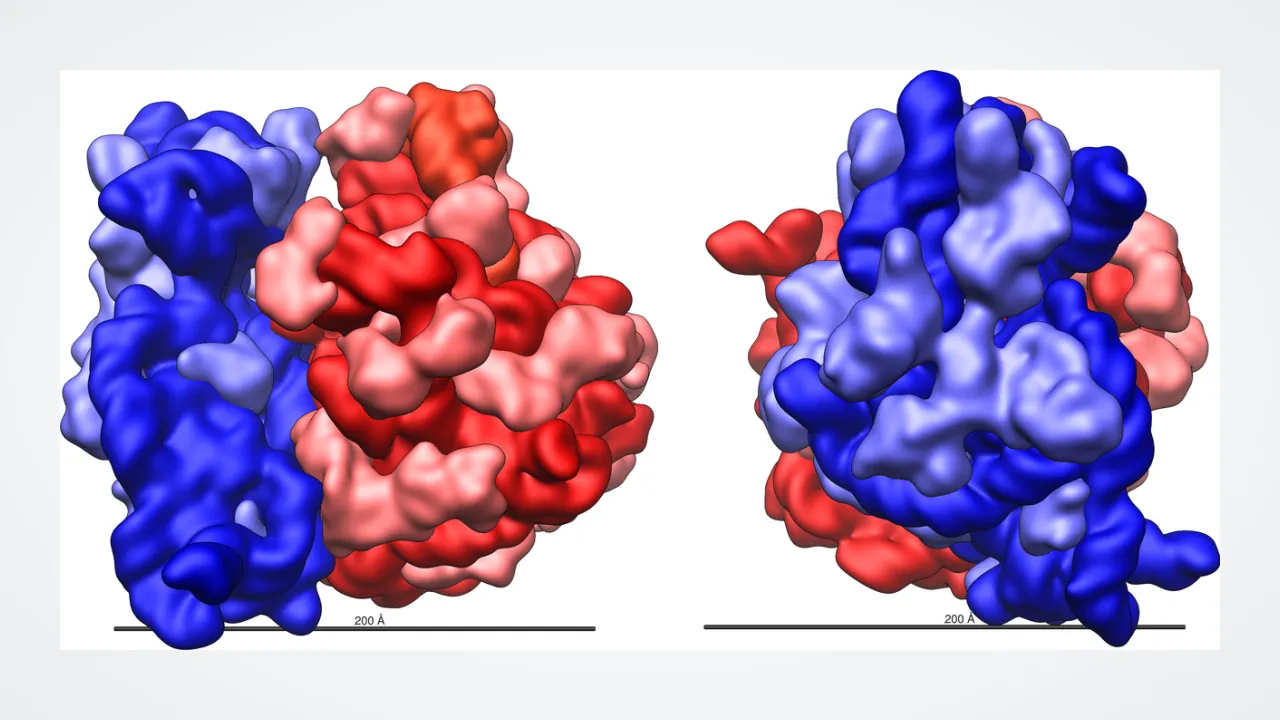
Zoom in millions of times on a ribosome and you will see two snug halves—a big top dome and a smaller bottom base! When a messenger RNA recipe arrives, the two halves clamp gently around the ribbon like a hamburger bun.
2
Twenty Flavors of Beads
Digested healthy foods give your cells twenty different kinds of building blocks called . As the ribosome slides along the recipe ribbon, it snaps the exact right amino acids together into a long chain.
3
Origami Folding
As soon as the chain pops out, it folds like magic origami into for blood, for hair, or antibodies for immunity!
1. How many main kinds of amino-acid building blocks do human ribosomes link together to make proteins?
2. How many main pieces fit together to form one working ribosome?
🤯 Mind-Blowing Fact • Grade 3
Unlike mitochondria or the nucleus, ribosomes wear no membrane wrapper at all—they are pure molecular machines woven from RNA and protein!
✨ Word Sparks (Grade 3 Glossary)
Tap 🔊 to hear
Translation
Reading RNA code to assemble a protein
Codon
Three-letter RNA word specifying one amino acid
Transfer RNA
Delivery molecule bringing matching amino acids
🪝
Why do some ribosomes float freely inside cell jelly while others park along folded maze walls?
1
Two Places to Work
Peer inside a busy pancreas or liver cell and you will spot ribosomes working in two neighborhoods! Free ribosomes float right in the watery cytoplasm, crafting proteins that stay inside the cell to run daily chores. Bound ribosomes dock along folded membranes called the rough endoplasmic reticulum—making it look bumpy under a microscope—to build proteins meant for export, like insulin or digestive enzymes.
2
Reading Three-Letter Codons
Biologists call protein building because ribosomes translate RNA code into amino-acid language! The small subunit reads messenger RNA three letters at a time—each three-letter word is called a .
3
Delivery Trucks Called tRNA
How do the right amino acids arrive on schedule? Clover-shaped helper molecules called (tRNA) ferry one specific amino acid each, matching the three-letter before the large subunit welds a sturdy peptide bond.
4
Assembly-Line Polysomes
Often dozens of ribosomes march along the same messenger RNA ribbon one behind another so a cell can print hundreds of matching proteins in minutes!
1. Why is the 'rough endoplasmic reticulum' called rough?
2. How many RNA letters make up one 'codon' word that a ribosome reads at a time?
🤯 Mind-Blowing Fact • Grade 4
Even though ribosomes contain dozens of proteins, the actual chemical weld that links amino acids together is performed entirely by folded RNA—making the ribosome a 'ribozyme'!
✨ Word Sparks (Grade 4 Glossary)
Tap 🔊 to hear
Peptide Bond
Strong chemical link joining two amino acids
Anticodon
Three-letter tRNA tip matching an mRNA codon
Ribozyme
RNA molecule acting directly as an enzyme
🪝
How can antibiotics stop harmful bacteria by pausing bacterial ribosomes while leaving your own human ribosomes humming happily?
1
Built Inside the Nucleolus
Every ribosome is a hybrid marvel—about sixty percent ribosomal RNA (rRNA) coiled around forty percent structural proteins! Born inside the cell nucleus's dark nucleolus, human ribosomes assemble as a small 40S subunit and a large 60S subunit, slip separately out through nuclear pores, and lock together into a complete 80S machine only when an mRNA start codon ('AUG') appears.
2
Three Docking Bays: A, P, and E
Inside a working ribosome sit three side-by-side parking bays named A (Arrival), P (Polypeptide), and E (Exit). An incoming tRNA carrying its amino acid pulls into the A site; if its three-letter matches the mRNA codon cleanly, the ribosome links the growing chain from the P site onto the new arrival, shifts everything over one notch, and lets the empty tRNA depart from the E site!
3
Different Sizes Save Lives
Here is a lifesaving medical secret: bacterial cells use slightly smaller 70S ribosomes with different rRNA twists than human 80S ribosomes! Many antibiotics selectively jam bacterial 70S ribosomes so germs cannot build proteins, while your human 80S ribosomes keep working unbothered.
4
Stop Signs and Release
When the ribosome reaches a 'STOP' codon at the end of the mRNA, a release protein snips the finished polypeptide free to fold into action.
1. Why can certain antibiotics stop bacterial ribosomes without bothering your main human cell ribosomes?
2. What happens in the A, P, and E sites as a ribosome translates messenger RNA?
🤯 Mind-Blowing Fact • Grade 5
Atomic X-ray maps that won the 2009 Nobel Prize proved that RNA—not protein—forms the active heart of every ribosome, solving the classic chicken-and-egg mystery of how life built its very first proteins!
✨ Word Sparks (Grade 5 Glossary)
Tap 🔊 to hear
Peptidyl Transferase
Catalytic RNA core linking amino acids together
Svedberg Unit
Measure of particle settling speed in centrifuges
Signal Peptide
Starter amino-acid tag routing ribosomes to ER
🪝
If ribosomes build every protein enzyme on Earth, what built the very first ribosome—and how did X-ray crystallography solve that riddle?
1
George Palade's Electron-Microscope Discovery
Until the 1950s, nobody knew how cells physically assembled proteins. Peering through pioneering electron microscopes at Rockefeller University in 1955, Romanian-American cell biologist George Emil Palade spotted dense twenty-five-nanometer granules carpeting the endoplasmic reticulum and drifting across the cytosol. Named ribosomes in 1958 for their rich ribonucleic acid content, Palade's discovery earned a share of the 1974 Nobel Prize.
2
Sedimentation Coefficients: 80S vs. 70S
Biochemists measure ribosomal particles in Svedberg (S) units—reflecting how fast particles settle in an ultracentrifuge rather than simple weight addition, because surface shape affects drag! Eukaryotic cytosolic ribosomes combine a 40S small subunit (18S rRNA plus 33 proteins) with a 60S large subunit (28S, 5.8S, and 5S rRNAs plus 47 proteins) into an intact 80S complex weighing 4.3 megadaltons. Fascinatingly, human mitochondria still house 55S bacterial-style ribosomes—another living echo of endosymbiosis!
3
The Ribosome Is a Ribozyme
For decades, scientists assumed ribosomal proteins catalyzed peptide bonds while rRNA merely served as scaffolding. In 2000, Venkatraman Ramakrishnan, Thomas Steitz, and Ada Yonath mapped the ribosome down to hundreds of thousands of individual atoms—sharing the 2009 Nobel Prize in Chemistry. Their atomic maps revealed zero proteins within eighteen angstroms of the center: folded rRNA itself catalyzes every peptide bond, proving ancient RNA-World life could synthesize proteins before protein enzymes even existed!
4
Fidelity, GTPase Proofreading, and Signal Peptides
Adding roughly fifteen to twenty amino acids per second in bacteria and five to ten per second in mammalian cells, ribosomes make fewer than one mistake in ten thousand links thanks to elongation-factor GTPase proofreading! If a nascent chain begins with a hydrophobic , a Signal Recognition Particle pauses translation, ferries the entire ribosome to a Sec61 translocon channel on the rough ER, and threads the growing hormone or antibody straight into the secretory pathway.
5
Quality Control and Modern Medicine
Molecular chaperones cradle emerging polypeptides so hydrophobic cores fold cleanly without clumping, while structural maps of bacterial 70S pockets guide next-generation antibiotics worldwide.