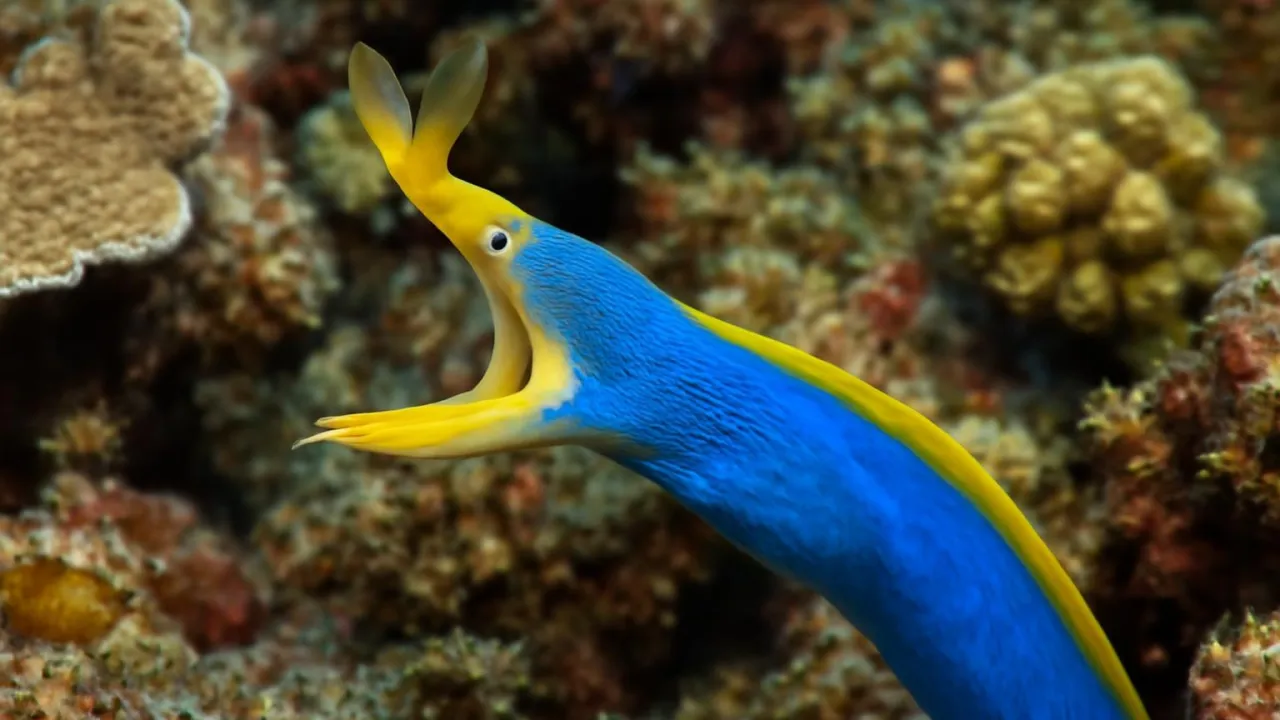
Ribbon eels change color and even their sex as they grow older!
✨ Word Sparks (Grade 2 Glossary)
Tap 🔊 to hear
predator
An animal that hunts other animals for food
coral reef
A home made of tiny sea animals' skeletons
crustacean
Sea animals with hard shells like shrimp or crabs
🪝
Have you ever seen a fish that looks like a colorful ribbon?
1
Colorful Ribbon Eels
Ribbon eels are bright blue and yellow when they are young. They look like long ribbons swimming in the ocean. As they grow, their colors change to black and yellow. This makes them easy to spot in .
2
Where They Live
These eels live in warm, shallow waters near . They hide in small holes and crevices to stay safe from . The coral reef provides food and shelter for the ribbon eel. It is their perfect home.
3
What They Eat
Ribbon eels eat small fish and like shrimp. They open their mouths wide to catch their prey quickly. Their sharp teeth help them hold onto slippery food. Hunting at night helps them avoid bigger .
Ribbon eels are one of the few fish that change both color and sex during their lives.
✨ Word Sparks (Grade 3 Glossary)
Tap 🔊 to hear
camouflage
Colors or shapes that help hide an animal
adaptation
A trait that helps animals survive better
carnivore
An animal that eats only meat
🪝
Did you know ribbon eels change color and sex as they grow?
1
Amazing Color Changes
Ribbon eels start life bright blue with yellow fins, making them easy to spot. As they mature, their colors shift to black and yellow, signaling a change in sex. This color change helps them adapt to their environment. It also signals their readiness to mate.
2
Habitat and Camouflage
They live in coral reefs where hiding is important for survival. Their colors help them blend with the reef or warn predators they are dangerous. Coral reefs provide shelter and nutrients for ribbon eels. protects them from predators.
3
Diet and Hunting
Ribbon eels are that eat small fish and crustaceans. Their sharp teeth and quick strikes help catch prey easily. They often hunt at night to avoid larger predators. Their hunting skills are an important .
4
Body Adaptations
Their long, thin bodies allow them to swim through narrow reef cracks. Their wide-open jaws help catch slippery prey quickly. The ribbon eel’s bright colors also play a role in communication. These help them survive in a busy reef ecosystem.
Ribbon eels’ ability to change sex and color helps balance their coral reef communities.
✨ Word Sparks (Grade 4 Glossary)
Tap 🔊 to hear
symbiosis
When two animals help each other live
reproduction
How animals make babies
population
All the animals of the same kind living together
🪝
How does the ribbon eel’s color change affect its role in coral reefs?
1
Color Change and Life Cycle
Ribbon eels begin life as bright blue males, but as they mature, they turn black and become females. This sex change is linked to their reproductive strategy and helps maintain balance. Their vibrant colors also signal their maturity to other eels. This unique trait influences their social interactions.
2
Ecosystem Role
As carnivores, ribbon eels control small fish and crustacean , maintaining reef balance. They serve as both predator and prey in the food web, supporting diverse marine life. Their burrows in coral reefs provide shelter for other small creatures. This symbiotic relationship strengthens the reef ecosystem.
3
Habitat and Distribution
Ribbon eels are found throughout the Indo-Pacific region, favoring warm, shallow coral reefs. Their preference for hiding in reef crevices protects them from larger predators. Human activities like coral reef damage threaten their habitat. Conservation of reefs is vital for their survival.
4
Cause and Effect of Adaptations
Their slender bodies allow easy movement through reef cracks, which helps them escape predators. The color changes act as signals to other eels, reducing conflict and aiding . Their hunting at night reduces competition and predation risk. These adaptations increase their chances of survival.
Ribbon eels change sex from male to female and colors from blue to black to survive and reproduce successfully.
✨ Word Sparks (Grade 5 Glossary)
Tap 🔊 to hear
hermaphroditism
Having both male and female traits during life
endocrine
Body system that controls hormones and changes
mesopredator
A medium-level predator in a food chain
🪝
What makes the ribbon eel’s color and sex changes vital for coral reef ecosystems?
1
Taxonomy and Scientific Context
The ribbon eel, Rhinomuraena quaesita, belongs to the family Muraenidae, known as moray eels. It is unique among morays for its striking color changes and sex reversal during its life cycle. This species is a fascinating example of sequential in fish. Its scientific study helps understand evolutionary adaptations in marine environments.
2
Physiological Mechanics of Color and Sex Change
Ribbon eels begin life as blue males and later transition to black females through hormonal changes. These physiological shifts involve complex processes that regulate pigmentation and reproductive organs. The color change signals social status and reproductive readiness to other eels. This mechanism optimizes mating success within coral reef populations.
3
Ecological Role and Conservation Challenges
Ribbon eels play a critical role as , controlling small fish and crustacean populations within Indo-Pacific coral reefs. Their burrowing behavior also modifies reef microhabitats, benefiting other species. However, coral reef degradation from climate change and human impact threatens their habitat and survival. Conservation efforts focus on protecting reef ecosystems to preserve ribbon eel populations.
4
Botanical vs. Culinary Comparison Insight
Unlike plants that can be classified by botanical or culinary definitions, ribbon eels are strictly marine animals with no such distinctions. However, their vibrant colors resemble ribbons used in human culture, inspiring names and artistic representations. This comparison helps students appreciate biological diversity and human connections to nature.
5
Quantitative Comparisons and Adaptations
Ribbon eels can grow up to 90 centimeters long and swim at speeds allowing quick prey capture. Their slender bodies fit into reef crevices less than 5 centimeters wide, providing escape routes from predators. They hunt mostly at night when water temperatures range from 24 to 28 degrees Celsius. These adaptations enhance survival in competitive reef environments.