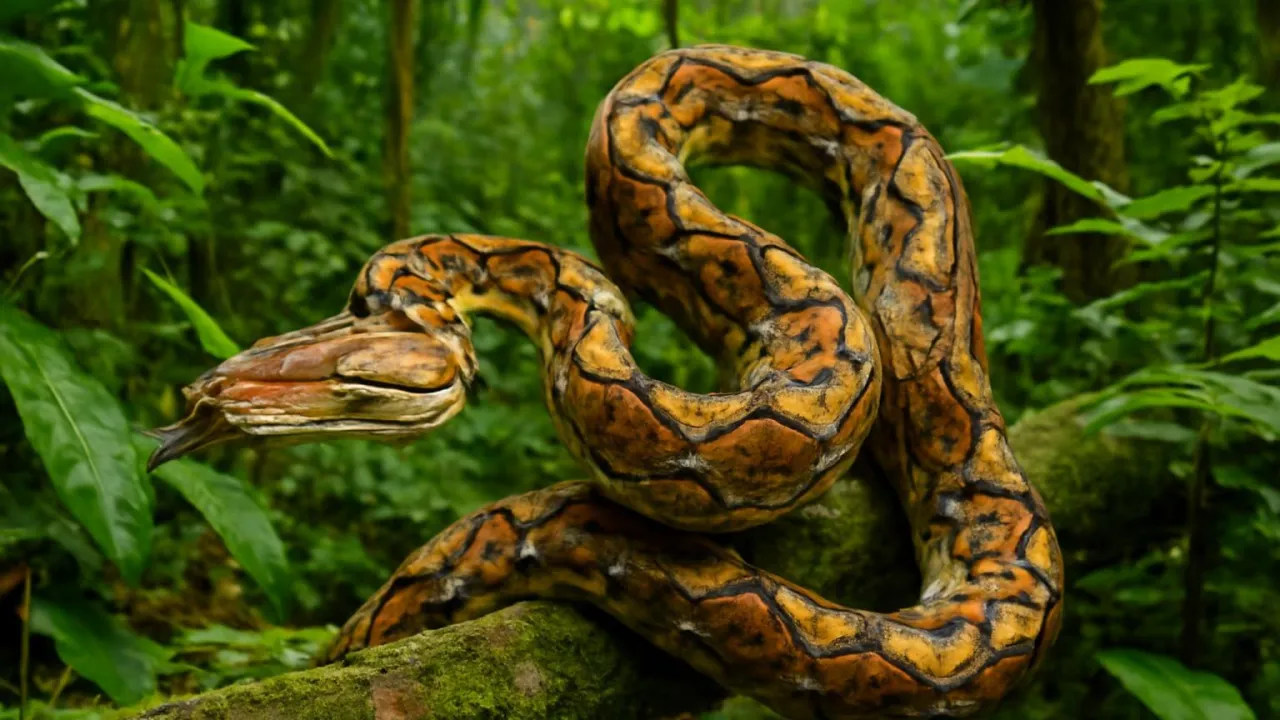
1. Where does the reticulated python like to live?
2. What does the python do to its food?
🤯 Mind-Blowing Fact • Grade 2
Reticulated pythons can grow up to 30 feet, longer than most cars!
✨ Word Sparks (Grade 2 Glossary)
Tap 🔊 to hear
tropical
Warm and rainy places near the equator
prey
Animals that other animals eat for food
slither
To move smoothly like a snake does
🪝
Can you imagine a snake longer than a big school bus?
1
Giant Snake Size
The reticulated python can grow very long and heavy. It can reach lengths over 20 feet. This makes it the world’s longest snake. It moves by slithering smoothly on the ground.
2
Home in the Forest
This snake lives in forests and near rivers. It hides in trees or thick bushes. It also swims well to catch . The warm, wet places help it stay healthy.
3
Hungry and Powerful
The python eats animals like birds, pigs, and deer. It squeezes its tightly to stop it from moving. Then it swallows the whole animal slowly. This helps it get all the food it needs.
1. What helps the python stay healthy in its home?
2. How does the python catch its prey?
🤯 Mind-Blowing Fact • Grade 3
Reticulated pythons can hold their breath underwater for over 30 minutes while hunting.
✨ Word Sparks (Grade 3 Glossary)
Tap 🔊 to hear
camouflage
Colors that help animals hide in nature
constrictor
A snake that squeezes its prey to eat
nutrients
Food parts that help animals grow strong
🪝
Did you know the reticulated python uses camouflage to hide from prey?
1
Amazing Size and Shape
The reticulated python is the longest snake in the world, reaching lengths up to 30 feet. Its body is covered in a complex pattern that helps it blend into the forest floor. This protects it from predators and helps it sneak up on prey. Its muscular body allows it to move silently through trees and water.
2
Habitat and Adaptations
This python lives in tropical rainforests and wetlands across Southeast Asia. It uses its strong swimming skills to hunt in rivers and swamps. The snake’s heat-sensing pits help it detect warm-blooded animals nearby. These adaptations make it a powerful predator in its ecosystem.
3
Hunting and Diet
The reticulated python is a , meaning it squeezes prey to stop breathing. It eats mammals like pigs, monkeys, and deer, as well as birds. After catching prey, it swallows it whole, digesting it slowly over days. This method helps the python get enough to survive long periods without food.
4
Life Cycle and Growth
Female pythons lay eggs in hidden nests and guard them until they hatch. Baby pythons are independent and start hunting small animals right away. As they grow, their patterns help them stay hidden from predators. The snake’s slow growth allows it to live many years in the wild.
1. How does the reticulated python use camouflage?
2. What does a constrictor snake do to catch food?
🤯 Mind-Blowing Fact • Grade 4
Reticulated pythons can swim for miles and hold their breath underwater for over 30 minutes.
✨ Word Sparks (Grade 4 Glossary)
Tap 🔊 to hear
ecosystem
A community of plants and animals living together
deforestation
Cutting down many trees in a forest area
metabolism
How an animal’s body uses energy to live
🪝
How does the reticulated python’s pattern help it survive in dense rainforests?
1
Master of Camouflage and Movement
The reticulated python’s intricate skin pattern acts as camouflage that blends perfectly with the forest floor and tree branches, helping it avoid predators and ambush prey. Its muscular body enables smooth, silent movement both on land and in water, allowing it to hunt efficiently. This snake’s ability to swim and climb trees expands its hunting range across diverse habitats. These adaptations make it a versatile and stealthy predator in Southeast Asian .
2
Role in the Ecosystem
As a top predator, the reticulated python helps control populations of mammals and birds, maintaining balance in the food web. It sometimes competes with other predators like large cats and crocodiles for food. Humans impact its habitat through and hunting, which threatens its survival. Conservation efforts focus on protecting rainforests and educating people about the python’s ecological importance.
3
Geographic Range and Habitat
This species is native to Southeast Asia, including countries like Indonesia, the Philippines, and Malaysia. It thrives in tropical rainforests, wetlands, and riverbanks where humidity and temperature support its needs. Seasonal changes affect its activity patterns, with cooler months slowing its . The python’s adaptability to various environments demonstrates its evolutionary success across a wide geographic range.
4
Reproduction and Growth
Female reticulated pythons lay clutches of 15 to 80 eggs and fiercely guard them until hatching. Hatchlings are about 2 feet long and immediately begin hunting small prey using inherited camouflage patterns. Juveniles grow steadily, molting their skin regularly to accommodate increasing size. This slow growth rate and parental care increase the chances of survival in the wild.
2. What threatens the reticulated python’s survival?
🤯 Mind-Blowing Fact • Grade 5
Reticulated pythons have over 400 vertebrae, giving them unmatched flexibility and strength.
✨ Word Sparks (Grade 5 Glossary)
Tap 🔊 to hear
vertebrae
The small bones that make up the spine
metabolism
How an animal’s body uses energy to live
keystone predator
An animal that helps keep nature balanced
🪝
What physiological features make the reticulated python the longest snake on Earth?
1
Taxonomy and Scientific Classification
The reticulated python, scientifically named Malayopython reticulatus, belongs to the Pythonidae family, which includes some of the largest snakes worldwide. It is classified within the genus Malayopython, distinguished by its unique scale patterns and genetic markers. This species is recognized for its exceptional length, making it the longest snake on Earth. Its evolutionary adaptations have allowed it to thrive in diverse Southeast Asian habitats.
2
Physiological Mechanics and Adaptations
This python’s elongated body consists of over 400 , granting it remarkable flexibility and strength for constriction. Its heat-sensing pits along the jaw detect infrared radiation from warm-blooded prey, enabling nocturnal hunting. The snake’s slow allows it to survive long intervals between meals, sometimes lasting months. Its muscular system facilitates powerful constriction, capable of exerting pressure exceeding 90 psi to subdue prey.
3
Conservation Status and Human Impact
Despite its impressive size, the reticulated python faces threats from habitat loss due to widespread deforestation and illegal wildlife trade. It is listed on the IUCN Red List as a species requiring monitoring, although not currently endangered. Conservation programs emphasize habitat protection and sustainable coexistence with local communities. Education efforts aim to reduce fear and promote the python’s ecological role as a .
4
Ecological Role and Geographic Distribution
Native to Southeast Asia, including Indonesia, the Philippines, and Malaysia, the reticulated python inhabits tropical rainforests, wetlands, and riverine systems. It plays a critical role in controlling populations of medium-sized mammals and birds, maintaining ecosystem balance. Seasonal behavioral shifts correspond to temperature and prey availability fluctuations. Its ability to swim long distances supports gene flow between island populations.
5
Quantitative Comparisons and Records
Reticulated pythons can reach lengths up to 30 feet (9 meters) and weigh over 350 pounds (160 kilograms), surpassing most other snake species. Their constriction force can exceed 90 pounds per square inch, which is sufficient to suffocate large prey. They can hold their breath underwater for more than 30 minutes to ambush aquatic animals. These remarkable physical records highlight their status as apex predators in their habitats.