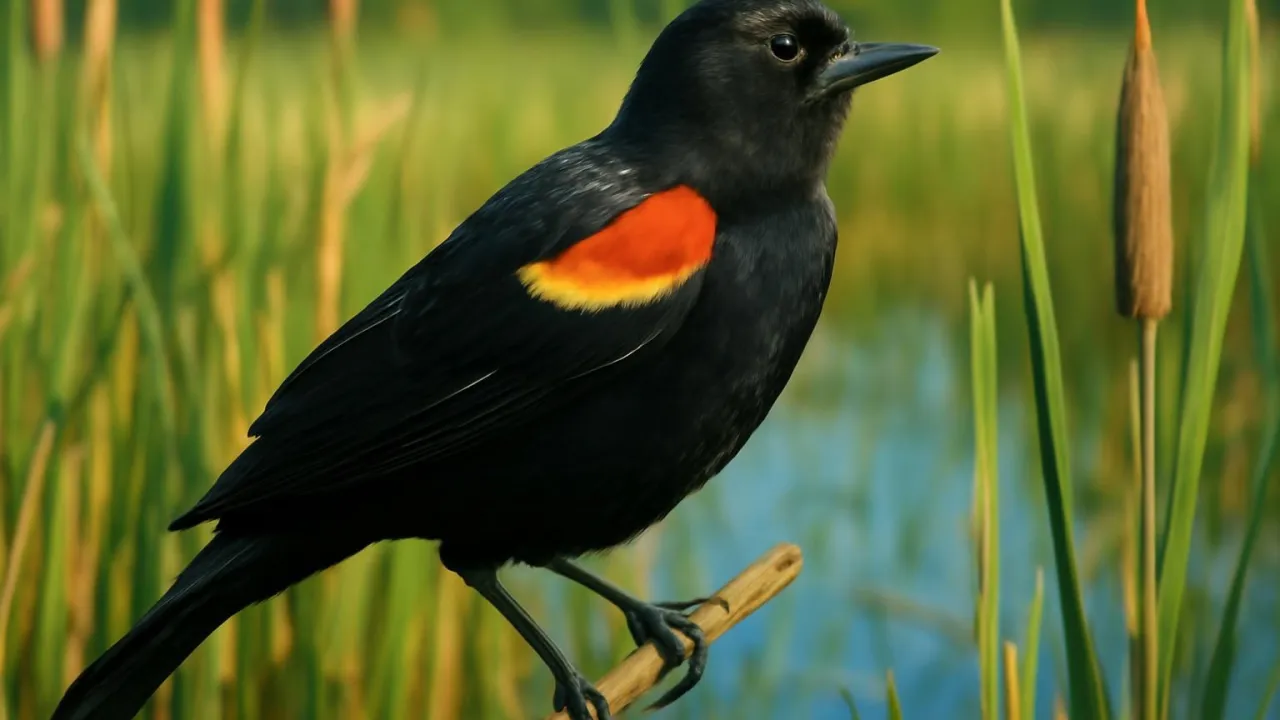
1. What color are the red-winged blackbird’s wings?
2. Where does the red-winged blackbird build its nest?
🤯 Mind-Blowing Fact • Grade 2
Male red-winged blackbirds flash red patches to warn rivals during spring fights!
✨ Word Sparks (Grade 2 Glossary)
Tap 🔊 to hear
feathers
Soft parts that cover a bird’s body
territory
A place a bird protects from others
insects
Small animals like bugs with six legs
🪝
Have you heard a bird sing with loud, clear songs near water?
1
Bright Red Shoulder Patches
The red-winged blackbird has bright red shoulder patches that show when it flies. It is mostly black with shiny . Males use these red patches to scare away other birds. Females are brown and help build nests.
2
Wetlands and Marshes Home
This bird lives in wetlands and marshes where tall grasses grow. It builds its nest in reeds near water. These places have many and seeds for food. The bird likes to sing loudly to mark its .
3
Eating Bugs and Seeds
Red-winged blackbirds eat , seeds, and grains found near water. They hop on the ground to find food. Sometimes they catch flying insects in the air. Their strong beaks help them crack open seeds.
1. Why do male red-winged blackbirds show red patches?
2. Where do red-winged blackbirds build their nests?
🤯 Mind-Blowing Fact • Grade 3
Red-winged blackbirds’ bright colors help them survive by warning rivals and hiding from predators!
✨ Word Sparks (Grade 3 Glossary)
Tap 🔊 to hear
camouflage
Colors that help animals hide in nature
territory
An area animals protect from others
nutrients
Food parts that help animals grow strong
🪝
Did you know red-winged blackbirds use bright colors for camouflage and defense?
1
Colorful Adaptations
The male red-winged blackbird has bright red and yellow shoulder patches. These colors help it scare predators and rivals during mating season. Females have brown feathers that provide in tall grasses. This adaptation protects them from predators.
2
Wetland Habitat and Nesting
These birds live in wetland areas filled with reeds and cattails. They build cup-shaped nests attached to tall plants above water. This location helps protect eggs from flooding and ground predators. The wetlands also offer plenty of insects and seeds for food.
3
Diet and Feeding Behavior
Red-winged blackbirds eat a diet of insects, seeds, and grains. They forage on the ground and in plants, searching for . Their sharp beaks help crack seeds and catch small flying insects. This diet supports their energy for singing and flying.
4
Communication and Territory
Males sing loud, clear songs to defend their and attract mates. Their bright shoulder patches flash during these displays. This combination of song and color helps them warn rivals and avoid fights. It is an important survival strategy.
1. How do female red-winged blackbirds protect themselves?
2. Why do males flash red shoulder patches?
🤯 Mind-Blowing Fact • Grade 4
Red-winged blackbirds help control insect pests and support wetland plant life through seed spreading!
✨ Word Sparks (Grade 4 Glossary)
Tap 🔊 to hear
omnivorous
Eating both plants and animals for food
predator
An animal that hunts other animals
migration
Seasonal movement to find food or warmth
🪝
What role do red-winged blackbirds play in wetland ecosystems?
1
Bright Colors and Survival
Male red-winged blackbirds display bright red and yellow shoulder patches to defend territory and attract mates during breeding season. This colorful display causes rivals to retreat, reducing physical fights that could cause injury. Females’ camouflaged brown feathers help them avoid while nesting in dense marsh vegetation.
2
Wetland Habitat and Distribution
These birds primarily inhabit freshwater wetlands, marshes, and ponds across North America. Their nests are built on reeds and cattails just above water, protecting eggs from flooding and ground . Wetlands provide abundant insects and seeds, supporting their diet. Human wetland conservation efforts help maintain their habitats.
3
Ecosystem Roles and Food Web
Red-winged blackbirds serve as both and prey within wetland food webs. They control insect populations by feeding on various bugs and larvae. In turn, they provide food for hawks, owls, and snakes. Their nesting habits also influence plant growth by spreading seeds and affecting vegetation density.
4
Communication and Behavior
Males use loud, melodic songs combined with flashing red shoulder patches to establish dominance and attract females. This behavior reduces direct conflicts by signaling strength and territory ownership. During , these birds travel in large flocks, which provides safety in numbers and helps them find new habitats.
1. How do red-winged blackbirds reduce fights during breeding?
2. What is one way red-winged blackbirds help wetlands?
🤯 Mind-Blowing Fact • Grade 5
Red-winged blackbirds can sing songs loud enough to be heard 100 meters away to protect their territory!
✨ Word Sparks (Grade 5 Glossary)
Tap 🔊 to hear
epaulets
Bright patches on bird wings used to show strength
omnivores
Animals that eat both plants and animals
trophic
Relating to feeding levels in a food chain
🪝
How do red-winged blackbirds’ unique traits support their survival and ecosystem roles?
1
Taxonomy and Scientific Classification
The red-winged blackbird, scientifically known as Agelaius phoeniceus, belongs to the family Icteridae. This family includes other blackbirds, orioles, and grackles, which share similar behaviors and habitats. It is one of the most widespread and abundant songbirds in North America, with over 100 million individuals estimated. Its classification helps scientists study its evolutionary relationships and ecological roles.
2
Physiological Adaptations and Mechanics
Red-winged blackbirds possess bright red on their wings, which they can flash or hide to communicate dominance or submission. Their sharp, conical beaks are adapted for cracking seeds and catching insects mid-flight. Their vocal cords produce complex songs used for territory defense and mate attraction. Additionally, their strong legs enable them to perch on reeds and hop efficiently on uneven wetland terrain.
3
Conservation Status and Historical Context
Currently, red-winged blackbirds are classified as Least Concern due to their large population and adaptability. However, wetland habitat loss from urban development and agriculture poses localized threats. Historically, their presence has been important to indigenous cultures and early naturalists who noted their loud songs and territorial behavior. Conservation efforts focus on protecting wetland ecosystems to sustain their populations.
4
Ecological Impact and Food Web Dynamics
As , red-winged blackbirds regulate insect populations, including agricultural pests, benefiting crop health. They also disperse seeds of wetland plants, aiding in habitat regeneration. Predators such as hawks and owls rely on them as a food source, linking multiple levels. Their nesting behavior influences plant community structures by affecting vegetation density and diversity.
5
Quantitative Comparisons and Behavior
Red-winged blackbirds measure about 7.5 to 10 inches long and weigh between 1.1 to 1.4 ounces. They can fly at speeds up to 30 miles per hour during migration. Their loud songs carry up to 100 meters, effectively marking territory boundaries. During breeding season, males aggressively defend territories up to one acre in size, using both song and wing displays to deter rivals.