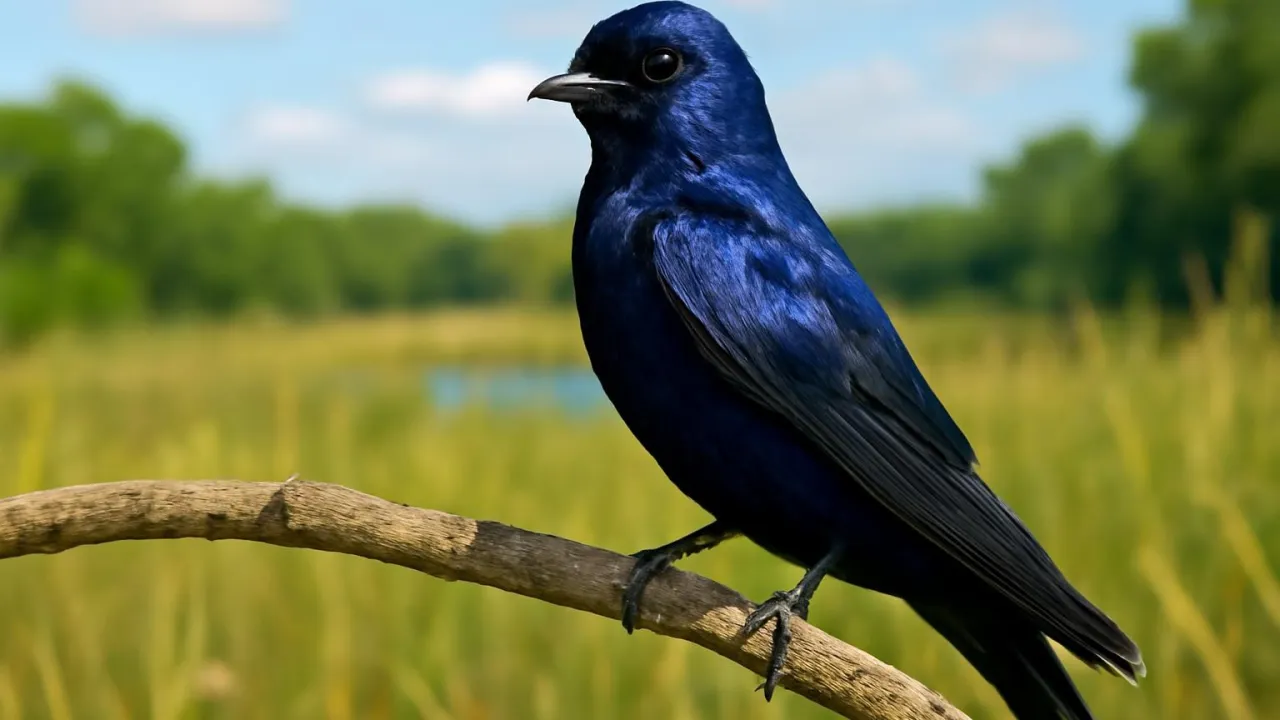
Purple martins can eat hundreds of insects each day to fuel their flights!
✨ Word Sparks (Grade 2 Glossary)
Tap 🔊 to hear
migration
When birds travel far to find food or warm homes
insects
Small animals with six legs like bugs and beetles
nest
A safe place birds build for their babies
🪝
Have you seen a shiny blue bird flying fast in the sky?
1
Shiny Blue Feathers
Purple martins have shiny blue feathers that sparkle in sunlight. They use their long wings to fly quickly and catch . Their small beaks help them grab bugs while flying.
2
Homes Near Water
These birds like to live near lakes or rivers where many bugs live. They build inside birdhouses or hollow trees to keep their babies safe. Purple martins often live close to people who put up special birdhouses.
3
Bug Catchers
Purple martins eat flying like mosquitoes and beetles. They catch bugs while soaring high in the air. Eating many bugs helps them stay healthy and strong during their long .
Purple martins are the largest swallow species in North America and amazing insect hunters!
✨ Word Sparks (Grade 3 Glossary)
Tap 🔊 to hear
camouflage
Colors that help animals hide from others
predator
An animal that hunts other animals for food
migration
Long travel to find food or better weather
🪝
How do purple martins use their shiny feathers to survive in the wild?
1
Shiny Feathers and Flight
Purple martins have glossy blue feathers that help them blend with the sky. This protects them from while flying. Their long, pointed wings give them great aerial agility to catch insects midair. These birds can quickly change direction to avoid danger.
2
Nesting and Habitat
Purple martins build nests in birdhouses or hollow trees, which protect their eggs and chicks. They prefer open areas near water where flying insects are plentiful. These habitats provide nutrients and shelter essential for raising their young. Humans often help by putting up martin houses.
3
Diet and Hunting
Their diet mainly includes flying insects such as mosquitoes, beetles, and dragonflies. Purple martins catch their prey during flight, using sharp eyesight and fast reflexes. This feeding method helps control insect populations, benefiting the ecosystem. Their hunting skills are an important adaptation for survival.
4
Migration and Survival
Purple martins migrate thousands of miles between North and South America each year. This long journey helps them find warmer climates and abundant food during winter. requires strong muscles and energy from eating many insects. Their ability to travel great distances is a key survival trait.
1. Why do purple martins have shiny blue feathers?
2. What is one way purple martins help the environment?
🤯 Mind-Blowing Fact • Grade 4
Purple martins can eat up to half their body weight in insects each day, helping control pests naturally.
✨ Word Sparks (Grade 4 Glossary)
Tap 🔊 to hear
iridescent
Shiny colors that change in the light
insectivore
An animal that eats mostly insects
habitat
The natural home where animals live
🪝
What role do purple martins play in their ecosystems and how do humans affect them?
1
Physical Adaptations and Flight
Purple martins have blue-black feathers that reflect sunlight, making them appear shiny in flight, which helps camouflage them against the sky and confuse predators. Their streamlined bodies and long, pointed wings allow for agile aerial maneuvers, enabling them to catch flying insects efficiently. These adaptations are critical for survival in open near water where insects are abundant.
2
Ecological Role and Food Web
As , purple martins play a vital role in controlling populations of mosquitoes, beetles, and other flying insects, which benefits human health and agriculture. They are prey for larger birds and mammals, fitting into a balanced food web. Their presence indicates a healthy ecosystem, and their nesting habits support biodiversity by providing shelter for other species.
3
Human Impact and Conservation
Humans have helped purple martins by providing specially designed birdhouses, which increase nesting success in urban and suburban areas. However, loss and competition from invasive species like European starlings threaten their populations. Conservation efforts focus on protecting nesting sites and educating people about the importance of these birds in ecosystems.
4
Geographic Distribution and Migration
Purple martins breed across much of North America, from Canada to the southern United States, and migrate to South America during winter. This long-distance migration requires significant energy, and they rely on stopover to rest and feed. Climate change and habitat destruction along migratory routes pose challenges to their survival.
2. What human action helps purple martins nest safely?
🤯 Mind-Blowing Fact • Grade 5
Purple martins can fly up to 30 miles per hour while catching insects mid-flight during long migrations.
✨ Word Sparks (Grade 5 Glossary)
Tap 🔊 to hear
aerial insectivore
A bird that eats insects while flying
iridescence
Shiny colors that change with light angles
metabolic rate
How fast an animal uses energy to live
🪝
How do purple martins’ biology and behavior reflect their role as aerial insectivores in North and South America?
1
Taxonomy and Scientific Classification
Purple martins belong to the family Hirundinidae, genus Progne, with the scientific name Progne subis. They are the largest swallow species native to North America. Their taxonomic classification relates closely to other that have evolved specialized flight and feeding adaptations to capture insects in midair.
2
Physiological Adaptations for Flight and Feeding
These birds have slender, streamlined bodies with long, pointed wings and a slightly forked tail, enabling rapid, agile flight. Their wide gape and short, strong beak allow them to efficiently catch flying insects during continuous aerial pursuit. Their feathers exhibit due to microscopic structures that reflect light, aiding in camouflage and mate attraction.
3
Migration Patterns and Energetics
Purple martins undertake long-distance migrations from breeding grounds in North America to wintering areas in South America, traveling thousands of miles annually. This journey requires high supported by consuming vast numbers of insects daily, sometimes up to half their body weight. Stopover sites are critical for resting and refueling during migration.
4
Conservation Status and Human Influence
While purple martins are currently listed as a species of least concern, their populations face threats from habitat loss, invasive species competition, and climate change. Human efforts to provide artificial nesting structures have helped stabilize some populations. Ongoing conservation focuses on habitat preservation and monitoring migratory corridors to mitigate environmental impacts.
5
Quantitative Comparisons and Ecological Impact
Purple martins measure approximately 7 to 8 inches in length and weigh about 1.5 to 2 ounces. They can consume hundreds of insects per day, significantly reducing pest populations such as mosquitoes. Their flight speed can reach up to 30 miles per hour, allowing efficient hunting. These ecological services underscore their importance in maintaining balanced ecosystems across their range.