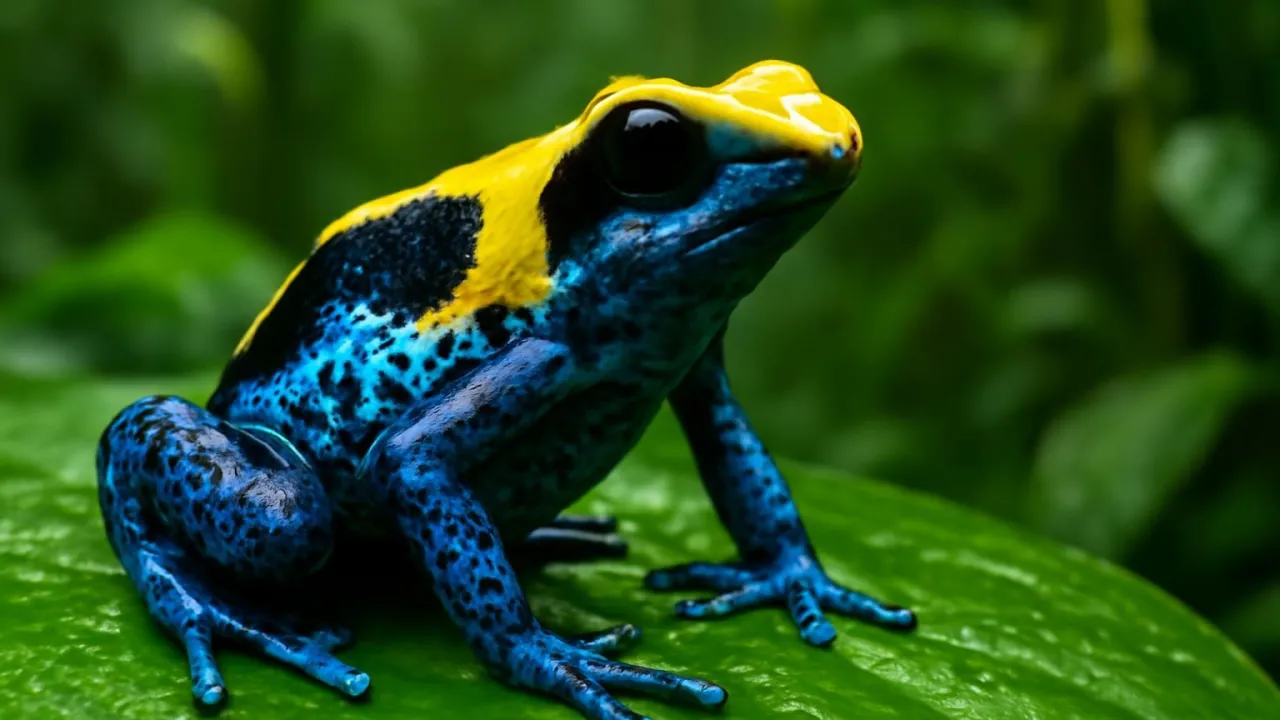
Some poison dart frogs can have over 200 times more poison than a rattlesnake!
✨ Word Sparks (Grade 2 Glossary)
Tap 🔊 to hear
predator
An animal that hunts other animals
warning
A sign to watch out
rainforest
A hot, wet, leafy forest
🪝
Why do these frogs wear neon colors?
1
Bright and Bold
Poison dart frogs have skin in bright blue, yellow, or orange colors. These colors help them stand out in the green . Their small bodies are shiny and smooth. They hop quickly from leaf to leaf.
2
Poison Power
Their skin makes poison that keeps them safe from hungry animals. The poison can make other animals sick if they try to eat the frog. The bright colors are a sign. learn not to mess with these frogs.
3
A Rainforest Home
These frogs live in warm, wet in Central and South America. They like to stay near water and hide under big leaves. Poison dart frogs eat ants, termites, and other tiny insects. Their food helps them make their poison.
A golden poison dart frog has enough toxin to harm 10 people!
✨ Word Sparks (Grade 3 Glossary)
Tap 🔊 to hear
aposematic
Bright colors that warn of danger
adaptation
A special trait that helps survival
toxin
A poison made by living things
🪝
Did you know some frogs wear warning colors like a stop sign?
1
Shocking Colors for Safety
Poison dart frogs are famous for their vivid blue, yellow, orange, or green skin. These colors are not for hiding—they are a warning called coloration. This tells predators that the frog is dangerous to eat. The brighter the color, the more poisonous the frog usually is.
2
How Poison Protects
The frog’s skin makes powerful poison from the insects it eats. This poison can make predators very sick or even kill them. Because of this, most animals learn to avoid these frogs. Some local people once used frog poison on their blow darts for hunting.
3
Life in the Rainforest
Poison dart frogs live in the warm, wet rainforests of Central and South America. They spend most of their time near water, hopping on leaves and logs. The frogs lay their eggs in wet places, and the tadpoles grow in small pools. The rainforest gives them everything they need to survive.
4
Tiny but Mighty
Most poison dart frogs are only about the size of a grape. Even though they are small, their poison is very strong. Some species are more poisonous than others. These frogs eat ants, termites, and beetles to get the chemicals for their poison.
Scientists study poison dart frog toxins to help create new medicines for humans!
✨ Word Sparks (Grade 4 Glossary)
Tap 🔊 to hear
aposematic
Bright warning colors in animals
deforestation
Cutting down lots of trees
amphibian
Animal that lives in water and on land
🪝
What if your skin could warn enemies to stay away?
1
Nature’s Neon Warning Signs
Poison dart frogs display some of the brightest colors in the animal kingdom, including blue, yellow, red, and green. These dazzling hues are an example of coloration, which is a survival adaptation that warns predators of their toxicity. The frogs’ skin contains potent toxins that can cause severe illness or even death in animals that try to eat them. As a result, most predators quickly learn to avoid these brightly colored .
2
Rainforest Experts
These frogs live in the humid rainforests of Central and South America, where rain falls almost every day. They thrive in the thick leaf litter and on low plants near streams and ponds. Their eggs are laid in moist places, and the parents often carry the tadpoles to small pools of water. The rainforest provides shelter, food, and the perfect environment for their unique life cycle.
3
How Frogs Make Poison
Poison dart frogs do not make their own toxins from scratch; instead, they get them from the ants, termites, and beetles they eat. The chemicals in these insects are stored in the frogs’ skin, making them poisonous to touch or eat. Interestingly, frogs raised in captivity without these insects are not poisonous, showing how important diet is to their defense.
4
Ecosystem Role and Conservation
Poison dart frogs play an important role in their rainforest ecosystems by controlling insect populations and serving as food for a few specialized predators. Sadly, their habitats are threatened by and pollution, putting many species at risk. Conservation programs are working to protect both the frogs and the rainforests they call home. Every frog matters for the balance of the ecosystem.
A golden poison dart frog’s toxin is 250 times stronger than cyanide by weight!
✨ Word Sparks (Grade 5 Glossary)
Tap 🔊 to hear
batrachotoxin
A super-strong poison made by these frogs
biodiversity
The variety of living things in nature
alkaloid
A plant chemical that can affect animals
🪝
Could a creature smaller than your thumb hold the rainforest’s deadliest secret?
1
Masters of Warning: Aposematic Coloration
Poison dart frogs, classified in the family Dendrobatidae, are renowned for their extraordinary aposematic coloration, which includes vibrant blues, yellows, reds, and greens. This coloration is a sophisticated evolutionary adaptation that signals their toxicity to potential predators, functioning as a biological stop sign. Unlike camouflage, which helps animals blend in, these frogs stand out boldly to advertise their danger. Research has shown that the intensity of their coloration often correlates with the potency of their toxins, making them a textbook example of warning coloration in nature.
2
Physiology of Toxicity
The potent toxins found in poison dart frogs’ skin are called , which interfere with nerve and muscle function in predators. These toxins are not produced by the frogs themselves but are derived from their specialized diet of -rich ants, termites, and beetles found in their native rainforest habitats. In captivity, when deprived of these insects, the frogs lose their toxicity entirely. A single golden poison dart frog (Phyllobates terribilis) can contain enough batrachotoxin to potentially harm 10 to 20 adult humans, making it one of the most poisonous animals on Earth.
3
Life Cycle and Reproductive Strategies
Poison dart frogs exhibit fascinating reproductive behaviors, including complex parental care. After eggs are laid in moist leaf litter, one parent—often the male—guards them until they hatch. The adult then transports the tadpoles on its back to tiny water-filled bromeliad plants or puddles, where they continue to develop. Some species even feed their tadpoles unfertilized eggs to ensure their survival, demonstrating remarkable adaptation to the challenging rainforest environment.
4
Ecological Role and Human Impact
In their native Central and South American rainforests, poison dart frogs play crucial roles in food webs as both insect predators and prey for specialized animals like snakes. Their presence helps regulate insect populations, supporting ecosystem health. Unfortunately, habitat destruction, pollution, and illegal pet trade have caused population declines in many species. Conservation efforts, such as protected reserves and captive breeding, are vital for their survival and for maintaining rainforest .
5
From Indigenous Knowledge to Modern Medicine
Indigenous peoples of Colombia historically used the frogs' skin toxins to tip blow darts for hunting, a practice that inspired the frogs’ common name. Today, scientists are studying for potential medical uses, such as developing new painkillers that work differently from traditional drugs. The story of the poison dart frog is a powerful example of how can benefit both nature and people, if carefully protected and respected.