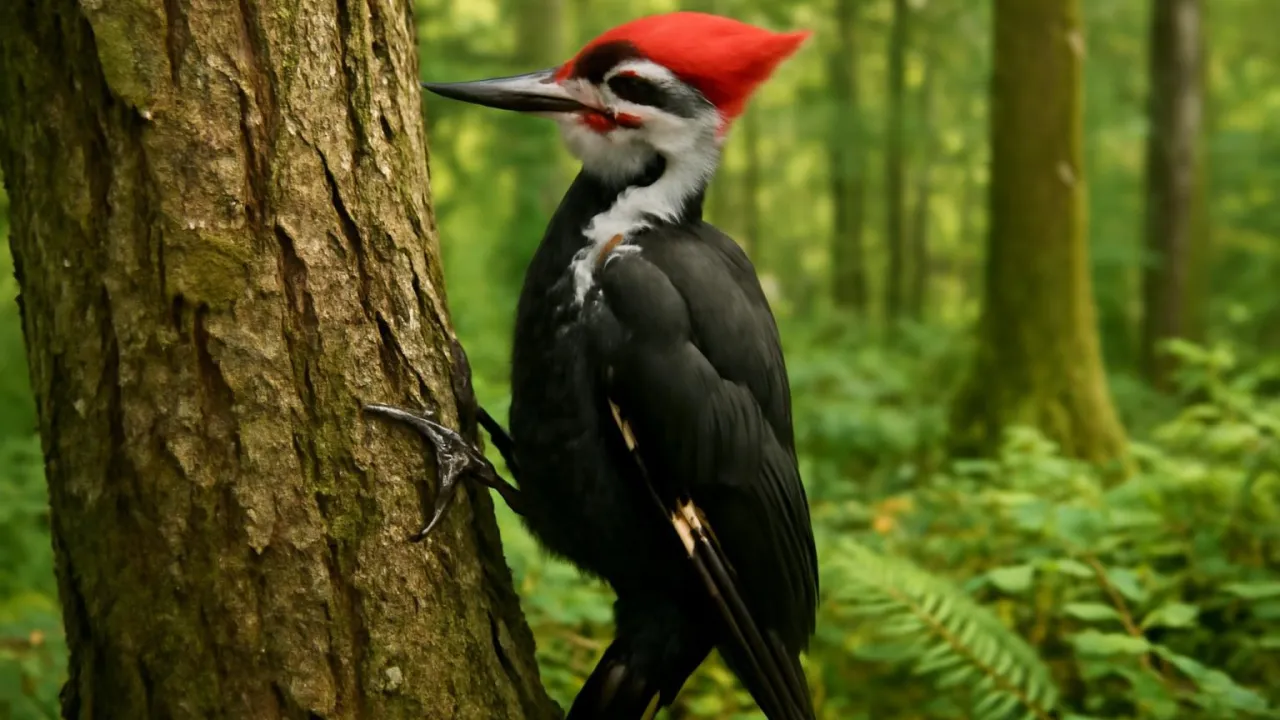
Pileated woodpeckers can peck up to 20 times every second while searching for food!
✨ Word Sparks (Grade 2 Glossary)
Tap 🔊 to hear
crest
Bright feathers on top of a bird’s head
nest
A home made by birds inside tree holes
insect
Small animals like ants and beetles
🪝
Can you imagine a bird that hammers on trees to find dinner?
1
Bright Colors and Loud Sounds
The pileated woodpecker has a bright red and black feathers with white stripes. It uses its strong beak to hammer loudly on trees. This loud drumming helps it find hiding inside the wood. Many people hear its tapping sound in the forest.
2
Forest Home and Nesting
These birds live in forests with tall trees and lots of dead wood. They carve big holes in trees to build for their babies. The nests keep eggs safe from other animals. Pileated woodpeckers stay in the same forest all year round.
3
Special Tools for Finding Food
Its long, sticky tongue helps catch ants and beetles deep inside tree holes. The bird’s beak is strong enough to break wood to reach . This helps the woodpecker get food that other birds cannot reach. It eats mostly bugs found in dead trees.
1. What helps the woodpecker catch insects deep inside trees?
2. Where do pileated woodpeckers build their nests?
🤯 Mind-Blowing Fact • Grade 3
Pileated woodpeckers can drum up to 20 times per second to communicate loudly.
✨ Word Sparks (Grade 3 Glossary)
Tap 🔊 to hear
camouflage
Colors that help animals hide in nature
predator
An animal that hunts other animals
adaptation
A body feature that helps survival
🪝
Did you know pileated woodpeckers use their beaks like hammers to find hidden food?
1
Appearance and Camouflage
The pileated woodpecker is one of the largest woodpeckers in North America. Its black feathers help it blend into dark forest trees. The bright red crest stands out and signals other birds. This bird’s strong beak and sharp claws help it cling to tree trunks.
2
Habitat and Nesting
Pileated woodpeckers live in mature forests with many dead trees. They carve large rectangular holes in wood to build nests. These holes provide shelter and protect their eggs from . The birds return to the same nesting sites year after year.
3
Finding Food and Adaptations
This woodpecker uses its powerful beak to chisel wood and find insects inside. Its long tongue can reach deep into tunnels to catch ants and beetle larvae. This helps it get nutrients other birds cannot. Woodpeckers also drum on trees to communicate with others.
4
Role in the Ecosystem
By making holes in trees, pileated woodpeckers create homes for other animals like owls and squirrels. They help control insect populations by eating many bugs. Their drumming sounds mark territory and attract mates. These birds play an important role in forest health.
1. How does the pileated woodpecker’s tongue help it find food?
2. Why do pileated woodpeckers make holes in trees?
🤯 Mind-Blowing Fact • Grade 4
Pileated woodpeckers’ drumming can be heard up to a mile away through the forest.
✨ Word Sparks (Grade 4 Glossary)
Tap 🔊 to hear
ecosystem
A community of plants and animals living together
biodiversity
Many different kinds of living things in one place
habitat
The natural home where an animal lives
🪝
How does the pileated woodpecker’s loud drumming shape its forest home and life?
1
Physical Features and Survival
The pileated woodpecker’s large size and bright red crest help it communicate and attract mates in dense forests. Its strong beak allows it to hammer deep into wood without injury, thanks to shock-absorbing skull bones. Its sharp claws and stiff tail feathers provide stability when climbing vertical tree trunks.
2
Ecosystem Role and Food Web
By feeding on wood-boring insects, pileated woodpeckers control pest populations that could damage trees. Their excavated holes create nesting sites for other species like owls, bats, and small mammals, supporting . This woodpecker is an important part of the forest food web, both as predator and prey.
3
Habitat and Geographic Range
Pileated woodpeckers inhabit mature deciduous and mixed forests across much of the eastern and western United States and southern Canada. They prefer areas with large standing dead trees, which provide food and nesting sites. loss from logging and urbanization has reduced some populations but they remain widespread.
4
Communication and Behavior
The loud drumming made by pileated woodpeckers serves to mark territory and attract mates during breeding season. They also use vocal calls to communicate with partners and warn rivals. Their drumming patterns vary by region, showing interesting behavioral adaptations to local environments.
1. What role do pileated woodpeckers play in their ecosystem?
2. Why is the pileated woodpecker’s drumming important?
🤯 Mind-Blowing Fact • Grade 5
The pileated woodpecker’s pecking force can reach 1,200 g’s, protecting its brain from damage during hammering.
✨ Word Sparks (Grade 5 Glossary)
Tap 🔊 to hear
Picidae
The bird family that includes woodpeckers
cavity nester
An animal that makes homes in holes in trees
symbiosis
When two species help each other survive
🪝
What makes the pileated woodpecker a master engineer of forest sound and structure?
1
Taxonomy and Scientific Context
The pileated woodpecker, Dryocopus pileatus, belongs to the family, which includes large woodpeckers. It is the largest woodpecker species native to North America, closely related to the ivory-billed woodpecker. Its genus name Dryocopus means 'tree cutter,' reflecting its powerful tree-chiseling behavior and ecological niche.
2
Physiological Mechanics of Pecking
This bird’s skull contains spongy bone tissue that absorbs shock from repeated hammering. Its strong neck muscles and chisel-like beak allow it to peck at speeds up to 20 times per second without brain injury. The tongue can extend up to 4 inches, coated with sticky saliva to extract insects from deep tunnels inside wood.
3
Conservation and Habitat Challenges
Although widespread, pileated woodpecker populations face habitat loss due to logging and urban sprawl. Conservation efforts focus on preserving mature forests with dead standing trees essential for nesting and feeding. These woodpeckers serve as indicator species, reflecting the health of forest ecosystems over time.
4
Ecological Impact and Symbiotic Relationships
By excavating large cavities, pileated woodpeckers provide shelter for secondary like owls, bats, and squirrels. Their predation on wood-boring insects helps maintain tree health and forest balance. This symbiotic relationship supports biodiversity and enhances forest resilience against pests and diseases.
5
Quantitative Comparisons and Behavior
Pileated woodpeckers measure 16 to 19 inches tall and weigh about 9 to 12 ounces. They can drum at 12 to 20 strikes per second, producing sounds audible up to one mile away. Their nests are typically 10 to 30 feet above ground, and they maintain territories spanning several hundred acres during breeding seasons.