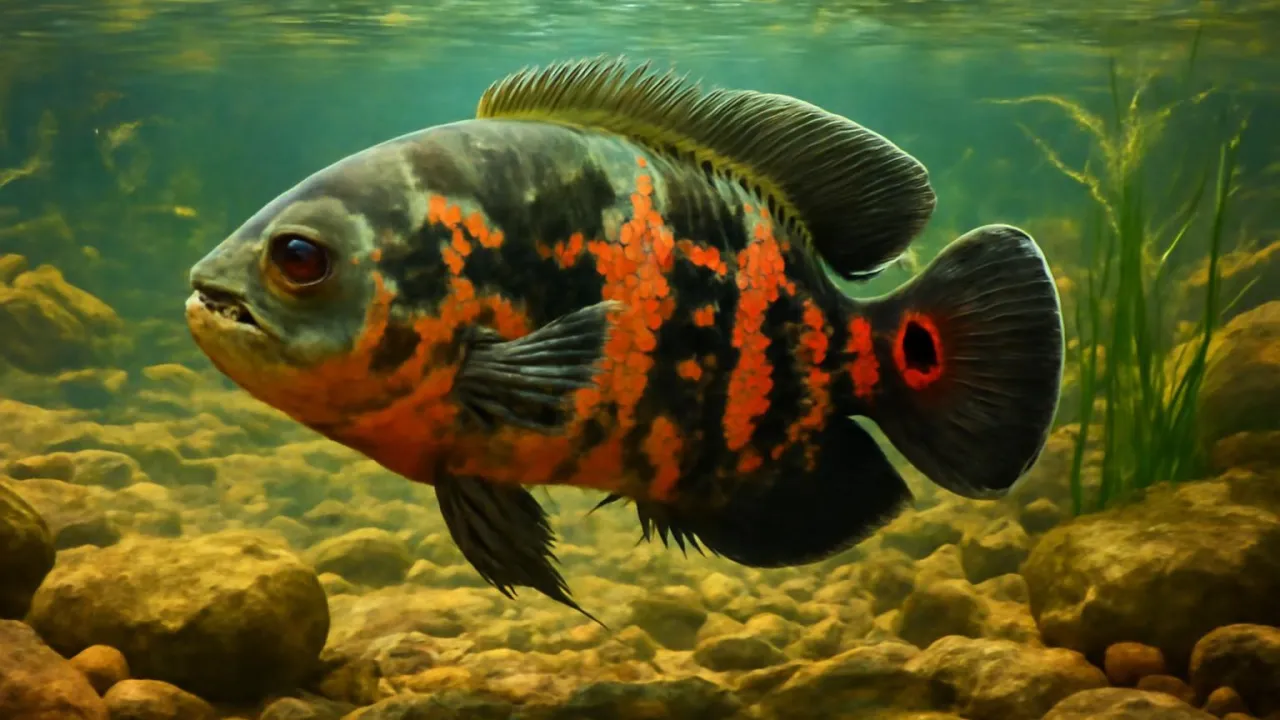
Oscar cichlids can recognize their owners and even learn simple tricks.
✨ Word Sparks (Grade 2 Glossary)
Tap 🔊 to hear
cichlid
A type of fish with bright colors and big fins.
carnivore
An animal that eats meat or other animals.
habitat
The place where an animal lives and grows.
🪝
Have you ever seen a fish that can change colors and play games?
1
Colorful Appearance
Oscar have bright orange and black spots on their bodies. Their colors help them hide in the water. Sometimes their colors change when they feel happy or scared.
2
Home in the Wild
These fish live in slow rivers and lakes in South America. They swim near plants and rocks where they feel safe. They like warm water that is not too deep.
3
What They Eat
Oscar eat small fish, insects, and worms. They use their strong mouths to catch food quickly. They are , which means they eat meat.
Oscar cichlids can remember faces and solve puzzles like clever pets.
✨ Word Sparks (Grade 3 Glossary)
Tap 🔊 to hear
camouflage
Colors that help animals hide in their home.
territorial
Protecting a space from others nearby.
nutrients
Food parts that help animals grow strong.
🪝
Did you know Oscar cichlids can change their colors to hide from predators?
1
Color and Camouflage
Oscar cichlids have bright orange and black patterns that help them . Their colors can change slightly depending on their mood or surroundings. This helps them avoid predators and sneak up on prey. Camouflage is a clever way animals stay safe in the wild.
2
Habitat and Behavior
These fish live in freshwater rivers and lakes in South America. They prefer slow-moving water with lots of plants and hiding spots. Oscar cichlids are and protect their space from other fish. They use their strong fins to swim quickly and escape danger.
3
Diet and Feeding
Oscar cichlids are carnivores that eat small fish, insects, and worms. They use their sharp teeth to catch and eat prey. Their diet provides important for growth and energy. Feeding behavior helps them survive and thrive in their habitat.
4
Smart Fish
Oscar cichlids are known for their intelligence and problem-solving skills. They can recognize their owners and learn simple tricks. This shows how some fish have advanced brain functions. Their smart behavior helps them adapt to changing environments.
Oscar cichlids help keep river ecosystems balanced by controlling smaller fish populations.
✨ Word Sparks (Grade 4 Glossary)
Tap 🔊 to hear
ecosystem
A community of plants and animals living together.
predator
An animal that hunts other animals for food.
conservation
Protecting nature and animals from harm.
🪝
How does the Oscar cichlid’s bright color affect its role in river ecosystems?
1
Color and Survival
The Oscar cichlid’s bright orange and black colors serve as both camouflage and warning signals to . These colors can change with mood or environment, helping the fish blend into plants or warn rivals. This adaptation increases their chances of survival in complex river habitats. Their color patterns also play a role in mating displays to attract partners.
2
Ecosystem Role
Oscar cichlids are important in freshwater food webs, controlling populations of smaller fish and insects. Their hunting helps balance aquatic by preventing overpopulation. They also serve as prey for larger animals, linking different levels of the food chain. Their presence supports biodiversity and healthy river environments.
3
Geographic Distribution
Native to the Amazon and Orinoco river basins, Oscar cichlids thrive in tropical South America. They prefer slow-moving waters with muddy bottoms and dense vegetation. Human activity, such as aquarium trade, has introduced them to other regions, sometimes impacting local . Understanding their native habitat helps protect these fish and their environments.
4
Human Impact
The aquarium trade has increased demand for Oscar cichlids worldwide, raising concerns about wild population declines. Habitat destruction from deforestation and pollution threatens their natural homes. efforts focus on sustainable trade and protecting river habitats. Educating people about their ecological role encourages responsible pet ownership.
1. What role do Oscar cichlids play in their ecosystem?
2. Why is conservation important for Oscar cichlids?
🤯 Mind-Blowing Fact • Grade 5
Oscar cichlids use specialized pigment cells to change colors for communication and camouflage.
✨ Word Sparks (Grade 5 Glossary)
Tap 🔊 to hear
chromatophores
Cells that help animals change their skin color.
taxonomy
How scientists group and name living things.
ecological balance
When nature’s plants and animals live in harmony.
🪝
What makes the Oscar cichlid a fascinating subject in fish biology and conservation today?
1
Scientific Classification and Origin
The Oscar cichlid, scientifically named Astronotus ocellatus, belongs to the Cichlidae family, which includes diverse freshwater fish. Native to the Amazon and Orinoco basins, these fish have adapted to tropical freshwater environments with slow-moving, warm waters rich in vegetation. Their evolutionary history shows remarkable adaptations that help them survive in competitive river ecosystems. Understanding their helps scientists study fish biodiversity.
2
Physiological Adaptations and Behavior
Oscar cichlids possess specialized jaw muscles and teeth that allow them to capture and consume a wide variety of prey, including small fish and insects. Their ability to change color is controlled by pigment cells called , which respond to environmental and emotional cues. This color change aids in communication, camouflage, and mating displays. Additionally, their cognitive skills enable them to recognize human caretakers and solve simple puzzles.
3
Ecological Importance and Human Impact
As mid-level predators, Oscar cichlids regulate prey populations, maintaining in freshwater habitats. However, habitat destruction from deforestation and pollution threatens their natural populations. The aquarium trade has introduced Oscars to non-native areas, sometimes causing ecological disruptions. Conservation efforts emphasize habitat protection and responsible pet trade to preserve wild stocks and ecosystem health.
4
Botanical and Culinary Curiosity
While the Oscar cichlid is a fish, it shares its name with a famous culinary dish, which can confuse some people. Unlike botanical fruits or plants, Oscars are animals with complex behaviors and ecological roles. This distinction highlights the importance of scientific naming to avoid confusion between living organisms and human culture. Learning about such differences deepens our understanding of biology.
5
Quantitative Comparisons and Research
Oscar cichlids can grow up to 18 inches (45 centimeters) long and weigh around 3 pounds (1.4 kilograms). Their swimming speed can reach up to 5 miles per hour (8 kilometers per hour) when chasing prey. Studies show they can live for 10 to 15 years in captivity with proper care. Ongoing research investigates their cognitive abilities and environmental adaptations to better protect this remarkable species.