🏢 WorkplaceChildren's hospitals, school nutrition offices, athletic training tables, and wellness clinics
⚡ Everyday Impact SparkTranslates vitamin, mineral, and energy science into delicious meals that help bodies heal, grow, and play
🤯 Mind-Blowing Fact • Grade 1
Red tomatoes, orange sweet potatoes, green spinach, and purple blueberries each carry different plant superpowers for your eyes, heart, and skin!
✨ Word Sparks (Grade 1 Glossary)
Tap 🔊 to hear
nutrient
Helpful part of food bodies need daily
vitamin
Tiny food helper keeping bodies working well
balanced
Having healthy amounts from different food groups
🪝
Why does 'eating a rainbow' of fruits and veggies make you run faster and feel strong?
1
Colors on Your Plate
Crunch into an orange carrot and pop sweet blue berries! Bright foods pack secret helpers inside. Guiding families to pick healthy fuel is a nutritionist & dietitian.
2
Food Is Body Fuel
Just like cars need clean power to roll, your body needs good food to play! Milk builds strong bones, and beans build strong muscles.
3
Planning School Lunches
Many dietitians plan tasty school menus so every kid gets energy to learn and grow!
1. What do nutritionists mean when they say 'eat a rainbow'?
2. Where might you eat a lunch planned by a school dietitian?
🤯 Mind-Blowing Fact • Grade 2
More than half of your entire body weight is plain water—which is why nutritionists remind athletes and students to sip water all day long!
✨ Word Sparks (Grade 2 Glossary)
Tap 🔊 to hear
protein
Nutrient that builds and repairs body muscles
calcium
Mineral building strong bones and healthy teeth
hydration
Giving your body enough fresh water daily
🪝
How do the five food groups team up to heal scraped knees, build bones, and power soccer games?
1
Building a Balanced Plate
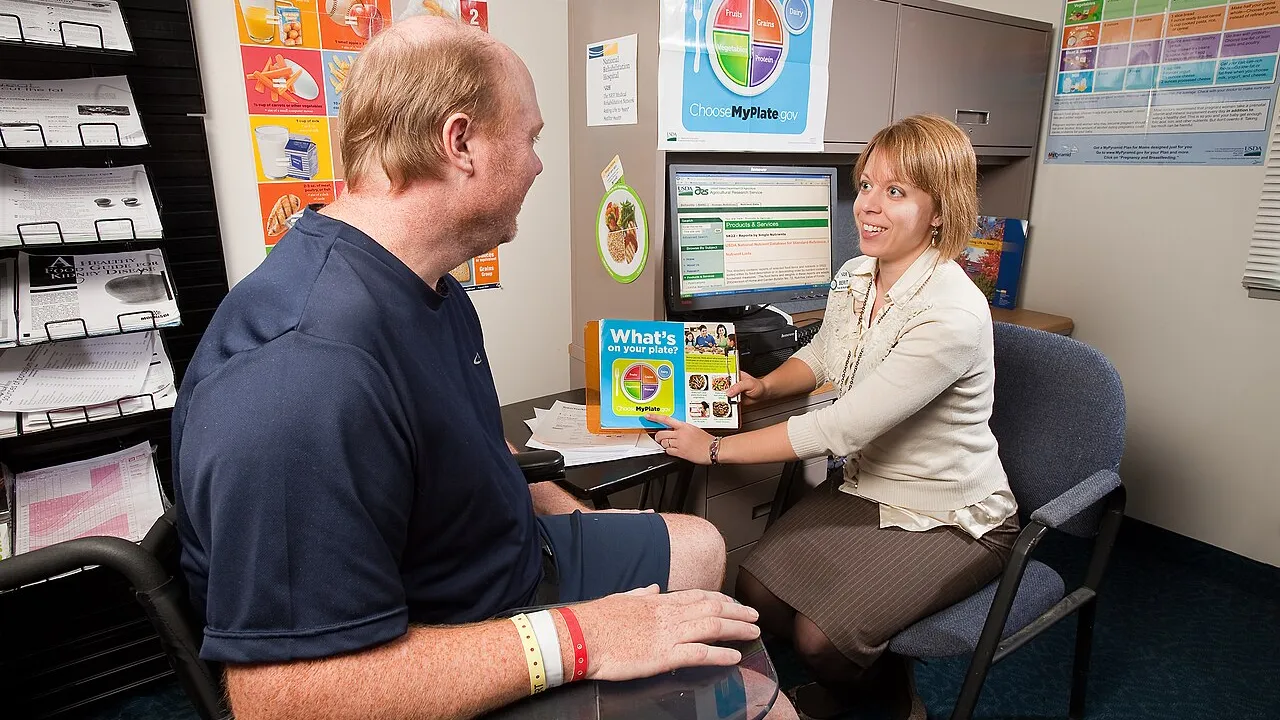
Look at the colorful MyPlate chart on a clinic wall: fruits, vegetables, grains, , and dairy all share space! Explaining how those five food groups team up inside your body is the specialty of a nutritionist & dietitian.
2
Every Nutrient Has a Job
Whole grains give steady energy for thinking and running. foods—like chicken, eggs, tofu, and beans—repair muscles and heal cuts. Meanwhile, in yogurt or fortified soy milk builds sturdy teeth and bones, and water keeps everything cool!
3
Helping Picky Eaters and Allergies
If a child cannot eat peanuts or wheat, a dietitian finds yummy, safe swaps so no nutrients are missed.
1. Which nutrient works like building blocks to repair muscles and heal a scraped knee?
2. How does a dietitian help a kid who is allergic to cow's milk?
🤯 Mind-Blowing Fact • Grade 3
Sailors centuries ago got sick on long ocean voyages until doctors and early nutrition pioneers realized a splash of lemon or lime juice supplied missing Vitamin C!
✨ Word Sparks (Grade 3 Glossary)
Tap 🔊 to hear
calorie
A unit measuring energy stored in food
carbohydrate
Starches and sugars giving quick body energy
fiber
Plant part keeping digestion smooth and healthy
🪝
How do sports dietitians fuel Olympic swimmers—and how do hospital dietitians help patients heal faster?
1
Decoding Nutrition Facts Labels
Flip over any cereal box or granola bar wrapper and you will spot a black-and-white Nutrition Facts chart! Teaching kids and families how to spot , vitamins, serving sizes, and sneaky added sugars is a favorite skill of a nutritionist & dietitian.
2
Macros and Micros
Scientists sort nutrients into two teams. Macronutrients—, proteins, and healthy fats—supply , which measure food energy. Micronutrients—vitamins and minerals like Vitamin C in oranges and iron in spinach—are needed in tiny amounts to fight germs and carry oxygen in your blood!
3
Hospital Healing Plans
Inside hospitals, Registered Dietitians team up with doctors to design medical meal plans for newborn babies, kids with diabetes, and patients recovering from surgery.
4
Fueling Champions
Sports dietitians time pre-game oatmeal, halftime banana electrolytes, and post-game recovery smoothies so athletes never run out of steam!
1. What does a 'calorie' on a Nutrition Facts label actually measure?
2. What important job does the mineral iron (found in beans, meats, and spinach) do inside your body?
🤯 Mind-Blowing Fact • Grade 4
Pairing Vitamin C foods—like bell peppers or orange slices—with plant-based iron foods like black beans or spinach can triple how much iron your body absorbs from the meal!
✨ Word Sparks (Grade 4 Glossary)
Tap 🔊 to hear
metabolism
Chemical reactions turning food into body energy
glucose
Simple blood sugar fueling brain and muscles
celiac disease
Condition where wheat gluten harms digestion
🪝
What is the real difference between a Registered Dietitian and a general nutritionist—and how do they honor every family's food culture?
1
Clinical Science Meets Family Traditions
Walk into a pediatric clinic and listen carefully: instead of handing every family the exact same bland checklist, a skilled nutritionist & dietitian asks what dishes Grandma cooks on Sundays! Whether a household enjoys corn tortillas and black beans, lentil dal, collard greens, or stir-fried bok choy, healthy nutrition works across every cultural cuisine.
2
Registered Dietitian Credentials
While many people interested in wellness call themselves nutritionists, a *Registered Dietitian Nutritionist (RDN)* completes rigorous university coursework in biochemistry, anatomy, and physiology, logs over a thousand supervised clinical practice hours, and passes a national board exam. That medical training qualifies RDNs to deliver Medical Nutrition Therapy in hospitals.
3
Managing Blood Sugar and Celiac Disease
For children living with Type 1 diabetes, pediatric dietitians teach carbohydrate counting alongside insulin timing so blood stays steady during recess, tests, and soccer practice. For patients with , they guide strict gluten-free meal planning so the small intestine heals and absorbs nutrients smoothly.
4
Community Food Access
Public health nutritionists also partner closely with Virginia farmers' markets, community food banks, pediatricians, and school vegetable gardens so fresh, affordable produce reaches families in every neighborhood.
1. What extra training sets a Registered Dietitian Nutritionist (RDN) apart?
2. Why does squeezing lemon juice or adding bell peppers to a bean salad boost nutrition?
🤯 Mind-Blowing Fact • Grade 5
Your digestive tract hosts roughly 38 trillion helpful microscopic microbes—the gut microbiome—that digest plant fibers human enzymes cannot break down on their own and even manufacture Vitamin K!
✨ Word Sparks (Grade 5 Glossary)
Tap 🔊 to hear
amino acid
Molecular building block forming every body protein
gut microbiome
Helpful trillions of microbes aiding human digestion
electrolyte
Minerals like sodium helping nerves and muscles
🪝
How do Registered Dietitians combine biochemistry, gut-microbiome research, and clinical care to treat disease with precision nutrition?
1
Biochemistry on a Hospital Tray
Inside a neonatal intensive care unit, a premature infant weighing less than three pounds receives a custom intravenous nutrient solution calculated down to milligrams of , lipids, , and trace minerals. Formulating that lifesaving prescription alongside physicians and pharmacists is a clinical Registered Dietitian Nutritionist (RDN) applying human biochemistry in real time.
2
Pioneers of Nutritional Science
Modern dietetics emerged when chemists discovered that calories alone cannot sustain life. After Scottish naval surgeon James Lind ran one of medicine's first controlled clinical trials aboard HMS Salisbury in 1747—proving citrus cured scurvy—twentieth-century biochemists like Casimir Funk and Elmer McCollum isolated individual vitamins. In 1917, trailblazers Lenna Frances Cooper and Lulu Graves founded the American Dietetic Association during World War I to conserve food and advance hospital nutrition.
3
Glycemic Control and the Gut Microbiome
Today's RDNs hold graduate degrees and analyze how whole-food matrices affect human physiology. Soluble prebiotic fibers in oats, legumes, and apples feed trillions of beneficial bacteria in the , which ferment fiber into short-chain fatty acids that strengthen immunity and gut health! Simultaneously, pairing complex carbohydrates with unsaturated fats and complete proteins moderates post-meal blood glucose spikes.
4
Evidence Over Fad Myths
Online feeds overflow with contradictory diet fads. Dietitians evaluate peer-reviewed clinical trials to separate marketing hype from evidence-based guidance, promoting positive, balanced relationships with food for growing youths and athletes.
5
Public Health Policy
At the national level, research dietitians shape the USDA Dietary Guidelines and the National School Lunch Program—nourishing more than thirty million students every school day.