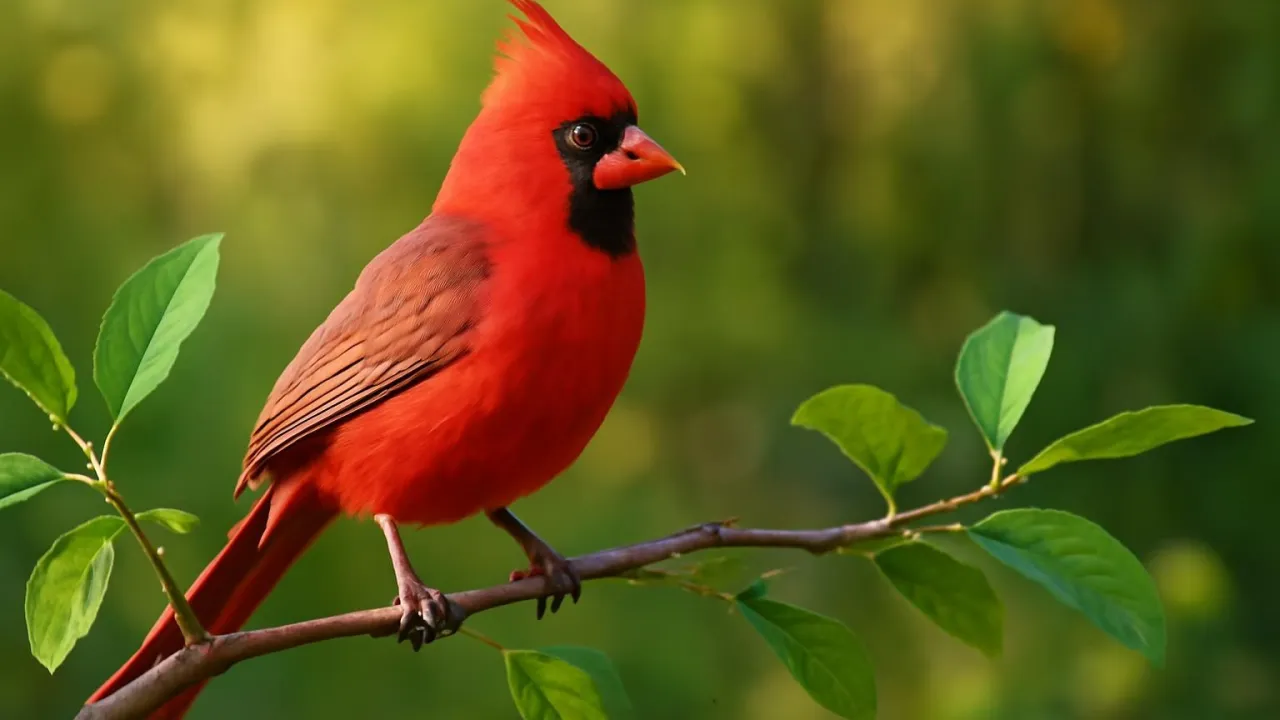
Northern Cardinal
The Red Songbird With a Secret
Only boy cardinals are bright red!
Have you ever seen a red bird sing?
1 Red in the Trees
Look! A red bird sits high. Its are so bright. It has a black face. Its is orange.
2 What Do Cardinals Eat?
This bird likes and bugs. It hops and pecks for food. Sometimes it eats berries. It eats all day long.
3 Listen to Its Song
The cardinal sings loud songs. It whistles from the tree. You can hear it in spring. Its song is very sweet.
1. What color is the cardinalโs beak?
2. What do cardinals like to eat?
Cardinals can sing over a dozen different songs!
Did you know some birds wear red all year?
1 A Flash of Red
Male northern cardinals are bright red, but females are brown with red hints. Both have a tall on their heads, which makes them easy to spot. Their thick orange beaks help them crack open seeds. Cardinals are often seen in backyards and parks.
2 Where Cardinals Live
Northern cardinals live in bushes, woodlands, and gardens across eastern North America. They build cup-shaped in low branches or shrubs. Cardinals do not , so you can see them even in winter. Their red feathers stand out against snow and green leaves.
3 Songs and Snacks
Cardinals sing loud, whistling songs to talk and find mates. They eat seeds, berries, and insects, using their strong beaks. Sometimes, they visit bird feeders for sunflower seeds. Their songs and colors make them favorite backyard birds.
1. Why are cardinals easy to spot in winter?
2. What do cardinals use their beaks for?
Cardinals sometimes feed seeds to their mates as a sign of bonding!
What bird sings the sunrise in a burst of red?
1 Spotting a Cardinal
Male northern cardinals are famous for their bright red and black faces. Females are light brown with hints of red on their wings and tails. Both sexes have a pointed crest on top of their heads, making them look like theyโre wearing a crown. Their thick, cone-shaped beaks are perfect for cracking seeds.
2 Cardinal Homes
Cardinals live in woodlands, gardens, and city parks across eastern and central North America. They build cup-shaped nests hidden in dense shrubs or low branches to protect their eggs from . Cardinals do not migrate, so they stay in their territory year-round. Their bright colors are especially easy to see against snowy winter backgrounds.
3 Songs and Survival
Cardinals are known for their loud, whistling songs that sound like โcheer, cheer, cheerโ or โbirdie, birdie, birdie.โ They use these songs to claim territory and attract mates. Cardinals are , eating seeds, fruits, and insects for a balanced diet. Their strong beaks help them break tough seeds that other birds cannot eat.
4 Special Adaptations
Cardinals have special adaptations to survive in many habitats. Their bright feathers warn rivals and attract mates, while their brownish color helps females hide from . Cardinalsโ songs travel far, helping them communicate through thick leaves and trees. Since they do not migrate, they must find food even when snow covers the ground.
1. Why do female cardinals have duller colors?
2. What does a cardinalโs strong beak help it do?
Both male and female cardinals sing, which is rare for North American songbirds!
How does a splash of red brighten snowy winter days?
1 Brilliant Red and Clever Camouflage
Male northern cardinals display vivid red feathers, which make them highly visible in snowy or green environments, while females are mostly brown with subtle red highlights, helping them blend into their surroundings and avoid predators. Both males and females have a tall, pointed crest and a thick, cone-shaped beak designed for cracking seeds. The bright coloration of males plays a key role in attracting mates, while the muted tones of females provide camouflage during nesting. This difference in coloration is an example of , which is common in many bird species.
2 Home Among the Branches
Northern cardinals are found throughout eastern and central North America, from southern Canada to Mexico, and they thrive in woodlands, gardens, and city parks. They build cup-shaped nests in dense shrubs or low tree branches, which helps protect their eggs and chicks from predators like snakes and blue jays. Cardinals do not migrate, so they must adapt to changing seasons and find food even in winter. Their year-round presence and striking appearance make them a favorite among birdwatchers.
3 Songs, Calls, and Social Life
Cardinals are famous for their loud, whistling songs, which both males and females sing to claim territory and communicate with each other. Their songs can be heard over long distances, especially in the early morning or late afternoon. Cardinals are mostly , and pairs often stay together for several breeding seasons. During courtship, males may feed seeds to females as a bonding behavior, and both parents help feed their chicks. This social cooperation increases the chances of their young surviving.
4 Cardinals in the Ecosystem
Northern cardinals play important roles in their by spreading seeds from the fruits they eat and providing food for predators such as hawks and owls. Their presence in gardens can help control insect populations, since they eat many types of bugs. Human activities, like planting native shrubs and putting out bird feeders, have helped cardinals expand their range northward. However, habitat loss and window collisions still threaten some cardinal populations, reminding us to protect their habitats.
1. How do cardinals help plants in their ecosystem?
2. What helps female cardinals protect their nests?
The northern cardinal is the official state bird of seven U.S. statesโthe most of any bird!
What makes the northern cardinal a backyard superstar and a scientific marvel?
1 Taxonomy and Unique Features
The northern cardinal, scientifically named Cardinalis cardinalis, belongs to the family Cardinalidae, which includes grosbeaks and buntings. This species is instantly recognizable by the maleโs brilliant red plumage, black facial mask, and prominent crest, while females display a subtle blend of brown and reddish tones. Both sexes have robust, conical beaks specialized for cracking hard seeds, a trait that distinguishes them from other songbirds. in plumage and behavior is pronounced, with males using their coloration to attract mates and defend territory. The cardinalโs song repertoire is unusually complex, with individuals capable of producing over 24 distinct song patterns.
2 Habitat, Range, and Adaptation
Northern cardinals inhabit a wide range of environments, including deciduous forests, woodland edges, suburban gardens, and city parks across eastern and central North America, from southern Canada to northern Guatemala. Unlike many songbirds, cardinals are non-migratory, remaining in their territories throughout the year and adapting to seasonal changes in food availability. Their ability to exploit bird feeders and ornamental shrubs has allowed them to expand their range northward over the past century. Cardinals build well-hidden, cup-shaped nests in dense vegetation, typically 3 to 10 feet (1โ3 meters) above the ground, providing protection from predators and harsh weather.
3 Physiology and Survival Strategies
Cardinals possess several physiological adaptations that enhance their survival. Their strong jaw muscles and thick beaks generate enough force to crack open seeds with tough shells, such as sunflower and safflower seeds. In winter, cardinals fluff their feathers to trap warm air, helping them maintain body temperature even in subfreezing conditions. Their vision is adapted for detecting movement and color, which aids in finding food and spotting predators. Both males and females sing, a rare trait among North American songbirds, and their vocalizations serve to defend territory, attract mates, and coordinate with their partner. Cardinalsโ non-migratory lifestyle requires them to locate food sources year-round, making them highly resourceful.
4 Role in Ecosystems and Human Impact
Northern cardinals play a crucial ecological role by dispersing seeds from the fruits they consume, which supports plant diversity and forest regeneration. They also help regulate insect populations by feeding on beetles, caterpillars, and grasshoppers. Cardinals are prey for larger birds such as hawks and owls, making them an important link in food webs. Human activities have both benefited and threatened cardinals: suburban landscaping and bird feeders have increased their numbers, but habitat loss and window collisions still pose risks. Conservation efforts focus on protecting native vegetation and reducing hazards in urban areas.
5 Amazing Numbers and Lasting Legacy
A northern cardinal weighs about 1.5 ounces (42 grams) and measures 8.3โ9.1 inches (21โ23 centimeters) in length, with a wingspan of 9.8โ12.2 inches (25โ31 centimeters). Cardinals can live up to 15 years in the wild, although most survive 3โ5 years due to predation and environmental hazards. Their striking appearance and melodic songs have made them state birds in seven U.S. states, more than any other species. Cardinals are also featured in art, sports, and folklore, symbolizing hope and cheerfulness. Their adaptability and beauty ensure their continued presence in both wild and human-altered landscapes.
1. How do northern cardinals survive cold winters without migrating?
2. What is one way humans have helped cardinal populations grow?