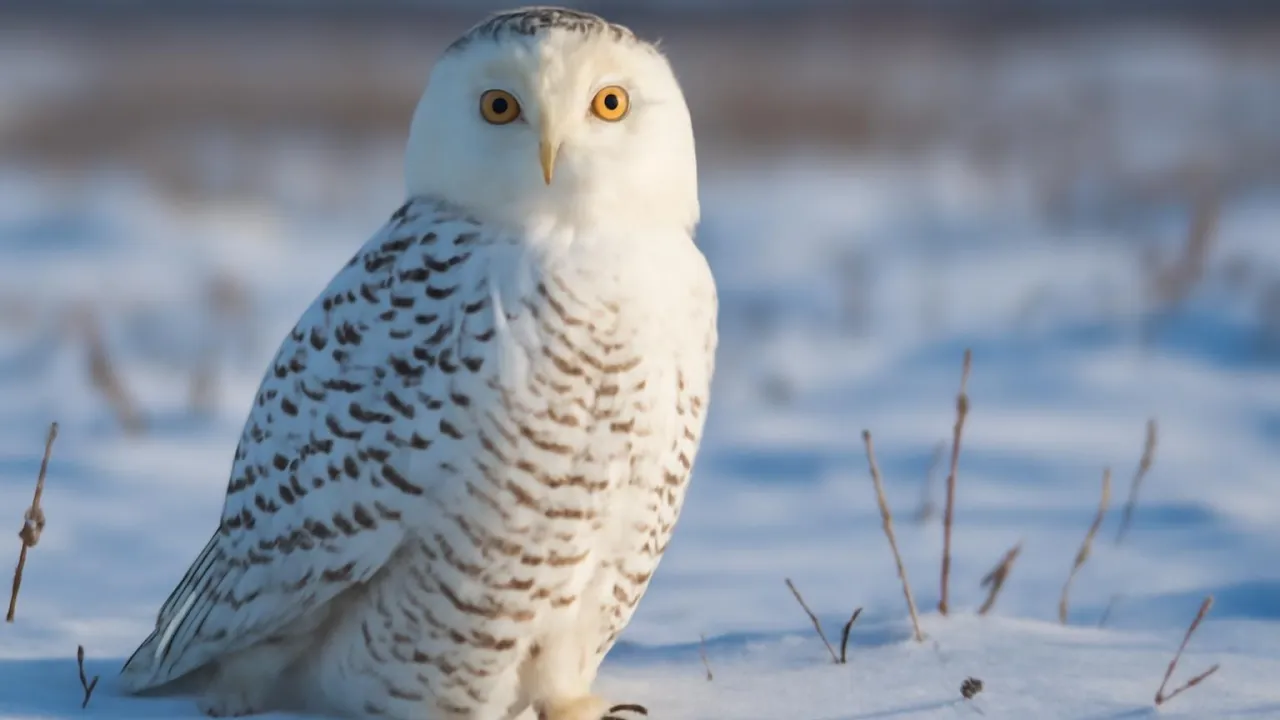
Snowy owls can fly silently because their feathers are specially shaped to stop sound.
✨ Word Sparks (Grade 2 Glossary)
Tap 🔊 to hear
camouflage
Colors that help animals hide in nature
tundra
Cold land with no tall trees
prey
Animals that are hunted and eaten
🪝
Have you ever wondered how snowy owls stay warm in icy places?
1
Snowy Owl’s White Feathers
Snowy owls have thick white feathers that help them blend into snowy places. Their feathers keep them warm during cold winters. They also use feathers on their feet like warm boots.
2
Where Do They Live?
Snowy owls live in the Arctic and open fields. They like places with lots of snow and cold weather. In winter, some owls fly south to find food.
3
What Do They Eat?
Snowy owls eat small animals like lemmings, birds, and mice. They hunt mostly at night but can hunt during the day. Their sharp eyes help them spot far away.
Snowy owls can see prey from over a mile away, even in dim Arctic light.
✨ Word Sparks (Grade 3 Glossary)
Tap 🔊 to hear
camouflage
Colors or patterns that help animals hide
prey
Animals hunted and eaten by others
adaptation
A trait that helps animals survive
🪝
How does the snowy owl’s white feathers help it survive in the cold Arctic?
1
Camouflage in the Snow
The snowy owl’s white feathers provide excellent in snowy environments. This camouflage helps it avoid predators and sneak up on easily. Its feathers also reflect sunlight to prevent overheating during bright days. This is vital for survival in harsh Arctic conditions.
2
Silent Flight for Hunting
Snowy owls have special feathers that allow silent flight, which helps them surprise . Silent flight reduces noise from wing movement, so prey do not hear the owl coming. This stealth is important for catching animals like lemmings and small birds. It is a key for hunting in open tundra.
3
Habitat and Range
Snowy owls live mainly in the Arctic tundra, where temperatures are very cold. During winter, some migrate south to find food in open fields and grasslands. Their habitat includes areas with few trees and lots of snow. This wide range helps them find throughout the year.
4
Diet and Hunting Skills
Snowy owls primarily eat lemmings but also hunt birds and small mammals. They use keen eyesight and hearing to locate under snow or in low light. Their strong talons help catch and hold slippery prey. This diet supports their energy needs in cold climates.
Snowy owls can migrate over 1,000 miles to find food during harsh winters.
✨ Word Sparks (Grade 4 Glossary)
Tap 🔊 to hear
ecosystem
All living things and their home together
migration
Animals moving to new places for food or warmth
predator
An animal that hunts other animals
🪝
What makes the snowy owl a key hunter in the Arctic ecosystem?
1
Camouflage and Survival
The snowy owl’s white feathers provide camouflage that helps it blend into the snowy Arctic tundra, protecting it from and aiding in hunting. This camouflage is a cause-and-effect adaptation that increases its chances of survival in harsh, open environments. Without this ability, the owl would be more visible to both prey and predators.
2
Silent Flight and Hunting Success
Snowy owls have specialized wing feathers that muffle sound, allowing silent flight which is crucial for sneaking up on prey. This silent flight directly affects their hunting success by surprising animals like lemmings and small birds. Their role as helps control prey populations in the Arctic food web.
3
Ecosystem Role and Human Impact
As top , snowy owls play an important role in maintaining balance in Arctic by controlling small mammal populations. Human activities like climate change and habitat disturbance affect their food supply and patterns. Conservation efforts focus on protecting their habitat to ensure ecosystem health.
4
Geographic Distribution and Migration
Snowy owls breed in the Arctic tundra but migrate south in winter when food is scarce. Their covers vast distances across North America and Eurasia. This wide geographic range allows them to adapt to seasonal changes and find food in different environments.
Snowy owls can fly silently at speeds up to 40 miles per hour while hunting in freezing Arctic winds.
✨ Word Sparks (Grade 5 Glossary)
Tap 🔊 to hear
diurnal
Active during the day and night
plumage
Bird’s feathers covering its body
apex predator
Top animal hunter in its ecosystem
🪝
How do snowy owls’ unique adaptations enable them to thrive in extreme Arctic environments?
1
Taxonomy and Scientific Classification
The snowy owl, scientifically named Bubo scandiacus, belongs to the family Strigidae, which includes true owls. It is one of the largest owls and is uniquely adapted to Arctic conditions. Unlike many owls, it is , hunting during both day and night. Its classification reflects evolutionary adaptations to cold, open habitats.
2
Physiological Adaptations for Cold
Snowy owls have dense, insulating feathers covering their entire body, including legs and feet, to minimize heat loss. Their white provides camouflage in snow-covered landscapes, reducing predation risk. They possess large eyes adapted for excellent vision in low-light Arctic conditions. These physiological traits enable survival in temperatures below freezing.
3
Conservation Status and History
Currently, snowy owls are classified as vulnerable due to habitat loss and climate change impacting prey availability. Historically, their populations have fluctuated with lemming cycles, their primary food source. Conservation efforts focus on monitoring populations and protecting Arctic tundra habitats. Understanding their ecological role helps guide preservation strategies.
4
Quantitative Comparisons and Behavior
Snowy owls can weigh up to 4.5 pounds (2 kilograms) and have wingspans reaching 5 feet (1.5 meters). They can fly silently at speeds up to 40 miles per hour (64 kilometers per hour). Their migration distances can exceed 1,000 miles (1,600 kilometers) during food shortages. These measurable traits highlight their impressive physical capabilities.
5
Ecological Impact and Adaptations
As , snowy owls regulate populations of small mammals, especially lemmings, influencing Arctic food webs. Their silent flight and keen senses are critical adaptations for hunting in open, snowy environments. Climate change threatens their habitat, making ongoing research vital for understanding long-term survival prospects.