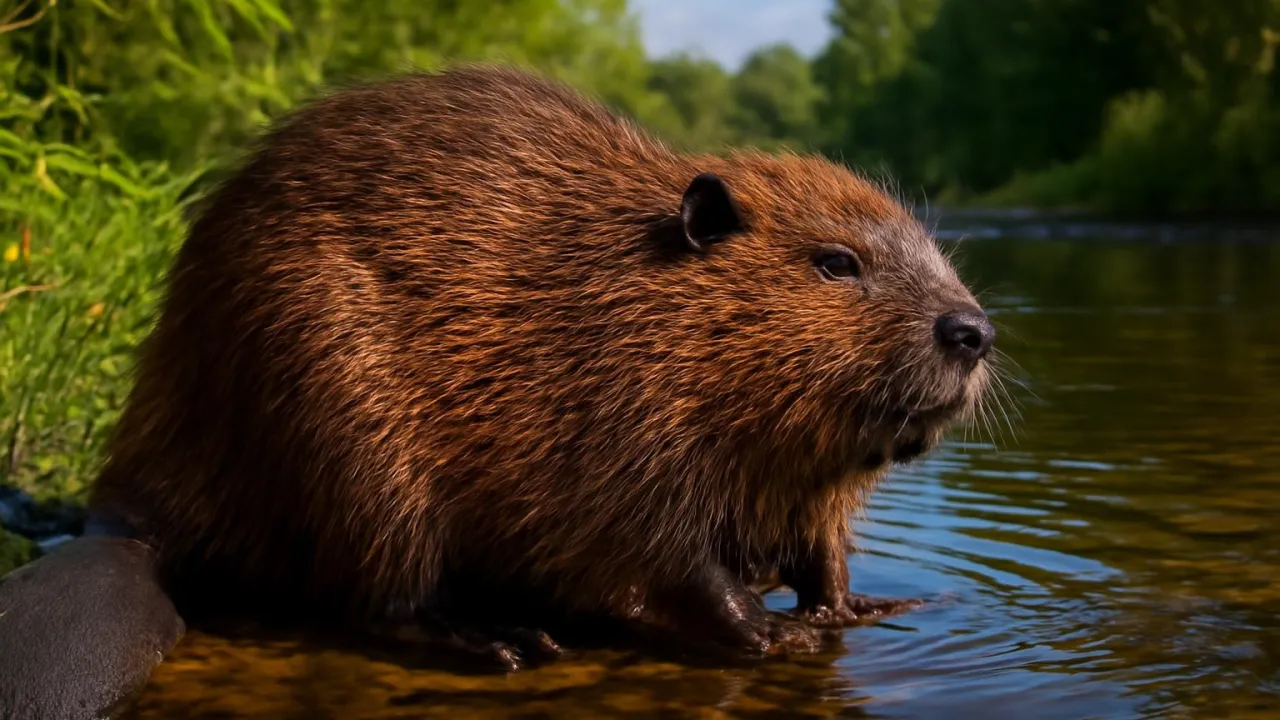
Beavers can hold their breath underwater for up to 15 minutes!
✨ Word Sparks (Grade 2 Glossary)
Tap 🔊 to hear
pond
A small lake made by beaver dams
predator
An animal that hunts other animals
mud
Wet dirt that beavers use to build
🪝
Have you ever seen a beaver building a dam in a river?
1
How Beavers Build Homes
Beavers build dams using sticks and to block river water. They create where they live safely. Their homes, called lodges, float in these ponds.
2
Where Beavers Live
Beavers live near rivers and lakes in North America. They need fresh water to build their homes. The water protects them from .
3
Beaver’s Special Teeth
Beavers have strong, sharp teeth that never stop growing. They use these teeth to cut down trees and branches. Their teeth help them build dams and lodges.
Beavers can move more than 220 pounds of wood in one night to build dams!
✨ Word Sparks (Grade 3 Glossary)
Tap 🔊 to hear
adaptation
A body change that helps animals survive
camouflage
Colors that help animals hide from danger
herbivore
An animal that eats only plants
🪝
Did you know beavers are nature’s engineers who change rivers?
1
Beaver Engineering and Adaptation
Beavers build dams that create ponds, which help protect them from predators. Their flat tails act as rudders, helping them steer underwater. This allows them to swim efficiently in their watery habitat. Their strong teeth continuously grow, which is crucial for gnawing wood.
2
Habitat and Survival
Beavers live in freshwater habitats like rivers and lakes across North America. They use sticks and mud to build lodges, which serve as safe homes. These lodges provide shelter and warmth during cold winters. The water surrounding lodges helps beavers avoid predators.
3
Diet and Nutrient Intake
Beavers are that eat bark, leaves, and aquatic plants to get nutrients. They store branches underwater to eat during winter months. This food storage is an important survival strategy. Their diet helps maintain the forest ecosystem by pruning trees.
4
Camouflage and Protection
The brown fur of beavers provides natural in muddy waters and forests. This helps them avoid predators such as wolves and bears. Their lodges also have underwater entrances, making it hard for enemies to enter. These increase their chance of survival.
1. Why do beavers build lodges surrounded by water?
2. What helps beavers swim well underwater?
🤯 Mind-Blowing Fact • Grade 4
Beaver dams can last for decades, shaping landscapes for many years!
✨ Word Sparks (Grade 4 Glossary)
Tap 🔊 to hear
ecosystem
A community of plants and animals living together
wetlands
Areas where land is covered by water much of the time
conservation
Protecting nature and animals from harm
🪝
How do North American beavers change their environment and help other animals?
1
Ecosystem Engineers
North American beavers build dams that create ponds, which change the flow of rivers and streams. These ponds provide habitats for many other animals, including fish, birds, and amphibians. By flooding areas, beavers increase biodiversity and improve water quality. Their building activities have a major effect on the ’s health.
2
Cause and Effect of Dam Building
When beavers build dams, water levels rise, creating that store floodwaters and reduce erosion. These wetlands filter pollutants and provide nutrients to plants. However, dams can sometimes flood human areas, causing conflicts. Despite this, beavers play a vital role in maintaining healthy freshwater .
3
Geographic Range and Habitat
Beavers are found throughout most of North America, from Canada to northern Mexico. They prefer freshwater habitats such as rivers, lakes, and marshes with plenty of trees nearby. Their presence indicates a healthy environment because they need good water and forest resources. Human activities like logging can reduce beaver habitats.
4
Human Impact and Conservation
Beavers were once hunted for fur and nearly disappeared in some areas, but efforts have helped populations recover. Today, beavers are protected in many regions to preserve their environmental benefits. People sometimes build artificial dams to mimic beaver activity and improve habitats. Understanding beavers helps humans balance nature and development.
1. What do beaver dams create that helps many animals live?
2. Why are beavers important to ecosystems?
🤯 Mind-Blowing Fact • Grade 5
Beaver dams can create wetlands that store thousands of liters of water and support hundreds of species!
✨ Word Sparks (Grade 5 Glossary)
Tap 🔊 to hear
keystone species
An animal that helps many others survive
incisors
Front teeth used for cutting and gnawing
webbed feet
Feet with skin between toes for swimming
🪝
What scientific secrets make the North American beaver a key species in freshwater ecosystems?
1
Taxonomy and Scientific Classification
The North American beaver, Castor canadensis, belongs to the family Castoridae within the order Rodentia. It is one of two extant species of beaver worldwide, the other being the Eurasian beaver. This species is native to North America, where it plays a crucial ecological role. Its classification highlights its evolutionary adaptations for aquatic life.
2
Physiological Adaptations and Mechanics
Beavers possess specialized coated with iron-rich enamel that continuously grow to counteract wear from gnawing wood. Their large, flat tails serve multiple functions, including balance, communication by tail slapping, and propulsion in water. Webbed hind feet enhance swimming efficiency, while their dense fur provides insulation against cold water temperatures. These adaptations enable beavers to thrive in aquatic environments.
3
Ecological Role and Conservation History
Beavers are considered because their dam-building activities create wetlands that support diverse flora and fauna. Historically, overhunting for fur drastically reduced their populations, leading to significant ecological changes. Conservation efforts since the early 20th century have restored many beaver populations, improving water quality and biodiversity in affected regions. Their presence is now a positive indicator of ecosystem health.
4
Quantitative Comparisons and Environmental Impact
A single beaver can move over 100 kilograms (220 pounds) of wood and mud in one night while constructing dams up to several meters high. Their dams can alter water flow over areas spanning hundreds of square meters, creating wetlands that regulate local climates. Beavers can hold their breath underwater for up to 15 minutes, allowing extended underwater construction. These impressive capabilities make them powerful ecosystem engineers.
5
Human Interactions and Future Challenges
Modern human development sometimes conflicts with beaver habitats, causing flooding of roads and farmland. However, innovative management strategies now include beaver deceivers to control water levels without harming beavers. Climate change also poses challenges by altering water availability and habitat conditions. Continued research and adaptive conservation are essential to sustain beaver populations and their environmental benefits.