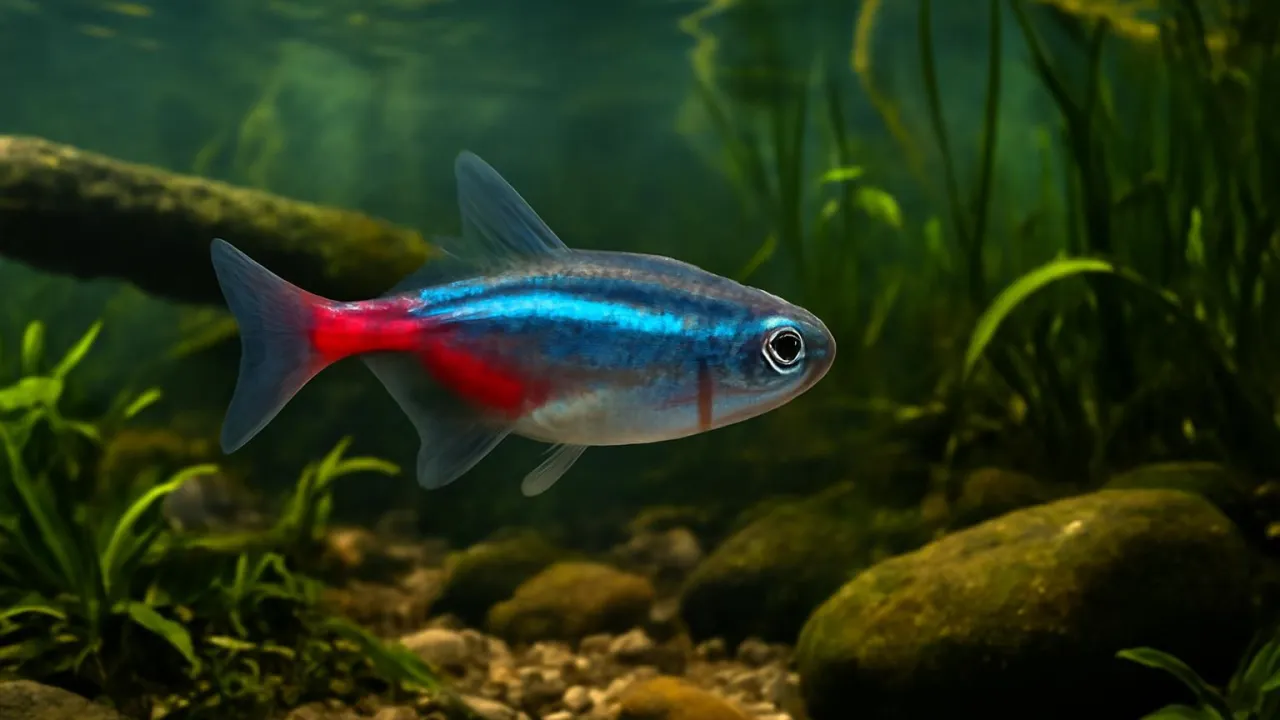
Neon tetras use their glowing stripes to communicate with other fish in dark waters!
✨ Word Sparks (Grade 2 Glossary)
Tap 🔊 to hear
predator
An animal that hunts other animals for food
school
A group of fish swimming together
diet
The food an animal eats to stay healthy
🪝
Have you ever seen a fish that glows like a tiny rainbow?
1
Shiny Stripes
Neon tetras have bright blue and red stripes that glow in water. Their colors help them hide from . They look like tiny glowing jewels swimming in groups.
2
Living in Rivers
These fish live in warm, slow-moving rivers in the Amazon. They swim together in groups called for safety. The water is soft and shaded by trees above.
3
Eating Tiny Food
Neon tetras eat small insects and bits of plants in the water. They use their small mouths to catch food quickly. Their helps them grow strong and healthy.
Neon tetras’ glowing stripes are a natural adaptation to their dark, shadowy river homes.
✨ Word Sparks (Grade 3 Glossary)
Tap 🔊 to hear
camouflage
Colors that help animals hide in their homes
nutrients
Food parts that help animals grow strong
adaptation
A special trait that helps animals survive
🪝
How do neon tetras use their glowing stripes to survive in the wild?
1
Bright Color Adaptations
Neon tetras have bright blue and red stripes that help with in dark water. These colors confuse predators by blending with light patterns. Their glowing stripes also help them find each other in murky rivers.
2
Habitat in the Amazon
They live in the Amazon Basin’s slow-moving streams and rivers. The water is soft and shaded by dense plants. This habitat provides and shelter from larger predators.
3
Diet and Feeding
Neon tetras feed on tiny insects and plant matter floating in the water. Their small mouths allow them to quickly catch food. This diet provides the needed for growth and energy.
4
Schooling Behavior
Neon tetras swim in schools to protect themselves from predators. Schooling creates confusion for attackers and improves survival chances. This social behavior is an important for safety.
Neon tetras’ glowing stripes evolved to help them survive in dark, plant-filled Amazon waters.
✨ Word Sparks (Grade 4 Glossary)
Tap 🔊 to hear
ecosystem
All living things and their homes working together
symbiosis
Animals helping each other to live and grow
deforestation
Cutting down many trees that hurt animal homes
🪝
Why do neon tetras’ glowing stripes help them survive in the complex Amazon ecosystem?
1
Glowing Stripes and Survival
Neon tetras’ bright blue and red stripes create camouflage in dim river waters, confusing predators and helping them avoid being eaten. This adaptation evolved because their habitat is dark and full of hiding places. Their glowing colors also help them recognize each other and maintain school formations. These colors make it easier for them to find mates and stay together.
2
Role in the Amazon Ecosystem
Neon tetras play an important role as both predator and prey in the Amazon food web. They eat small insects and plant matter, controlling insect populations. At the same time, they provide food for larger fish and birds, maintaining balance in their . Their presence supports many other species in the river.
3
Habitat and Geographic Range
These fish live in the slow-moving, soft-water streams of the Amazon Basin, mainly in Brazil and Peru. The shaded waters with plenty of plants offer shelter and breeding grounds. Human activities like and pollution threaten their habitat and survival. Protecting these areas is vital for their future.
4
Schooling and Social Behavior
Neon tetras swim in tight schools to confuse predators and increase their survival chances. This social behavior is a key adaptation that improves their ability to find food and avoid danger. Their schooling also helps with breeding and communication. Group living strengthens their chances of thriving in the wild.
Neon tetras’ iridescent stripes come from light-reflecting cells called iridophores unique to their species.
✨ Word Sparks (Grade 5 Glossary)
Tap 🔊 to hear
iridophores
Cells that reflect light to make colors shine
taxonomy
How scientists group and name living things
nutrient cycling
How nutrients move through nature’s living things
🪝
How do neon tetras’ unique physiology and behavior support their survival in the Amazon Basin?
1
Taxonomy and Scientific Classification
Neon tetras belong to the Characidae family, genus Paracheirodon, species innesi. They are small freshwater fish native to the Amazon Basin in South America. Their scientific classification helps researchers understand their evolutionary relationships and ecological roles. This classification places them among other small, colorful characins.
2
Physiological Adaptations and Mechanics
Their iridescent blue and red stripes result from specialized cells called that reflect light in unique ways. This physiological trait provides effective camouflage in dim, tannin-stained waters common in their habitat. Neon tetras have streamlined bodies and small mouths adapted for quick feeding on tiny insects and plant debris, enabling efficient energy use.
3
Conservation and Environmental Impact
Neon tetra populations face threats from habitat loss due to deforestation and water pollution in the Amazon Basin. Conservation efforts focus on protecting river habitats and promoting sustainable aquarium trade practices. Maintaining clean, shaded waterways is essential for their survival and the health of the entire ecosystem.
4
Ecological Role and Food Web Dynamics
As both prey and predator, neon tetras balance insect populations and provide food for larger aquatic and avian predators. Their schooling behavior enhances survival by confusing predators and improving foraging efficiency. They contribute to within their freshwater ecosystems, supporting biodiversity.
5
Quantitative Comparisons and Interesting Metrics
Neon tetras grow to about 1.5 inches (4 cm) and swim at speeds up to 1.5 miles per hour (2.4 km/h). They live in water temperatures ranging from 70 to 81 degrees Fahrenheit (21 to 27 degrees Celsius). Their small size and vibrant colors make them popular in home aquariums worldwide, with millions traded annually.