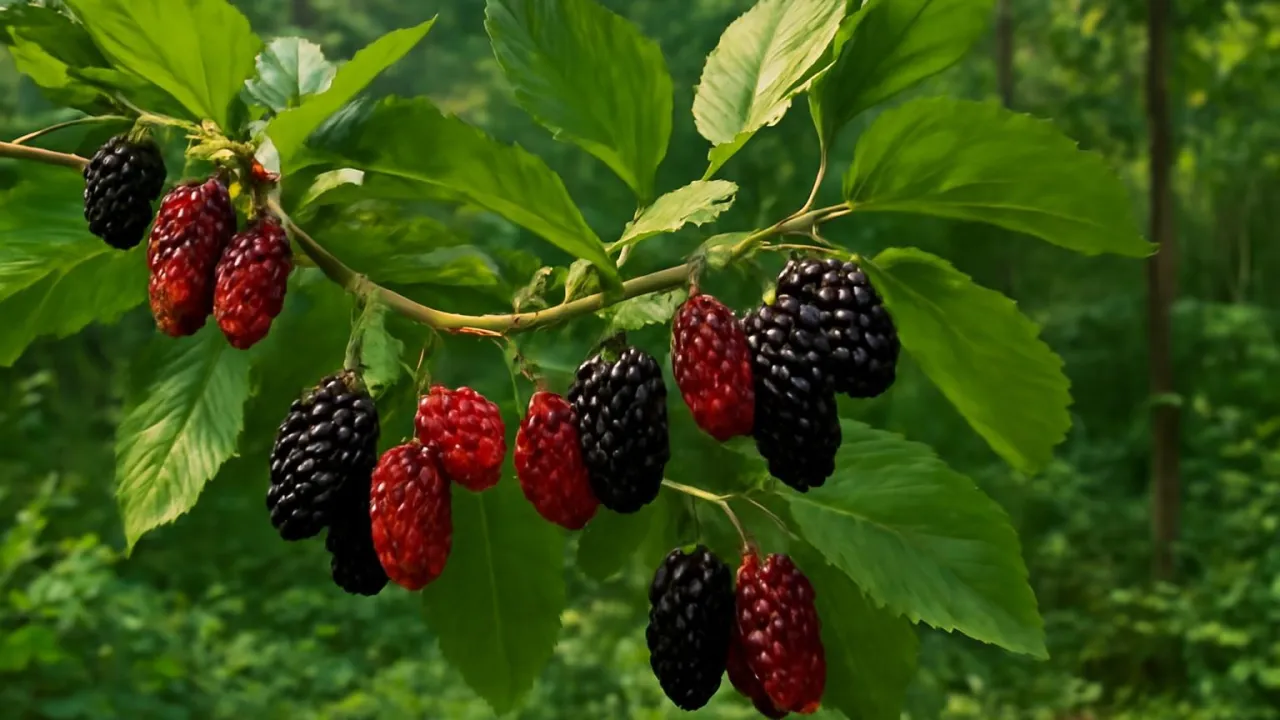
Mulberries can change color from green to red to purple as they ripen.
✨ Word Sparks (Grade 2 Glossary)
Tap 🔊 to hear
ripe
Ready to eat and sweet.
harvest
To pick fruits or crops to eat.
vitamins
Good nutrients that keep us healthy.
🪝
Have you ever seen berries that change color as they grow?
1
Mulberries Grow on Trees
Mulberries grow on tall trees that like warm sunny places. The leaves are green and broad. People pick the berries when they turn dark purple or red. Birds and animals also eat the berries.
2
Berries Change Colors
Mulberries start green and then turn red as they grow. When fully , they become dark purple or black. This color change shows the berries are ready to eat. The berries are soft and sweet.
3
Sweet and Juicy Fruit
Mulberries taste very sweet and juicy when . They are soft and easy to eat. People use them in jams, pies, and drinks. Mulberries are healthy and full of .
Mulberries help spread their seeds by attracting animals with their color and sweetness.
✨ Word Sparks (Grade 3 Glossary)
Tap 🔊 to hear
ripen
To become ready to eat and sweet.
pollinate
Help flowers make seeds by moving pollen.
camouflage
To blend in and hide from others.
🪝
Did you know mulberries change color to show they are ready to eat?
1
Mulberry Trees and Habitat
Mulberries belong to the Morus genus and grow in warm temperate areas. They thrive in sunny locations with well-drained soil. The trees can reach up to 50 feet tall and have broad leaves. Their habitat helps them get enough sunlight and water.
2
Color Change and Ripening
Mulberries start green and gradually change to red, then dark purple or black when ripe. This color change helps animals spot the fruit for eating and seed dispersal. The berries are soft and juicy, which attracts birds and mammals. This adaptation helps the plant spread its seeds.
3
Role in the Ecosystem
Mulberries provide food for many animals like birds and insects, which help flowers. They also support predators by feeding prey species. The tree’s leaves can some insects, protecting them from predators. This shows the mulberry’s important role in its ecosystem.
4
Human Uses and Benefits
People harvest mulberries for fresh eating and making jams or drinks. Mulberries contain nutrients like vitamins and antioxidants that support health. Farmers sometimes grow mulberries to feed silkworms, which produce silk. This shows how mulberries connect nature and human life.
Mulberries support ecosystems and humans by feeding animals and producing silk through silkworms.
✨ Word Sparks (Grade 4 Glossary)
Tap 🔊 to hear
photosynthesis
How plants use sunlight to make food.
symbiosis
A helpful relationship between living things.
nutrients
Substances plants and animals need to grow.
🪝
How do mulberries play a key role in nature and human life?
1
Mulberry Tree Habitat and Growth
Mulberry trees thrive in temperate and subtropical regions where they receive ample sunlight and moderate rainfall. Their broad leaves capture sunlight efficiently, enabling to produce energy. These trees can grow up to 50 feet tall, adapting to various soil types for better nutrient absorption. Their growth depends on suitable climate conditions that affect fruit production.
2
Ripening Process and Animal Interaction
Mulberries undergo a color transformation from green to red and finally to dark purple or black as they ripen, signaling readiness for consumption. This change attracts birds and mammals, which eat the berries and disperse their seeds through droppings, aiding plant reproduction. The soft texture and sweet flavor further entice animals to feed on them. This mutual relationship benefits both the plant and the animals.
3
Ecosystem Role and Symbiosis
Mulberries contribute to food webs by providing nourishment for herbivores and supporting pollinators that help flowers reproduce. The tree’s leaves offer shelter and camouflage for insects, protecting them from predators. Additionally, farmers cultivate mulberries to feed silkworms, which produce silk, demonstrating a symbiotic relationship between humans and nature. These interactions highlight the mulberry’s ecological importance.
4
Human Uses and Environmental Impact
Humans harvest mulberries for fresh consumption, jams, and beverages due to their rich nutrient content, including vitamins and antioxidants. Sustainable farming of mulberries supports local economies and biodiversity by maintaining habitats. However, overharvesting or habitat loss can threaten wild mulberry populations. Conservation efforts aim to balance human use with environmental protection to preserve this valuable fruit.
1. Why do animals eat mulberries when they are ripe?
2. How do mulberries help humans besides food?
🤯 Mind-Blowing Fact • Grade 5
Mulberries have fed silkworms for over 5,000 years, enabling ancient silk production.
✨ Word Sparks (Grade 5 Glossary)
Tap 🔊 to hear
anthocyanin
Pigment that colors fruits purple or red.
frugivorous
Animals that eat mostly fruit.
mutualism
A relationship where both species benefit.
🪝
What makes mulberries scientifically fascinating in nature and human culture?
1
Scientific Classification and Distribution
Mulberries belong to the genus Morus within the family Moraceae, native to temperate and subtropical zones worldwide. These deciduous trees grow up to 15 meters tall and thrive in diverse soil conditions. Their widespread distribution includes Asia, Europe, and North America, adapting to various climates. This adaptability has allowed mulberries to become important both ecologically and economically.
2
Physiological Adaptations and Ripening
Mulberries exhibit a unique ripening process where fruit color changes from green to red, then to dark purple or black, signaling optimal sweetness and seed maturity. This physiological mechanism involves pigment changes such as accumulation, which also protects against ultraviolet damage. The soft, juicy texture aids seed dispersal by attracting animals. These adaptations enhance reproductive success in different environments.
3
Ecological and Agricultural Significance
Mulberries play a critical role in ecosystems by providing food for birds, mammals, and insects, supporting complex food webs. Their leaves serve as primary food for silkworms (Bombyx mori), which humans have cultivated for silk production for thousands of years. This agricultural relationship exemplifies , where both species benefit. Moreover, mulberries contribute to soil stabilization and biodiversity in agroforestry systems.
4
Conservation and Environmental Challenges
While mulberries are widely cultivated, wild populations face threats from habitat loss and climate change, impacting genetic diversity. Conservation efforts focus on protecting natural habitats and promoting sustainable harvesting practices. Research into mulberry genetics aids breeding programs for disease resistance and climate adaptability. Preserving mulberry diversity is crucial for ecological balance and future agricultural use.
5
Quantitative Comparisons and Uses
Mulberry trees can grow 9 to 15 meters tall and produce berries weighing about 1 to 2 grams each. The ripening process typically spans two to three weeks, with fruit sugar content increasing significantly. Silkworm larvae consume approximately 100 kilograms of mulberry leaves during development. These measurable traits highlight mulberries’ importance in both natural ecosystems and human industries.