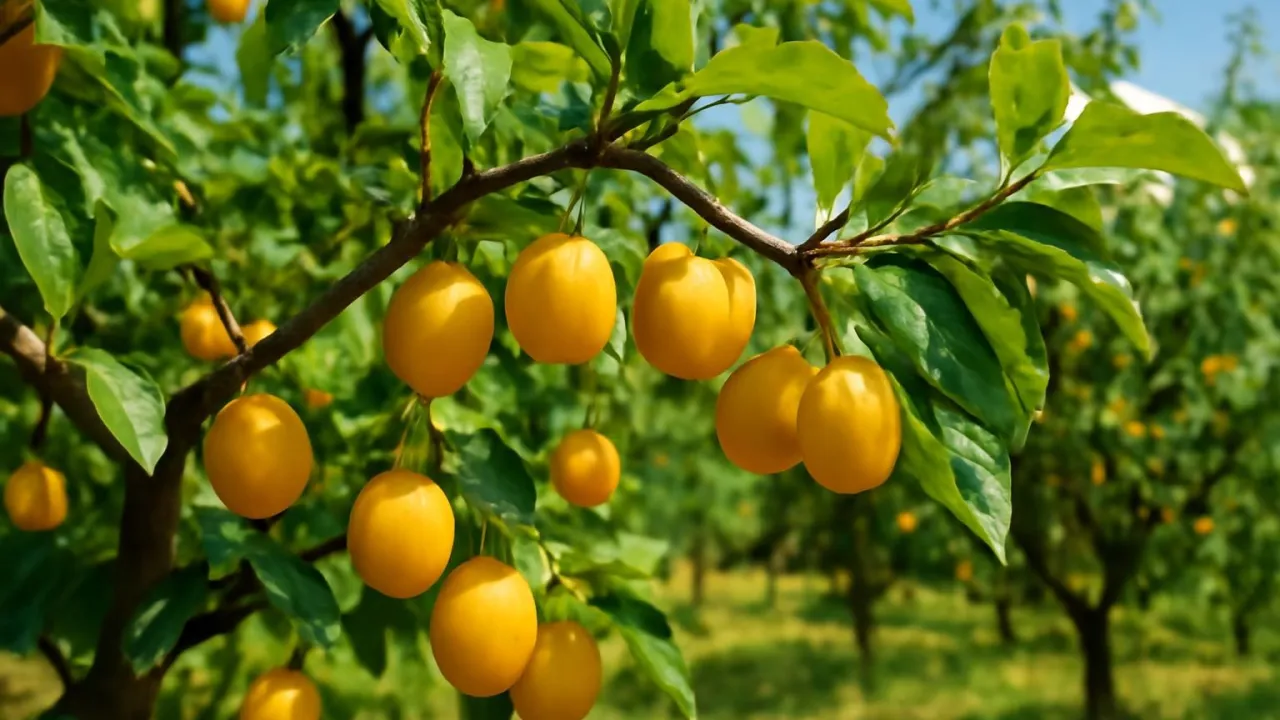
Mirabelle plums are so sweet and fragrant that they are sometimes called 'golden jewels'!
✨ Word Sparks (Grade 2 Glossary)
Tap 🔊 to hear
orchard
A place where fruit trees grow
aroma
A nice smell from food or flowers
dessert
Sweet food eaten after a meal
🪝
Have you ever seen a plum that looks like a tiny golden sun?
1
Bright and Sweet Fruit
Mirabelle plums are small fruits that look bright golden yellow. They have a sweet taste and smell that people love. The skin is smooth and shiny, making them easy to spot in .
2
Growing on Trees
These plums grow on medium-sized trees that need plenty of sunlight and water. They bloom with white flowers in spring before the fruit grows. The trees are mostly found in temperate parts of Europe.
3
Uses and Enjoyment
People often eat mirabelle plums fresh or use them to make jams and . Their sweet is so strong that some perfumes include it. Birds and small animals also enjoy eating these tasty fruits.
Mirabelle plums are so fragrant and sweet that they inspired special festivals in France every year!
✨ Word Sparks (Grade 3 Glossary)
Tap 🔊 to hear
camouflage
Colors that help hide from animals
pollination
Moving pollen to help plants make fruit
ecosystem
A community of plants and animals living together
🪝
Did you know the mirabelle plum’s golden color helps it hide from some predators?
1
Golden Color and Sweetness
The mirabelle plum is famous for its bright golden-yellow skin and sweet, juicy flesh inside. This golden color helps the fruit blend with sunlight, a natural against some birds. Its sweetness attracts animals that help spread its seeds for new trees to grow.
2
Tree Growth and Pollination
Mirabelle plum trees grow up to about 20 feet tall and bloom with white flowers in spring. These flowers attract bees, which help pollinate the tree by moving pollen from flower to flower. is important because it allows the tree to produce fruit.
3
Ecosystem Role and Adaptations
These trees grow best in temperate European climates where they get full sun and enough water. The mirabelle plum’s smooth skin protects it from pests and harsh weather. Birds and insects rely on the fruit and flowers for food, showing the tree’s role in its .
4
Human Use and Harvest
People harvest mirabelle plums in late summer when the fruit is ripe and sweet. The plums are eaten fresh or made into jams, desserts, and even brandy. Their strong aroma and flavor make them prized in cooking and traditional recipes.
Each year, the Lorraine region hosts a festival celebrating the mirabelle plum’s cultural and economic importance!
✨ Word Sparks (Grade 4 Glossary)
Tap 🔊 to hear
symbiotic
Living together and helping each other
pollinators
Animals that help plants make fruit
cultivation
Growing plants for food or use
🪝
Why does the mirabelle plum play an important role in European orchards and food culture?
1
Fruit Characteristics and Survival
The mirabelle plum’s bright golden skin and sweet aroma attract animals that help spread its seeds, ensuring the tree’s survival. Its smooth skin also protects the fruit from pests and harsh weather conditions, which helps maintain healthy crops. This adaptation allows the fruit to thrive in temperate climates across Europe.
2
Pollination and Ecosystem Relationships
Mirabelle plum trees bloom with fragrant white flowers that attract bees and other , which are essential for fruit production. This pollination process supports local ecosystems by providing food for insects and birds, creating a balanced food web. The trees also benefit from relationships with soil microbes that improve nutrient uptake.
3
Human Cultivation and Economic Impact
Farmers in regions like Lorraine, France, cultivate mirabelle plums extensively because of their unique flavor and aroma. The fruit is harvested in late summer and used in jams, desserts, and traditional brandies, contributing to local economies and cultural heritage. Sustainable farming practices help protect these orchards from environmental damage.
4
Geographic Distribution and Climate Needs
Mirabelle plum trees grow best in temperate European climates with warm summers and cold winters, which help the trees rest and produce fruit annually. They require full sun and regular watering to thrive, and their distribution is mostly limited to areas with these conditions. Climate changes could impact their growth and fruit quality in the future.
1. How do mirabelle plums help their trees survive?
2. Why are bees important for mirabelle plum trees?
🤯 Mind-Blowing Fact • Grade 5
The mirabelle plum’s AOC status protects its unique qualities and supports farmers in France.
✨ Word Sparks (Grade 5 Glossary)
Tap 🔊 to hear
drupe
Fruit with one hard seed inside
dormancy
A resting period for plants in winter
Appellation d’Origine Contrôlée
French label protecting special regional foods
🪝
How does the mirabelle plum’s biology and history make it a treasured fruit in Europe?
1
Taxonomy and Botanical Classification
The mirabelle plum, scientifically known as Prunus domestica subsp. syriaca, belongs to the Rosaceae family. It is a subspecies of the common European plum and is distinguished by its small size, golden-yellow skin, and intense sweetness. This fruit is botanically classified as a , meaning it has a single stone or pit inside surrounded by fleshy fruit.
2
Physiological Adaptations and Growth
Mirabelle plum trees reach heights of up to 20 feet and require temperate climates with cold winters to induce . Their smooth skin contains natural waxes that reduce water loss and protect against fungal infections. The fruit’s bright golden color results from carotenoid pigments, which also provide antioxidant benefits to consumers.
3
Cultural History and Conservation
Mirabelle plums have been cultivated in Europe for centuries, especially in the Lorraine region of France, where they are protected by an (AOC) designation. This certification helps conserve traditional farming methods and preserves genetic diversity. Festivals celebrating the mirabelle plum highlight its cultural and economic significance.
4
Ecological Role and Human Impact
Mirabelle plum trees support local ecosystems by providing nectar for pollinators and fruit for birds and mammals. However, modern agricultural practices and climate change threaten their habitats. Sustainable orchard management and conservation efforts are essential to maintain healthy populations and fruit quality.
5
Quantitative Comparisons and Uses
Mirabelle plums typically weigh between 15 and 25 grams and measure about 1 inch in diameter. They ripen in late summer, with temperatures around 70 to 85 degrees Fahrenheit being ideal for growth. Their sugar content often exceeds 15 percent, making them sweeter than many other plum varieties. These qualities make mirabelles prized for fresh eating, jams, and eau-de-vie brandies.