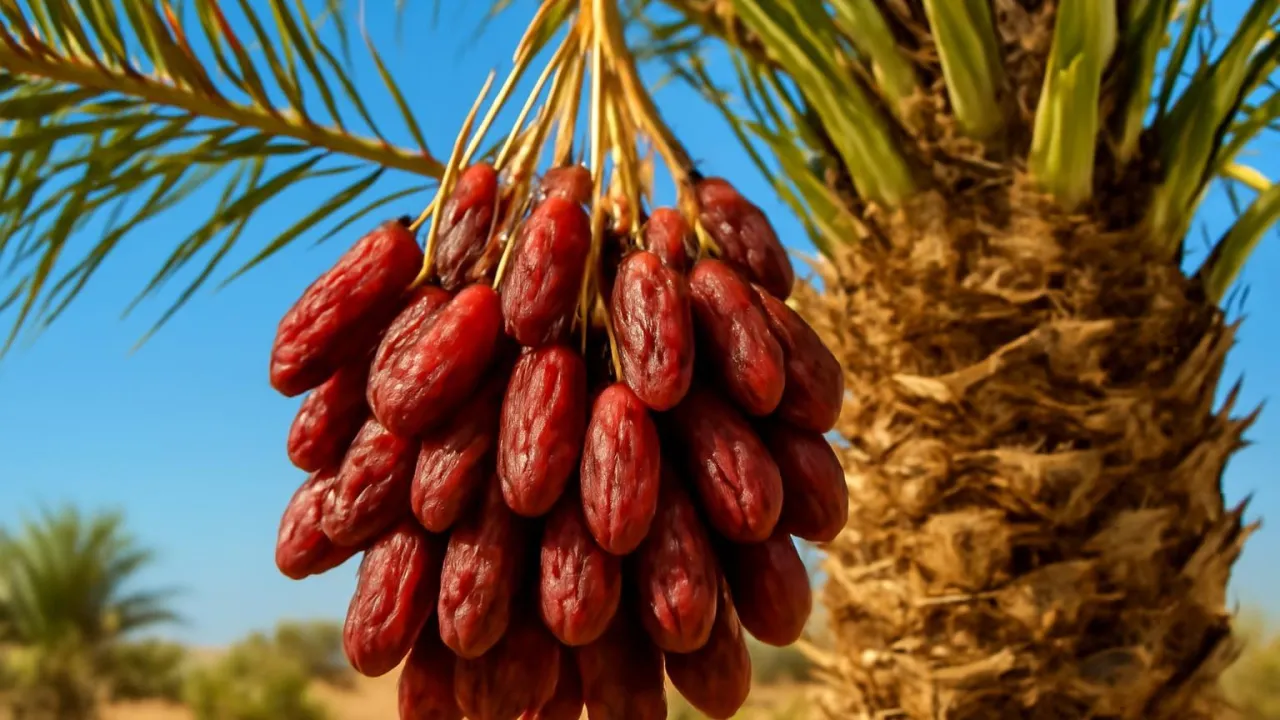
Medjool dates were called the 'king of dates' because of their size and sweetness!
✨ Word Sparks (Grade 2 Glossary)
Tap 🔊 to hear
desert
A dry, hot place with little rain
nutrients
Good stuff in food that helps us grow
chewy
Something soft that takes time to bite
🪝
Have you ever tried a fruit that grows on a desert palm tree?
1
Big and Sweet Dates
Medjool dates are large fruits that grow in bunches on palm trees. They have a shiny brown skin and taste very sweet. People often eat them as snacks or add them to desserts.
2
Where Dates Grow
These palm trees grow in hot, dry places like in North Africa and the Middle East. They need lots of sunlight and little water to grow healthy fruits. The desert sun helps the dates become sweet.
3
Special Features
Medjool dates have soft, flesh inside a thin skin. Their sweetness comes from natural sugars. They provide energy and to people who eat them.
Medjool date palms can live and produce fruit for over 60 years in desert climates!
✨ Word Sparks (Grade 3 Glossary)
Tap 🔊 to hear
adaptation
A change that helps plants survive better
seed dispersal
How seeds spread to grow new plants
nutrients
Healthy parts of food that help bodies grow
🪝
Did you know Medjool dates are called the 'king of dates' because of their size and sweetness?
1
Medjool Dates’ Appearance
Medjool dates are large fruits with a shiny, brown skin that helps protect them. Their soft, chewy flesh is full of natural sugars that give them a sweet taste. This sweetness helps attract animals that spread their seeds.
2
Growing in Hot Deserts
These dates grow on tall palm trees in hot, dry desert environments. The palm leaves provide shade to protect the dates from harsh sun rays. The trees adapt to survive with little water and intense sunlight.
3
Role in the Ecosystem
Medjool dates provide food for many desert animals and humans. Their seeds help grow new palm trees when animals carry and drop them. This process is called , which helps the palm population grow.
4
How Dates Help People
People eat Medjool dates for energy because they contain important like fiber and potassium. Farmers carefully harvest these fruits by hand to keep them fresh and tasty. The dates also play a role in local economies.
Medjool date palms can produce up to 200 pounds of fruit each year, feeding many animals and people.
✨ Word Sparks (Grade 4 Glossary)
Tap 🔊 to hear
symbiotic
Two living things helping each other
irrigate
To give water to plants on purpose
biodiversity
Many different plants and animals living together
🪝
How do Medjool dates survive and thrive in hot desert environments with little water?
1
Desert Adaptations of Medjool Dates
Medjool date palms have deep roots that reach underground water sources, allowing them to survive in arid deserts. Their thick, waxy skin reduces water loss and protects the fruit from intense sunlight and heat. These adaptations help the fruit stay fresh and sweet despite harsh conditions.
2
Role in Desert Ecosystems
Medjool dates serve as a vital food source for desert animals such as birds and rodents, which in turn help disperse the seeds. This relationship supports the growth of new palm trees and maintains in desert ecosystems. The palms also provide shade and shelter for many small creatures.
3
Human Cultivation and Impact
Humans have cultivated Medjool date palms for thousands of years, especially in North Africa and the Middle East. Farmers the palms carefully to mimic natural water sources, ensuring healthy fruit production. The dates contribute significantly to local economies and traditional diets, but over-farming can threaten natural palm habitats.
4
Global Distribution and Uses
Today, Medjool date palms are grown in several warm regions worldwide, including California and Israel. The fruit is prized for its large size, chewy texture, and rich sweetness, making it popular in cooking and snacking. Its nutritional benefits and long shelf life increase its global demand.
Medjool date palms can live over 60 years and produce hundreds of pounds of sweet fruit annually.
✨ Word Sparks (Grade 5 Glossary)
Tap 🔊 to hear
monocotyledonous
A plant with one seed leaf when it sprouts
transpiration
Water loss from plants through tiny leaf holes
habitat fragmentation
Breaking up natural homes into smaller parts
🪝
What makes the Medjool date palm a unique and valuable species in desert agriculture and ecology?
1
Scientific Classification and Description
The Medjool date palm, scientifically named Phoenix dactylifera, belongs to the Arecaceae family. It is a flowering plant adapted to arid environments. The palm can grow up to 75 feet tall, with pinnate leaves reaching 15 to 20 feet in length. Its fruit is a large drupe, rich in sugars and dietary fiber.
2
Physiological Adaptations to Desert Life
Medjool palms have extensive root systems that penetrate deep into the soil to access groundwater. Their thick cuticle and waxy fruit skin minimize water loss through . The palm’s stomata regulate gas exchange efficiently, enabling survival under high temperatures and low humidity typical of desert climates.
3
Cultural and Economic Importance
Cultivation of Medjool dates dates back over 5,000 years in North Africa and the Middle East, where they are integral to traditional diets and festivals. Today, commercial farms in California and Israel produce significant quantities, contributing millions of dollars annually. The fruit’s high sugar content and long shelf life make it a valuable export commodity.
4
Ecological Role and Conservation Challenges
Medjool date palms provide critical habitat and food for desert wildlife, supporting pollinators and seed dispersers. However, over-irrigation and land development threaten natural palm groves, leading to . Conservation efforts focus on sustainable farming practices and protecting native palm populations.
5
Quantitative Comparisons and Growth Metrics
A mature Medjool palm can produce up to 200 pounds (90 kilograms) of fruit annually, with individual dates measuring up to 1.5 inches (3.8 centimeters) long. These palms thrive in temperatures ranging from 77°F to 104°F (25°C to 40°C) and require minimal water compared to other fruit crops. Their longevity often exceeds 60 years under optimal conditions.