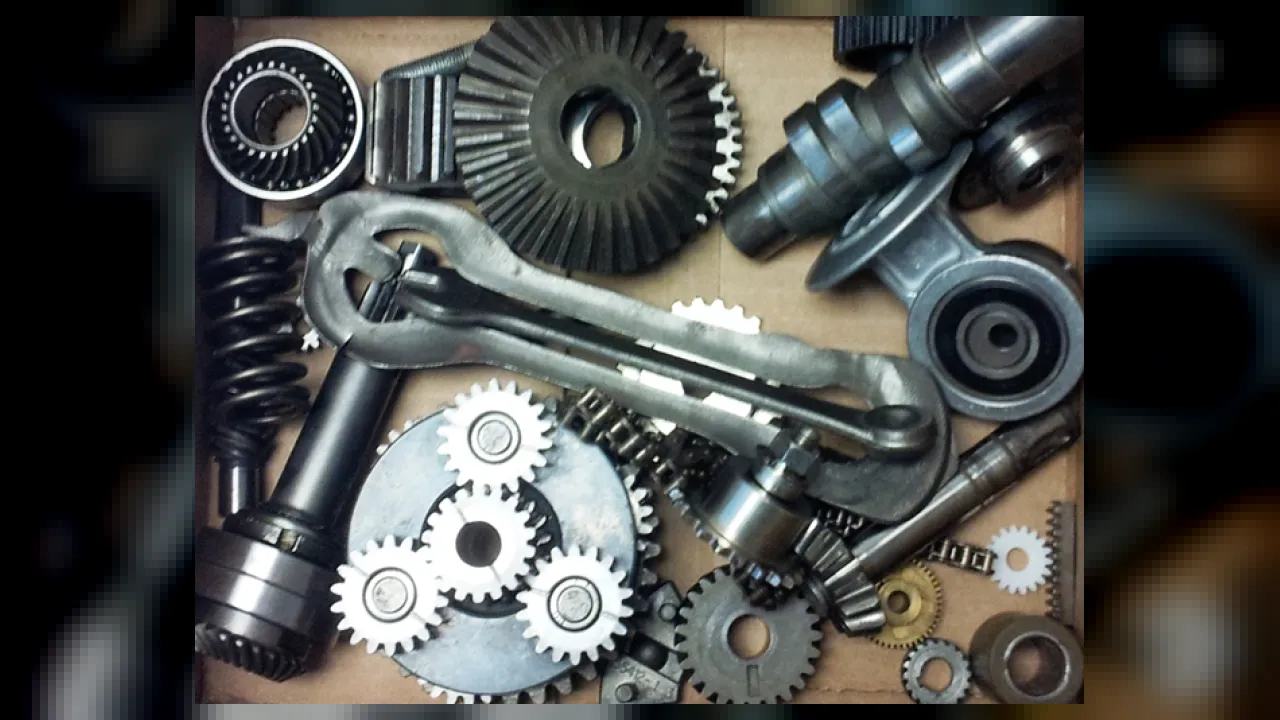
1. What connects bicycle pedals to the back wheel to make it spin?
2. Which everyday object uses a simple mechanical hinge to swing open?
🤯 Mind-Blowing Fact • Grade 2
Tiny steel ball bearings inside skateboard wheels reduce rubbing friction so much that a single push lets you roll smoothly down a whole sidewalk!
✨ Word Sparks (Grade 2 Glossary)
Tap 🔊 to hear
friction
Rubbing force that slows motion and makes heat
bearing
Smooth rolling balls helping wheels spin easily
3D printer
A machine building solid objects layer by layer
🪝
What do roller coasters, artificial heart pumps, and electric scooters all have in common?
1
Masters of Things That Move
From the tiny zipper on your winter jacket to a giant elevator lifting thirty people at once, moving parts surround us! Designing, building, and testing machines like these is the job of a mechanical engineer.
2
Taming Friction and Heat
Rub your hands together fast—feel them warm up? Moving machine parts rub together too, creating and heat. Engineers add smooth ball , cooling fans, and drops of oil so engines run quietly without wearing out.
3
Sketching in 3D and Printing Parts
Using 3D computer software and printers, engineers turn fresh ideas into real plastic or metal prototypes they can hold, test, and improve.
1. Why do mechanical engineers put smooth ball bearings inside skateboard and bike wheels?
2. How does a 3D printer help an engineer test a brand-new invention?
🤯 Mind-Blowing Fact • Grade 3
Springy J-shaped carbon-fiber running prosthetics store and return energy just like a kangaroo's Achilles tendon with every single stride!
✨ Word Sparks (Grade 3 Glossary)
Tap 🔊 to hear
mechanical advantage
Using gears or levers to multiply lifting force
thermodynamics
Science of heat, temperature, and energy transfer
prosthetic
An engineered artificial limb helping someone move
🪝
How can changing the size of two interlocking gears help a tiny motor lift a heavy garage door?
1
Multiplying Force With Clever Geometry
Watch a small electric motor spin rapidly near your ceiling and lift a heavy garage door with ease! By pairing a small fast gear with a larger slow gear, a mechanical engineer trades speed for extra lifting force—a superpower called .
2
Energy, Heat, and Motion
Mechanical engineering is one of the broadest STEM careers on Earth because it studies both motion and heat energy, known as . Engineers design cozy home heat pumps, refrigerator cooling loops, quiet electric car drivetrains, and giant wind turbine gearboxes.
3
Helping Bodies Move Again
Inside biomedical labs, mechanical engineers team up with doctors to craft lightweight carbon-fiber running blades for Paralympic athletes and bionic hands with motorized fingers.
4
Stress Testing Until It Breaks
Before any helmet, car seat, or roller-coaster harness reaches families, engineers bend, drop, and shake test samples inside lab machines to guarantee top safety.
1. How does pairing a small fast gear turning a large gear create 'mechanical advantage'?
2. Why do mechanical engineers bend, drop, and shake helmets in testing labs?
🤯 Mind-Blowing Fact • Grade 4
Mechanical engineers designed the James Webb Space Telescope's tennis-court-sized sunshield to unfold flawlessly a million miles from Earth using 107 tiny release pins and 90 pulleys!
✨ Word Sparks (Grade 4 Glossary)
Tap 🔊 to hear
kinetic energy
Energy an object possesses because of motion
crumple zone
Vehicle sections engineered to fold and absorb crash energy
CAD
Computer-Aided Design software for 3D blueprints
🪝
How does a modern car crumple like an accordion on the outside while keeping passengers completely safe on the inside?
1
Physics That Saves Lives
Decades ago, people assumed a stiffer steel bumper always made a safer car. Physics proved something surprising! If a rigid frame stops instantly, all that sudden crash force slams straight into the riders. Instead, a mechanical engineer designs front and rear '' that fold like a metal accordion—stretching out the stopping time by milliseconds to absorb safely around a rigid passenger cage.
2
CAD Modeling and CNC Precision
Every modern machine begins inside Computer-Aided Design () software. Engineers sculpt 3D parts accurate to a thousandth of an inch—thinner than a sheet of notebook paper—and simulate airflow, vibration, and heat transfer on screen. Next, computer-guided CNC milling cutters or laser-sintering 3D printers carve titanium, aluminum, or polymer prototypes.
3
Mastering Heat and Fluid Flow
Engines, hospital MRI magnets, and cloud data centers all battle unwanted heat. Mechanical engineers apply thermodynamics and fluid mechanics to route liquid cooling pipes, heat exchangers, and aerodynamic fan blades where temperatures climb highest.
4
From Shipyards to Space Telescopes
Across Virginia—from giant marine propulsion shafts engineered in Newport News to precision folding sunshields tested for space telescopes—mechanical engineers turn Sir Isaac Newton's laws of motion into reliable machines.
1. How do engineered 'crumple zones' protect passengers during a collision?
2. Why do mechanical engineers machine precision parts accurate to a thousandth of an inch?
🤯 Mind-Blowing Fact • Grade 5
Regenerative braking engineered for electric vehicles and trains flips the drive motor into an electrical generator whenever you slow down—capturing up to seventy percent of kinetic energy that old brake pads wasted as heat!
✨ Word Sparks (Grade 5 Glossary)
Tap 🔊 to hear
regenerative braking
Capturing slowing-down motion to recharge vehicle batteries
fatigue
Weakening of metal after millions of repeated bends
generative design
Software sculpting lightweight, bone-like strong part shapes
🪝
Why can no engine in the universe ever reach one hundred percent efficiency—and how close can mechanical engineers get?
1
Universal Laws of Motion and Energy
Whether designing a microscopic MEMS gyroscope inside a smartwatch or a multi-megawatt steam turbine spinning at 3,600 revolutions per minute, a mechanical engineer works directly with nature's most fundamental rulebooks: classical mechanics, materials science, fluid dynamics, and the laws of thermodynamics.
2
Confronting the Second Law of Thermodynamics
While the First Law of Thermodynamics states that energy can neither be created nor destroyed, the Second Law reveals that converting heat into mechanical work always loses some energy as waste heat—a limit calculated in 1824 by French engineer Sadi Carnot. Mechanical engineers push efficiency higher using combined-cycle turbines, in electric trains (turning stopping friction back into battery electricity), and ultra-low-friction ceramic bearings.
3
Stress, Strain, and Generative Design
When forces pull or twist a machine part, engineers analyze internal stress (force per unit area) and strain (percentage deformation) to stay safely below a metal's yield point and prevent microscopic cracks. Today, engineers pair Finite Element Analysis with AI-powered '' algorithms—growing organic, bone-like titanium brackets for aircraft and satellites that shave forty percent of weight without sacrificing an ounce of strength!
4
Micro-Machines to Cryogenic Pumps
Mechanical engineering spans breathtaking physical scales across science and medicine. Biomechanics specialists craft microfluidic lab-on-a-chip pumps narrower than a human eyelash that diagnose blood samples using a single droplet, alongside motorized prosthetic ankles that adapt instantaneously to stairways. At the opposite extreme, aerospace propulsion engineers machine titanium rocket turbopumps spinning tens of thousands of times per minute while handling liquid hydrogen chilled to minus 253 degrees Celsius without cracking.
5
Designing for Circular Sustainability
Modern mechanical engineers also reimagine manufacturing around circular sustainability—selecting recyclable alloys, replacing fossil-fueled boilers with high-efficiency industrial heat pumps, and designing everyday appliances for easy disassembly and repair. By uniting mathematical rigor with hands-on invention, they ensure the machines powering clean transit, hospitals, and exploration tread lightly on planet Earth.