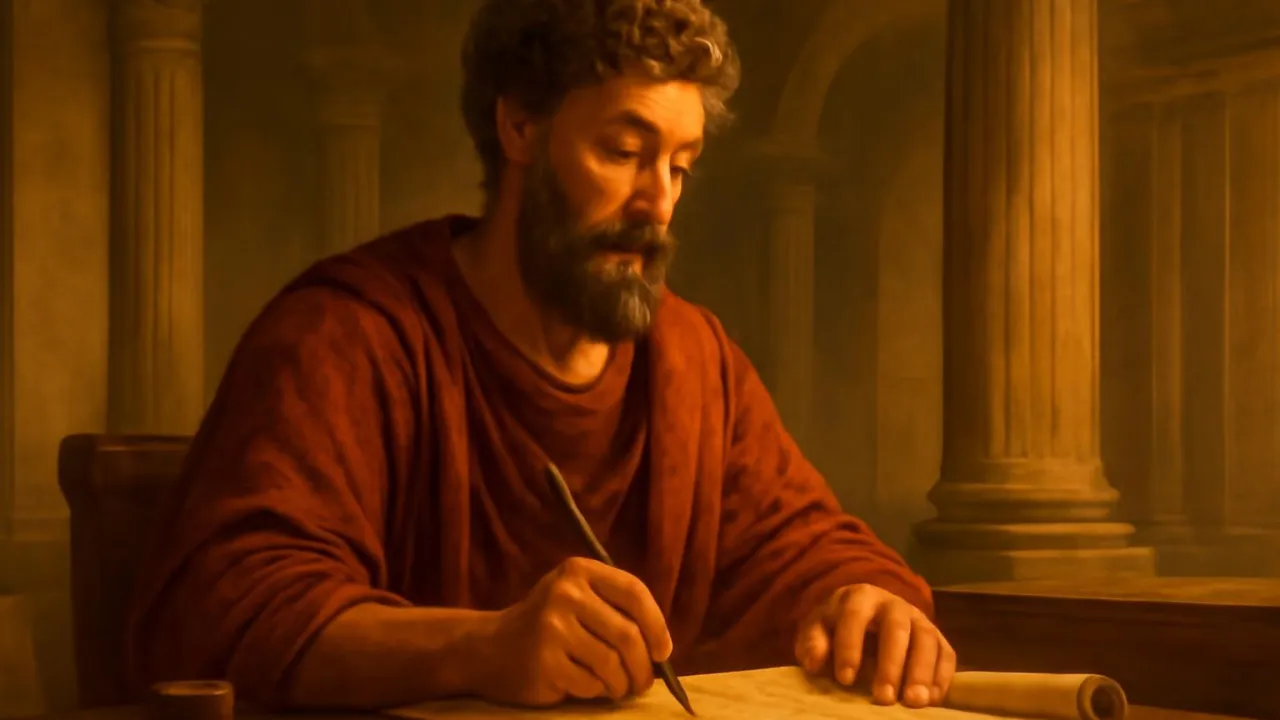
Marcus Aurelius wrote his ideas in a journal called 'Meditations.'
✨ Word Sparks (Grade 2 Glossary)
Tap 🔊 to hear
emperor
A king who rules a big land
wisdom
Knowing what is right and good
journal
A book for writing thoughts
🪝
Can you imagine a ruler who writes in a journal?
1
Curious Young Marcus
As a child, Marcus always asked questions and read many scrolls. He wanted to understand how people should live and treat each other. He learned from wise teachers and listened carefully to their advice.
2
Practicing Calm and Kindness
Marcus practiced staying calm, even when things were hard or scary. He wrote his thoughts and feelings in a special book each day. He believed being fair and gentle made a strong leader.
3
A Wise Emperor
When Marcus became , he led Rome with kindness and . He helped his people by making fair choices and solving problems. His book, 'Meditations,' still teaches us about being strong inside.
Marcus wrote parts of 'Meditations' while leading his army in tents!
✨ Word Sparks (Grade 3 Glossary)
Tap 🔊 to hear
Stoicism
A way to stay calm and strong
philosophy
Ideas about how to live well
advisor
A person who gives good advice
🪝
What would you write if you ruled a whole empire?
1
A Young Mind Full of Wonder
Marcus Aurelius grew up in ancient Rome, always curious about the world around him. He read scrolls about and asked wise teachers many questions. He wondered how people could be good and fair to each other. This curiosity made him want to learn even more.
2
The Practice of Stoicism
Marcus studied a special way of thinking called , which teaches self-control and calm. He practiced staying peaceful, even when things were difficult or people were unkind. Writing his thoughts in a journal helped him remember to be patient and strong. Stoicism became his guide for living a good life.
3
Leading with Wisdom and Care
When Marcus became emperor, he faced many tough problems and wars. He made decisions by thinking carefully and listening to his . He tried to be fair to everyone, rich or poor. His calm and wise choices helped his people trust him.
4
A Book That Lasts Forever
Marcus wrote his ideas in a book called 'Meditations,' which people still read today. In it, he shared lessons about being brave, kind, and honest. His words inspire people to stay strong and do the right thing. Marcus Aurelius is remembered as a philosopher and a great leader.
Marcus Aurelius’s 'Meditations' has been read for nearly 2,000 years!
✨ Word Sparks (Grade 4 Glossary)
Tap 🔊 to hear
legacy
What someone leaves behind for others
self-control
Staying calm and not acting out
fairness
Treating everyone equally and kindly
🪝
How did a Roman emperor use philosophy to lead his people wisely?
1
A Curious Boy in Ancient Rome
Long before he wore a crown, Marcus Aurelius was a thoughtful boy growing up in Rome. Surrounded by books and wise teachers, he asked deep questions about life and . His family encouraged his curiosity, hoping he would become a good leader one day. Marcus soon discovered that thinking deeply could help solve problems.
2
Learning the Ways of Stoicism
Marcus was drawn to Stoicism, a philosophy that values , courage, and wisdom. He practiced staying calm and patient, even during arguments or tough times. Writing daily in his journal, he reminded himself to treat others with kindness and . These habits shaped his character and prepared him for the challenges of leadership.
3
Facing Hardships as Emperor
When Marcus became emperor, Rome faced wars, sickness, and many difficult decisions. He listened to advisors, thought carefully before acting, and tried to be just to all his people. Even when leading armies, he found time to write his thoughts in 'Meditations.' His calm, steady leadership helped Rome through some of its hardest years.
4
A Legacy of Wisdom
Marcus Aurelius’s book, 'Meditations,' is still read by people all over the world. His words teach us about patience, strength, and doing what is right, even in tough times. Many leaders and thinkers admire his example of wise and caring leadership. Marcus showed that true strength comes from and kindness.
Marcus Aurelius’s 'Meditations' is still studied by world leaders, athletes, and philosophers today!
✨ Word Sparks (Grade 5 Glossary)
Tap 🔊 to hear
resilience
Being strong when things get tough
humility
Not thinking you are better than others
adversity
Hard times or big challenges
🪝
What does it take to rule an empire with both strength and wisdom?
1
A Childhood Fueled by Curiosity
In the bustling heart of ancient Rome, young Marcus Aurelius spent his days surrounded by books, philosophers, and endless questions. His family, part of Rome’s noble class, encouraged him to study history, literature, and philosophy from an early age. Marcus was especially fascinated by the teachings of Stoic philosophers, who believed that self-control and reason were the keys to a good life. He often pondered how he could use wisdom to help others, even before he knew he would one day rule an empire. This early curiosity planted the seeds for his lifelong journey as a philosopher and leader.
2
The Stoic Path: Discipline and Reflection
Marcus Aurelius became a devoted student of Stoicism, a philosophy that teaches people to remain calm and rational, no matter what challenges they face. He practiced daily reflection, writing his thoughts and struggles in a personal journal that later became known as 'Meditations.' Through these writings, Marcus reminded himself to act with justice, patience, and , even during times of war and political unrest. His commitment to self-discipline helped him make fair decisions, resist anger, and treat others with respect. These Stoic habits would guide him throughout his life as emperor.
3
Leadership During Turbulent Times
When Marcus Aurelius became emperor in 161 CE, the Roman Empire faced enormous challenges, including invasions, plagues, and internal conflicts. Despite these hardships, Marcus led with a calm and steady hand, always seeking wise counsel from trusted advisors. He believed that a true leader must serve the people and act for the common good, not personal gain. Even while commanding armies on distant frontiers, he found time to write in his journal, reflecting on how to stay strong and compassionate. His leadership style earned him respect from both soldiers and citizens alike.
4
The Enduring Wisdom of 'Meditations'
Marcus Aurelius’s private writings, later published as 'Meditations,' offer timeless lessons in , kindness, and moral strength. In these pages, he explores how to face without losing hope or becoming bitter, encouraging readers to focus on what they can control. 'Meditations' has inspired countless leaders, writers, and thinkers for nearly two thousand years, making it one of the most influential works in Western philosophy. Marcus’s words remind us that wisdom, not power, is the true measure of greatness.
5
A Legacy of Thoughtful Leadership
Today, Marcus Aurelius is remembered as both a philosopher and one of Rome’s most respected emperors. His reign is often called the last of the 'Five Good Emperors,' a time marked by relative peace and wise governance. Historians admire his ability to balance the demands of ruling a vast empire with his dedication to personal growth and ethical living. Marcus’s example encourages us to lead with empathy, seek understanding, and face life’s challenges with courage and self-control. His life proves that thoughtful leadership can leave a lasting legacy for generations to come.