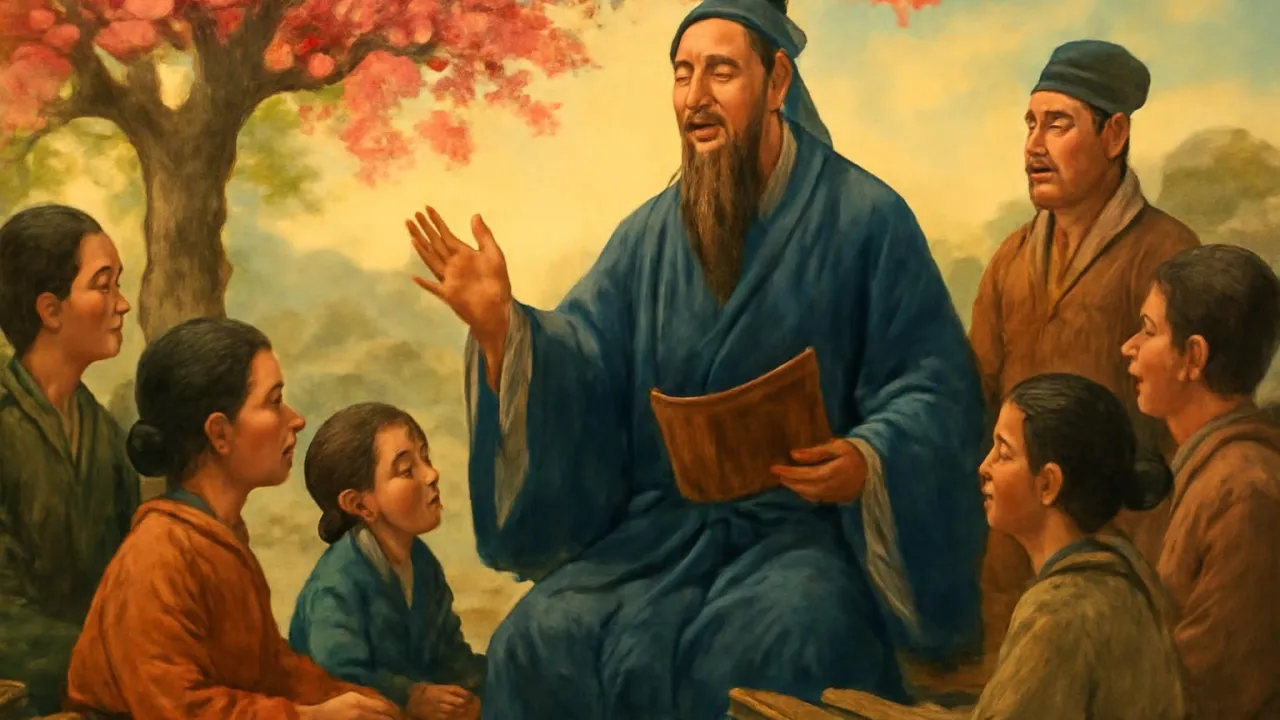
Confucius’s students collected his sayings in a book called the Analects.
✨ Word Sparks (Grade 2 Glossary)
Tap 🔊 to hear
manners
Polite ways to act with others
tradition
A special way people do things
village
A small place where people live
🪝
Have you ever wondered how to treat people fairly?
1
Curious From the Start
Young Confucius always asked questions about life. He wanted to know how to make people happy. He read old books and learned from wise teachers. He dreamed of helping his whole .
2
Hard Work and Kindness
Confucius practiced good every day with his friends. He believed everyone should show respect and kindness to others. He worked hard to understand rules and . He taught that being fair makes the world better.
3
A Famous Teacher
People traveled far to hear Confucius teach about respect. He answered questions with patience and care. His students wrote down his wise sayings in books. Today, his lessons are shared all around the world.
2. Where did Confucius’s students write his ideas?
🤯 Mind-Blowing Fact • Grade 3
Confucius’s ideas helped shape schools and governments for thousands of years.
✨ Word Sparks (Grade 3 Glossary)
Tap 🔊 to hear
ritual
A special action done in a set way
philosophy
Ideas about life and right or wrong
harmony
Living together in peace
🪝
Can asking the right questions help you become wise?
1
A Curious Mind
As a child, Confucius wondered how people could live together peacefully. He listened to stories from elders and asked thoughtful questions about fairness. He studied history, music, and old traditions to learn more. His curiosity helped him discover the importance of respect.
2
Learning and Teaching
Confucius worked hard to master reading, writing, and . He believed that anyone could learn, not just rich or powerful people. He opened a school where students learned about kindness, honesty, and responsibility. His teaching style encouraged students to think deeply and ask questions.
3
Overcoming Challenges
Confucius faced many obstacles, including leaders who ignored his advice. Still, he never gave up on sharing his ideas about fairness and respect. He traveled from city to city, teaching people how to treat others well. His determination inspired many followers.
4
A Lasting Legacy
After Confucius died, his students collected his sayings in the Analects. His became the foundation for Chinese culture and education. People all over the world study his lessons about respect and . Confucius’s wisdom continues to guide people today.
Confucianism became the official philosophy of China for over 2,000 years.
✨ Word Sparks (Grade 4 Glossary)
Tap 🔊 to hear
justice
Treating everyone fairly and kindly
self-improvement
Working to become a better person
perseverance
Never giving up, even when it’s hard
🪝
How can one person’s ideas shape a whole civilization?
1
A Boy With Big Questions
Growing up in ancient China, Confucius was fascinated by stories of old kings and wise leaders. He spent hours reading ancient texts and asking elders about , kindness, and how people should live together. His curiosity about fairness and respect made him different from other children. Even as a boy, he dreamed of helping his country become more peaceful.
2
The Path of the Teacher
Confucius believed that anyone, rich or poor, could become wise through learning and . He opened a school where students learned about rituals, honesty, and the importance of treating others with respect. His teaching style encouraged students to ask questions and think for themselves, which was unusual at the time. He taught that good leaders should set a strong example for everyone.
3
Struggles and Perseverance
Although Confucius tried to advise powerful rulers, many ignored his ideas or dismissed his wisdom. He traveled from city to city, teaching people about kindness, responsibility, and the importance of harmony in society. Despite setbacks, he remained dedicated to spreading his philosophy and never stopped believing in the value of education. His inspired generations of students to keep learning and improving themselves.
4
A Legacy That Endures
After his death, Confucius’s students recorded his teachings in the Analects, a book still read today. His philosophy shaped Chinese society, government, and education for centuries, influencing millions of people. The values of respect, honesty, and harmony he taught are now part of cultures around the world. Confucius’s wisdom continues to guide people in making fair and thoughtful choices.
The Analects has been translated into over 50 languages and studied worldwide.
✨ Word Sparks (Grade 5 Glossary)
Tap 🔊 to hear
empathy
Understanding how someone else feels
virtue
A good quality, like honesty or kindness
legacy
What someone leaves behind for others
🪝
What if a single teacher’s wisdom could influence millions for thousands of years?
1
A Childhood Spark for Wisdom
In the ancient land of Lu, young Confucius spent his days listening to stories of legendary rulers and pondering the mysteries of right and wrong. Unlike other children, he was fascinated by questions about justice, kindness, and the best ways for people to live together. He eagerly read ancient texts and sought out wise elders, always searching for deeper understanding. This early curiosity shaped his lifelong mission to help society become more fair and harmonious. Even as a child, Confucius believed that every person, no matter their background, could become wise through learning and self-reflection.
2
The Teacher Who Transformed Learning
Confucius revolutionized education in ancient China by opening his school to students from all walks of life, not just the wealthy or noble. He taught lessons about rituals, honesty, responsibility, and the importance of treating others with respect and . His teaching method encouraged students to ask questions, debate ideas, and think for themselves—an approach that was groundbreaking for his era. Confucius believed that good leaders should act as role models, inspiring others through their own virtuous behavior. His philosophy, known as Confucianism, emphasized lifelong self-improvement and the value of education for all.
3
Persistence Through Adversity
Throughout his life, Confucius faced many setbacks, including being ignored or dismissed by powerful rulers who did not want to change their ways. Despite these challenges, he traveled across many states, sharing his vision of a just and harmonious society with anyone willing to listen. He never abandoned his belief in the power of education and moral example, even when times were difficult. His perseverance inspired his students, who followed him faithfully and recorded his teachings for future generations. Confucius’s dedication to spreading wisdom became a model for teachers everywhere.
4
The Analects and a Lasting Legacy
After Confucius’s death, his devoted students gathered his sayings and lessons into a book called the Analects, which remains one of the most influential texts in world history. Confucianism became the foundation of Chinese government, education, and family life for over two thousand years, shaping the values of respect, loyalty, and harmony. His philosophy spread beyond China, influencing cultures across East Asia and even reaching thinkers in the Western world. Today, people still study the Analects to learn about ethics, leadership, and the importance of treating others with dignity.
5
Why Confucius Still Matters
Confucius’s teachings offer timeless guidance for building strong communities and living with integrity. His belief that everyone can learn and grow, regardless of their background, remains a powerful message for students everywhere. By encouraging people to ask questions and seek understanding, he helped create a tradition of critical thinking and open dialogue. Confucius’s ideas about respect, honesty, and self-improvement continue to inspire leaders, teachers, and families all over the world. His reminds us that wisdom begins with curiosity and a willingness to learn from others.