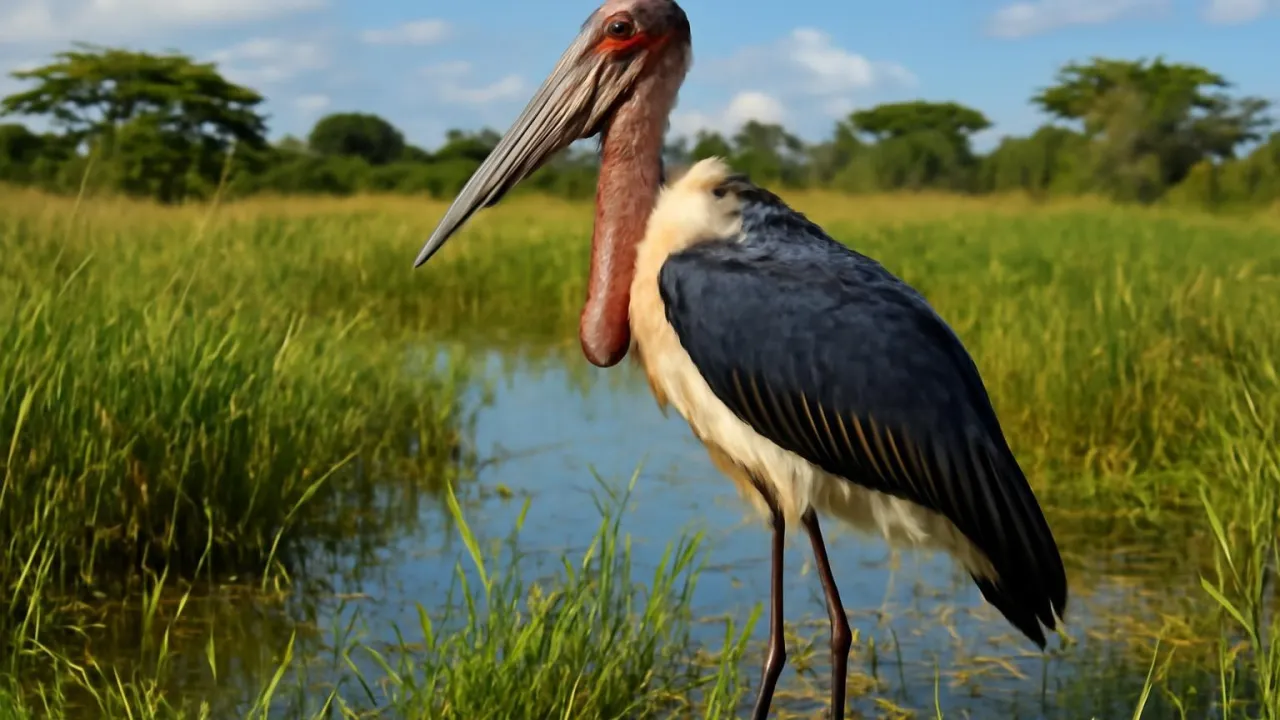
Marabou storks can have wingspans up to 10 feet wide!
✨ Word Sparks (Grade 2 Glossary)
Tap 🔊 to hear
carrion
Dead animals that birds eat
wetlands
Wet places like swamps or lakes
beak
The hard mouth part birds use to eat
🪝
Have you ever seen a bird as tall as a grown person?
1
A Giant Bird with a Bald Head
The marabou stork is very tall and has a bald head to stay clean. Its feathers are black and white, and it has a big . It uses its big beak to catch food and protect itself.
2
Where It Lives and Grows
This bird lives mostly in warm places near water like lakes and . It grows from a small chick to a tall bird with long legs and wings. It needs water and warm air to survive well.
3
What It Eats and Why
The marabou stork eats dead animals called , fish, and insects. It helps clean the environment by eating dead animals. Its bald head stops feathers from getting dirty when it eats.
Marabou storks can soar up to 10,000 feet high while searching for food!
✨ Word Sparks (Grade 3 Glossary)
Tap 🔊 to hear
scavenger
An animal that eats dead things
camouflage
Colors that help hide in the environment
nutrients
Food parts that help living things grow
🪝
Did you know the marabou stork is a giant scavenger with special adaptations?
1
Physical Features and Adaptations
The marabou stork has a bald head and neck which helps prevent feathers from getting dirty while scavenging. Its large, strong beak is perfect for tearing apart carrion. The bird’s black and white feathers provide some near water. Its long legs allow it to wade easily in wetlands.
2
Habitat and Behavior
Marabou storks live in sub-Saharan Africa, mostly around wetlands, lakes, and savannas. They often gather in large groups to find food. Their scavenging role helps keep ecosystems clean by eating dead animals. They also eat fish, insects, and small animals when carrion is scarce.
3
Life Cycle and Growth
Marabou storks build large nests high in trees or on cliffs. They lay two to three eggs, and both parents care for the chicks. The young birds grow quickly and learn to fly within a few months. Their long wings help them soar high while searching for food.
4
Ecological Role and Survival
As , marabou storks play a vital role in their ecosystems by recycling . Their bald heads and strong stomach acids protect them from bacteria in decaying meat. This adaptation helps them avoid diseases that could harm other animals. Their presence supports a balanced food web.
1. What helps marabou storks stay clean while eating?
2. What do marabou storks mainly eat to help the environment?
🤯 Mind-Blowing Fact • Grade 4
Marabou storks can fly at speeds up to 30 miles per hour while soaring across Africa!
✨ Word Sparks (Grade 4 Glossary)
Tap 🔊 to hear
symbiosis
When two species help each other live
ecosystem
A community of plants and animals living together
habitat
The natural home of an animal or plant
🪝
How does the marabou stork help keep African ecosystems healthy?
1
Physical Adaptations for Survival
The marabou stork’s bald head prevents feathers from becoming soiled while feeding on carrion, which helps reduce bacterial infections. Its large, powerful beak allows it to tear apart tough carcasses, and its long legs help it wade through wetlands easily. These adaptations enable it to thrive in harsh environments where food can be scarce.
2
Role in the Ecosystem
As a scavenger, the marabou stork plays a crucial role in food webs by cleaning up dead animals that could spread disease. This bird often feeds alongside vultures and other scavengers, creating a symbiotic relationship where each species benefits from the others’ presence. Its feeding habits help recycle nutrients back into the .
3
Habitat and Geographic Range
Marabou storks are found throughout sub-Saharan Africa, especially near lakes, rivers, and wetlands. They prefer warm climates and open areas like savannas where they can easily spot food. Human activities such as wetland drainage and pollution can threaten their , but they adapt well to some changes.
4
Human Impact and Conservation
Although not currently endangered, marabou storks face loss due to agriculture and urban growth. Conservation efforts focus on protecting wetlands and educating people about the bird’s important ecological role. By maintaining healthy habitats, humans help ensure that marabou storks continue to support balanced .
1. What is one way the marabou stork helps its ecosystem?
2. Where do marabou storks mostly live?
🤯 Mind-Blowing Fact • Grade 5
Marabou storks have one of the largest wingspans of any bird, reaching up to 10 feet wide!
✨ Word Sparks (Grade 5 Glossary)
Tap 🔊 to hear
taxonomy
The science of naming and grouping living things
physiology
How a living thing’s body works
conservation
Protecting animals and their homes
🪝
What makes the marabou stork a unique giant scavenger in African ecosystems?
1
Taxonomy and Scientific Classification
The marabou stork belongs to the family Ciconiidae and the genus Leptoptilos, scientifically named Leptoptilos crumenifer. It is one of the largest stork species, closely related to other large scavenging birds like the adjutant stork. Its evolutionary adaptations allow it to occupy a unique ecological niche among African birds.
2
Physiological Adaptations and Mechanics
This bird’s bald head and neck reduce bacterial contamination during feeding on carrion, while its strong, hooked beak efficiently tears flesh. Its digestive system contains highly acidic stomach juices that neutralize harmful bacteria from decaying meat. The marabou’s wingspan can reach up to 10 feet, enabling it to soar for hours while searching for food.
3
Ecological Importance and Conservation Status
Marabou storks are essential scavengers that recycle nutrients by consuming carrion, preventing the spread of disease in their habitats. Although classified as Least Concern by organizations, habitat destruction from wetland drainage and pollution threatens local populations. Conservation programs emphasize wetland protection and public awareness to sustain their populations.
4
Behavior, Reproduction, and Life Cycle
Marabou storks breed during the dry season, building large stick nests high in trees or on cliffs. Both parents incubate the eggs and feed their chicks until fledging, which occurs within three months. Juveniles develop strong flight muscles to soar long distances, aiding in their survival and food searching abilities.
5
Quantitative Comparisons and Interesting Measures
Adult marabou storks can weigh up to 20 pounds (9 kilograms) and stand about 5 feet (1.5 meters) tall. Their wingspan ranges from 8 to 10 feet (2.5 to 3 meters), allowing them to glide efficiently. They can fly at speeds reaching 30 miles per hour (48 kilometers per hour) and soar as high as 10,000 feet (3,000 meters) during migration or food searches.