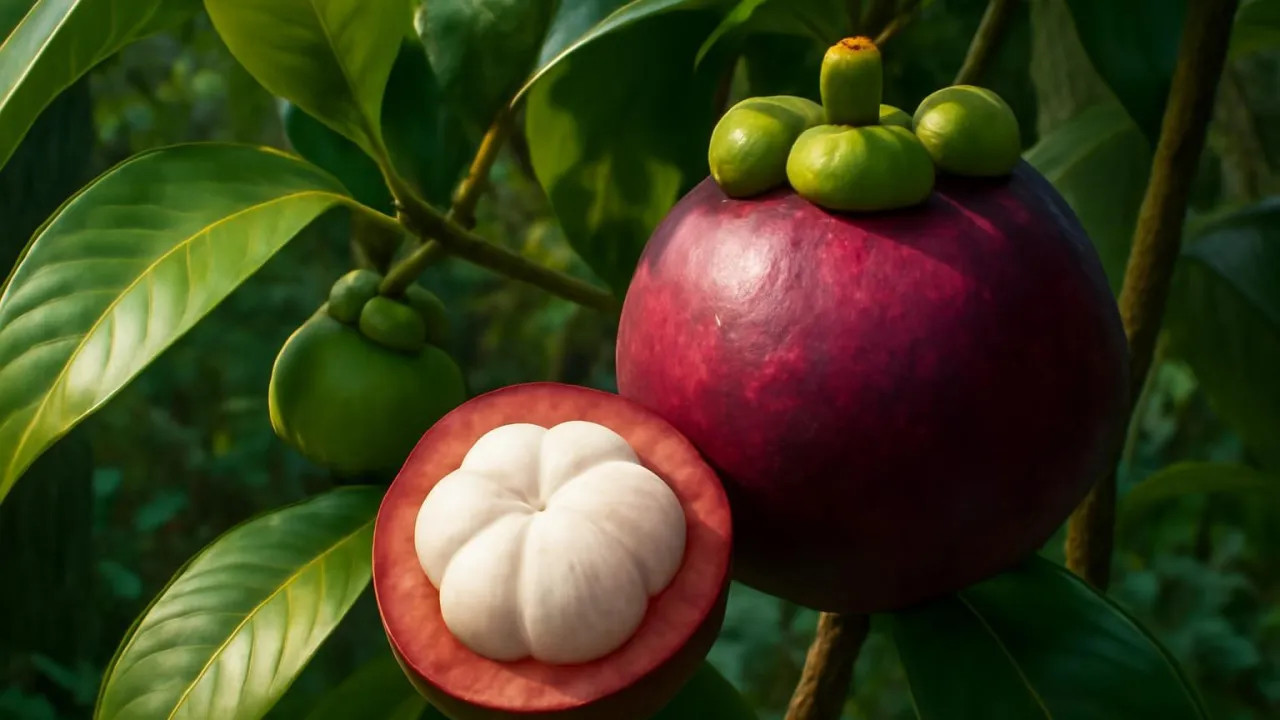
Mangosteen’s rind contains antioxidants that help protect the fruit and people’s health!
✨ Word Sparks (Grade 2 Glossary)
Tap 🔊 to hear
rind
The thick outer skin of some fruits
tropical
A hot and wet place near the equator
segments
Parts or sections inside a fruit
🪝
Did you know mangosteen is called the queen of fruits in Asia?
1
The Purple Mangosteen Fruit
Mangosteen fruit has a thick purple skin that protects the soft white inside. The fruit tastes sweet and a little sour. People enjoy eating it fresh or in desserts.
2
Where Mangosteen Trees Grow
Mangosteen trees grow best in warm, wet forests. They need rich soil and plenty of rain to grow tall and strong. The trees can reach up to 80 feet high.
3
A Special Feature of Mangosteen
The fruit has a thick that keeps it safe from bugs and animals. Inside, the white look like little stars. This helps protect the juicy fruit inside.
Mangosteen’s rind contains powerful antioxidants that protect both the fruit and humans!
✨ Word Sparks (Grade 3 Glossary)
Tap 🔊 to hear
camouflage
A way to hide by blending in with surroundings
pollination
When insects help flowers make fruit and seeds
nutrients
Food parts plants and animals need to grow
🪝
What makes mangosteen’s thick rind a clever adaptation for survival?
1
The Mangosteen’s Protective Rind
Mangosteen’s thick purple rind acts as in dense tropical forests. This adaptation helps hide the fruit from some predators. The rind also protects the juicy segments inside from damage. This allows the fruit to ripen safely on the tree.
2
Where Mangosteen Thrives
Mangosteen trees grow in humid tropical regions with rich soil and warm temperatures. These conditions provide the and water needed for healthy growth. The trees can grow very tall to reach sunlight in dense forests. This height helps the fruit get enough sun to ripen.
3
How Mangosteen Fruits Grow
The fruit develops from flowers through by insects. After pollination, the fruit grows slowly and gains its purple color. Inside, the white segments are filled with juicy pulp rich in . These nutrients attract animals that help spread the seeds.
4
Mangosteen’s Role in Nature
Mangosteen fruits provide food for many animals in the ecosystem, including birds and mammals. This relationship helps spread seeds and supports forest growth. The thick rind also prevents some pests from harming the fruit. This balance helps maintain a healthy tropical food web.
Mangosteen’s thick rind helps it survive pests and supports tropical forest ecosystems through seed dispersal.
✨ Word Sparks (Grade 4 Glossary)
Tap 🔊 to hear
symbiotic
A helpful relationship between two living things
dispersal
The spreading of seeds or animals far away
biodiversity
Many different plants and animals living together
🪝
How does mangosteen’s thick rind affect its role in tropical ecosystems?
1
Mangosteen’s Protective Adaptation
Mangosteen’s thick, purple rind serves as a natural barrier that prevents many pests and diseases from damaging the fruit. This cause-and-effect relationship helps the fruit ripen fully and remain attractive to animals. The rind’s tough texture also reduces water loss, which is crucial in tropical climates where humidity fluctuates.
2
Ecological Role of Mangosteen
Mangosteen fruits provide an important food source for various tropical animals such as birds, bats, and monkeys. These animals help disperse mangosteen seeds through their droppings, creating a relationship that benefits both the tree and wildlife. This seed supports forest regeneration and .
3
Human Impact and Cultivation
Humans cultivate mangosteen trees in tropical regions for their delicious fruit, which is valued in many cultures. Agricultural practices impact mangosteen growth by providing optimal soil and water conditions. However, habitat loss and climate change threaten wild mangosteen populations, affecting ecosystem balance.
4
Geographic Distribution
Mangosteen is native to Southeast Asia but is now grown in tropical areas worldwide. Its growth depends on warm temperatures and high humidity, limiting its range to equatorial regions. Understanding its geographic needs helps farmers cultivate mangosteen successfully in suitable climates.
1. What role do animals play with mangosteen fruit?
2. Why is mangosteen’s thick rind important in tropical climates?
🤯 Mind-Blowing Fact • Grade 5
Mangosteen’s rind contains unique xanthones with antioxidant levels higher than blueberries, aiding fruit and human health.
✨ Word Sparks (Grade 5 Glossary)
Tap 🔊 to hear
pericarp
The thick outer layer of a fruit
frugivorous
Animals that eat mostly fruit
xanthones
Natural compounds in mangosteen rind with health benefits
🪝
What unique botanical traits and ecological roles make mangosteen a tropical marvel?
1
Scientific Classification and Botanical Traits
Mangosteen, scientifically named Garcinia mangostana, belongs to the Clusiaceae family and is a tropical evergreen tree. It produces a globose fruit approximately 2 to 3 inches in diameter with a thick, purple rich in , compounds with antioxidant properties. The white edible arils inside are segmented and contain seeds, classifying the fruit botanically as a berry. The tree’s slow growth and specific climate needs limit its natural range.
2
Physiological Mechanisms and Adaptations
Mangosteen’s thick rind acts as a physical and chemical barrier against microbial infections and insect predation, preserving the fruit during its long maturation period of up to six months. The rind’s high antioxidant content reduces oxidative damage, while the tree’s deep root system efficiently absorbs nutrients and water in tropical soils. These adaptations enable survival in humid, nutrient-rich environments.
3
Ecological and Conservation Importance
Mangosteen plays a vital role in tropical forest ecosystems by providing food for animals such as bats, birds, and primates, which in turn facilitate seed dispersal and forest regeneration. However, habitat destruction and climate change pose threats to wild populations, prompting conservation efforts focused on sustainable cultivation and protection of native forests.
4
Agricultural History and Human Use
Cultivated for centuries in Southeast Asia, mangosteen is prized for its unique sweet-tart flavor and medicinal properties. Traditional uses include treatments for inflammation and skin conditions, attributed to bioactive compounds in the rind. Modern agriculture employs grafting techniques to improve yield and disease resistance, supporting both local economies and global fruit markets.
5
Quantitative Comparisons and Growth Conditions
Mangosteen trees can reach heights of up to 80 feet (24 meters) and require average temperatures between 77°F and 95°F (25°C to 35°C) with annual rainfall exceeding 70 inches (1,780 mm). The fruit’s maturation period of approximately six months is longer than many tropical fruits, and its antioxidant levels surpass those found in common fruits like blueberries. These factors influence cultivation practices and market availability.