Lychee seeds inside the fruit are shiny and dark brown but are not edible.
✨ Word Sparks (Grade 2 Glossary)
Tap 🔊 to hear
peel
To take off the outside skin of fruit
tropical
Warm places near the equator with lots of sun
juicy
Full of tasty liquid inside
🪝
Have you ever tried a fruit that wears a bumpy red coat?
1
Spiky Red Skin Protects Fruit
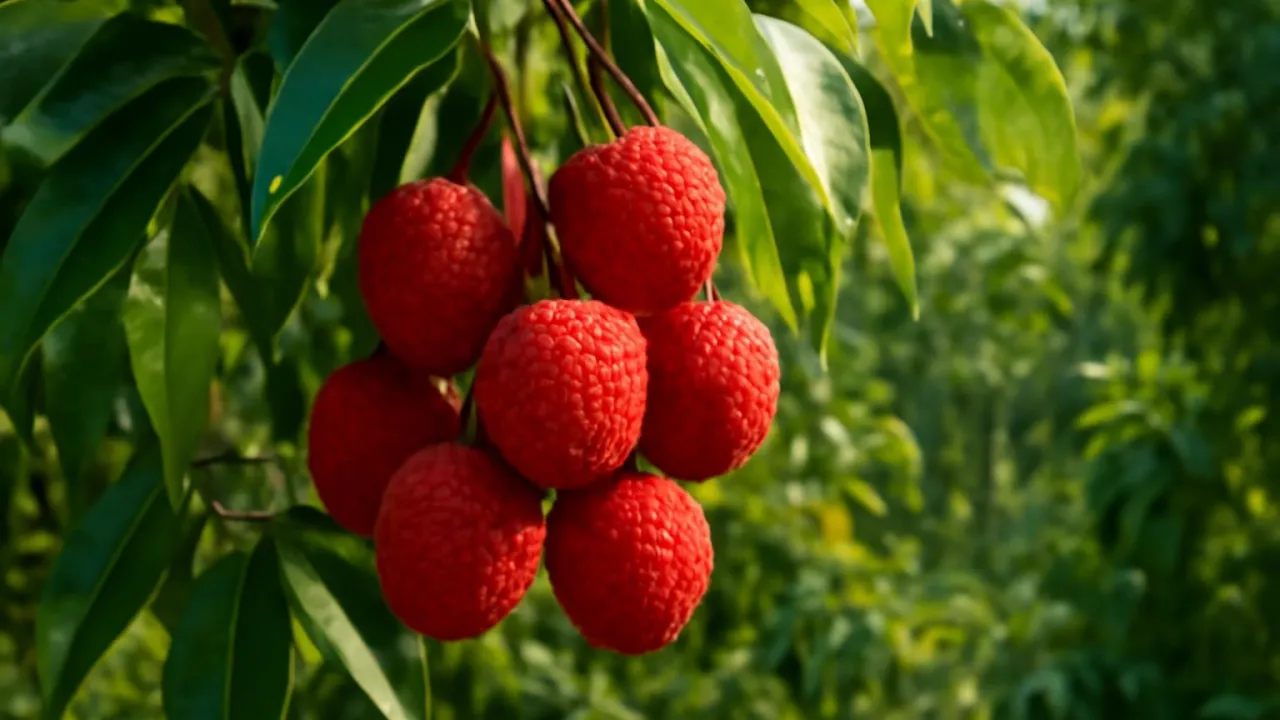
Lychee fruit has a rough, spiky red skin that protects the inside. People off the skin before eating. The skin looks tough but is soft when handled gently.
2
Sweet Taste and Juicy Flesh
Inside the lychee is white, , and sweet with a little sour flavor. Many animals enjoy eating lychee fruits in the wild. People like to eat lychee fresh or drink its juice.
3
Grows on Tall Tropical Trees
Lychee trees grow best in warm, sunny forests. They can reach up to 40 feet tall. These trees need regular watering to produce many fruits each year.
Lychee’s bright red skin signals ripeness and invites animals to help spread its seeds.
✨ Word Sparks (Grade 3 Glossary)
Tap 🔊 to hear
camouflage
How something hides by blending in
pollinator
An animal that helps plants make seeds
nutrients
Food that helps plants and animals grow
🪝
Did you know lychee fruit wears a spiky skin to hide from predators?
1
Protective Spiky Skin
Lychee fruit has a rough, spiky skin that helps it from predators. This skin acts as a natural barrier to protect the juicy flesh inside. When ripe, the skin turns bright red to attract animals for seed dispersal. The spikes are soft enough to peel off easily.
2
Sweet, Juicy Flesh Inside
Inside the lychee is white, juicy flesh filled with and water. This flesh tastes sweet with a slight sourness that many animals enjoy. The juicy fruit helps attract and animals that spread its seeds. The seed inside is hard and dark brown, protecting the plant’s next generation.
3
Tropical Tree Habitat
Lychee trees grow in tropical climates where they receive plenty of sunlight and water. These trees can grow up to 40 feet tall and produce fruit annually. Their leaves help capture sunlight for photosynthesis, which creates food for growth. Lychee trees adapt well to warm, humid environments.
4
Role in Nature
Lychee fruits are an important food source for many animals, including birds and insects. This relationship helps spread lychee seeds across the forest. The tree also supports local ecosystems by providing shade and shelter. Humans cultivate lychee for its delicious fruit and economic value.
Lychee’s bright red skin both protects the fruit and signals animals to spread its seeds.
✨ Word Sparks (Grade 4 Glossary)
Tap 🔊 to hear
symbiotic
Two living things helping each other
photosynthesis
How plants make food from sunlight
ecosystem
All living things in one place
🪝
How does lychee’s spiky skin help it survive in tropical forests?
1
Spiky Skin Protects and Signals
Lychee’s spiky skin acts as a protective barrier that deters many predators from eating the fruit prematurely. When the fruit ripens, its bright red color signals to animals that it is ready to eat, encouraging seed dispersal. This cause-and-effect relationship helps lychee reproduce successfully in dense tropical forests. The skin’s texture also reduces damage from insects and weather.
2
Tropical Habitat and Growth
Lychee trees thrive in warm, humid tropical climates with abundant sunlight and regular rainfall. These conditions allow the trees to grow tall and produce large crops of fruit each year. The trees’ broad leaves capture sunlight efficiently for , which provides energy for growth and fruit development. Human cultivation has expanded lychee’s range beyond its native Southeast Asia.
3
Role in Ecosystems and Agriculture
Lychee fruits serve as a vital food source for birds, insects, and mammals, forming an important part of the local food web. This relationship benefits both the lychee tree and the animals that help spread its seeds. Farmers cultivate lychee commercially, contributing to local economies and food supplies. However, pests and diseases can impact lychee crops, requiring careful management.
4
Geographic Distribution and Impact
Originally native to Southeast Asia, lychee cultivation has spread to tropical regions worldwide, including parts of India, Africa, and the Americas. This global distribution supports diverse agricultural industries and introduces lychee to new . While lychee trees adapt well to many tropical environments, they require specific care to maintain fruit quality and tree health. Conservation of native forests helps protect wild lychee populations.
Lychee’s spiky red skin and juicy flesh evolved together to protect seeds and attract animals for dispersal.
✨ Word Sparks (Grade 5 Glossary)
Tap 🔊 to hear
aril
Juicy part covering a seed inside some fruits
frugivorous
Animals that eat mostly fruit
morphology
The shape and structure of living things
🪝
What makes lychee a fascinating fruit in tropical botany and ecology?
1
Scientific Classification and Origins
Lychee, scientifically known as Litchi chinensis, belongs to the Sapindaceae family, native to the subtropical and tropical regions of Southeast Asia. This deciduous tree can grow up to 40 feet tall and produces clusters of small, round fruits covered by a rough, red, spiky rind. The fruit’s unique and reproductive strategy have evolved to maximize seed dispersal by animals in dense forest ecosystems. Lychee cultivation dates back over 2,000 years in China, highlighting its cultural and agricultural importance.
2
Physiological Adaptations and Fruit Mechanics
The lychee fruit’s spiky skin serves as a physical defense mechanism against herbivores and insect damage, while its bright red coloration acts as a visual signal to attract animals. Inside, the translucent, juicy surrounding the seed provides essential nutrients and moisture, facilitating seed dispersal through animal consumption. The seed itself is hard and dark brown, protecting the embryo during digestion and aiding successful germination. Lychee trees perform photosynthesis efficiently in warm, humid climates, supporting vigorous growth and fruit production.
3
Ecological Roles and Conservation Status
Lychee trees play a significant role in tropical forest ecosystems by providing food and habitat for a variety of animals, including birds, bats, and insects, which in turn assist in pollination and seed dispersal. While widely cultivated globally, wild lychee populations face threats from deforestation and habitat loss, emphasizing the need for conservation efforts. Sustainable farming practices and forest preservation are critical to maintaining genetic diversity and ecological balance in lychee’s native range.
4
Agricultural History and Economic Impact
Historically cultivated in China and Southeast Asia, lychee has become an important commercial fruit crop in tropical and subtropical regions worldwide. Its sweet flavor and unique texture have made it popular in global markets, contributing significantly to local economies. Advances in cultivation techniques, pest management, and post-harvest handling have increased lychee production and export potential. However, lychee farming requires careful climate and soil management to optimize yield and fruit quality.
5
Quantitative Comparisons and Growth Conditions
Lychee trees can grow up to 40 feet (12 meters) tall and produce fruits approximately 1 to 1.5 inches (2.5 to 4 centimeters) in diameter. The fruit ripens in summer when temperatures range between 75°F and 90°F (24°C to 32°C), requiring consistent watering to maintain juicy flesh. Lychee seeds weigh about 1 gram each and are dispersed primarily by birds and mammals. Compared to similar tropical fruits, lychee’s unique combination of spiky skin and juicy provides both protection and attraction for seed dispersers.