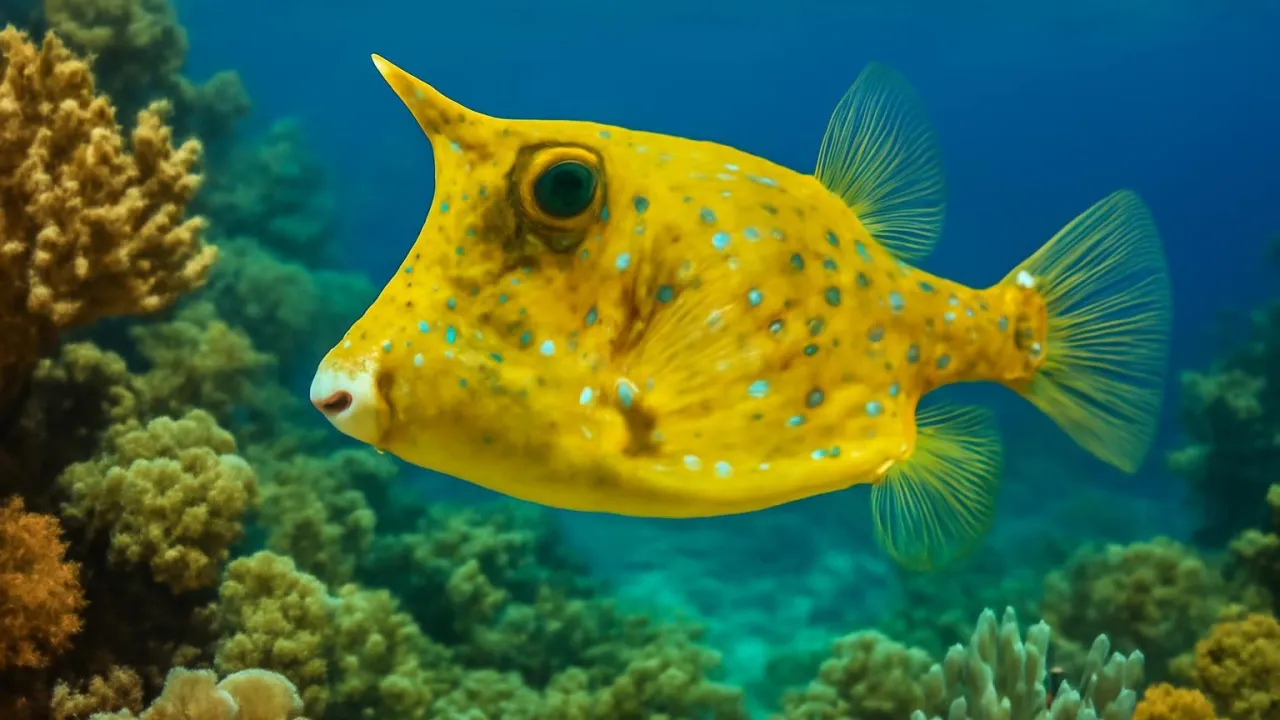
When scared, the longhorn cowfish can release a poison to protect itself!
✨ Word Sparks (Grade 2 Glossary)
Tap 🔊 to hear
predator
An animal that hunts other animals
coral reef
Underwater home made of tiny animals
algae
Green plants that grow in water
🪝
Have you ever seen a fish with horns like a cow?
1
Horned Armor
The longhorn cowfish has two sharp horns on its head and a box-shaped body. It uses these horns to protect itself from . The fish’s yellow color helps it blend in with . Its body is covered with hard plates that act like armor.
2
Where It Lives
This fish lives in warm in the Indo-Pacific Ocean. It likes shallow waters where it can find food easily. The reefs provide shelter from bigger fish that might eat it. The cowfish swims slowly among the coral branches.
3
What It Eats
The longhorn cowfish eats small animals like shrimp and crabs. It also eats growing on rocks and coral. The fish uses its mouth to suck up food from the ocean floor. It searches carefully for tasty snacks.
The longhorn cowfish’s toxin can be deadly to other fish if it feels threatened!
✨ Word Sparks (Grade 3 Glossary)
Tap 🔊 to hear
camouflage
Colors that help animals hide
toxin
A poison made by some animals
crustacean
Small animals like shrimp with shells
🪝
Did you know the longhorn cowfish wears a hard shell like armor?
1
Amazing Horns and Armor
The longhorn cowfish has two long horns that point forward from its head. Its body is covered with hard bony plates that form a box shape. This armor protects it from predators in the coral reef. The horns can make it hard for enemies to swallow the fish.
2
Where It Lives and Grows
This fish lives in warm Indo-Pacific coral reefs where it finds shelter among coral branches. It grows up to 20 inches long and moves slowly using small fins. The coral reef provides nutrients and safety from larger predators. The cowfish’s slow swimming is an adaptation to its armored body.
3
What It Eats and How
The longhorn cowfish feeds on small , worms, and algae found on the ocean floor. It uses its small mouth to suck up food while foraging carefully. This feeding helps control algae growth and keeps the reef healthy. Its diet makes it an important part of the coral reef ecosystem.
4
Defense and Survival
When threatened, the cowfish can release a from its skin to deter predators. This chemical defense is a powerful adaptation against attacks. Its bright yellow color warns enemies that it might be poisonous. and toxin work together to keep the fish safe.
The longhorn cowfish can survive attacks thanks to both its horns and deadly toxin!
✨ Word Sparks (Grade 4 Glossary)
Tap 🔊 to hear
aposematic
Bright colors that warn of danger
invertebrate
Animals without bones, like shrimp
ecosystem
All living things in one place
🪝
How do the longhorn cowfish’s horns and toxin help it survive in coral reefs?
1
Protective Horns and Armor
The longhorn cowfish’s two long horns grow from its head and make it difficult for predators to bite or swallow it. Its box-shaped body is covered in hard bony plates that act as armor against attacks. This physical defense allows the fish to survive in coral reef filled with predators. The horns also serve as a warning signal to potential threats.
2
Role in the Coral Reef Ecosystem
Living in the warm Indo-Pacific coral reefs, the cowfish plays an important role in maintaining reef health by eating algae and small . This feeding behavior helps prevent algae from overgrowing and suffocating corals. The cowfish’s slow swimming and armored body are adaptations to its niche in the reef’s complex food web. It also serves as prey for larger fish, linking different levels of the .
3
Chemical Defense and Warning Colors
When threatened, the longhorn cowfish releases a toxin from its skin that can be harmful or deadly to other fish. This chemical defense deters predators and reduces attacks. Its bright yellow coloration acts as coloration, warning predators of its toxicity. This combination of physical and chemical defenses increases its chances of survival.
4
Geographic Range and Habitat
The longhorn cowfish is found throughout the Indo-Pacific region, including coral reefs from East Africa to the central Pacific Ocean. It prefers shallow waters where sunlight supports coral growth and algae availability. Human activities like reef damage and pollution can threaten its habitat. Conservation efforts focus on protecting coral reefs to support species like the cowfish.
1. What makes it hard for predators to eat the cowfish?
2. Where does the longhorn cowfish live?
🤯 Mind-Blowing Fact • Grade 5
The longhorn cowfish’s toxin can kill fish within meters, creating a chemical shield around itself!
✨ Word Sparks (Grade 5 Glossary)
Tap 🔊 to hear
carapace
Hard shell covering an animal’s body
aposematic
Bright colors warning predators of danger
ostracitoxin
A poison released by boxfish skin
🪝
What unique adaptations allow the longhorn cowfish to thrive in coral reef ecosystems?
1
Taxonomy and Scientific Context
The longhorn cowfish, Lactoria cornuta, belongs to the family Ostraciidae, known as boxfishes. Its name reflects its distinctive long horns and rigid, box-like formed by fused bony plates. This species is part of the order Tetraodontiformes, which includes pufferfish and triggerfish. These taxonomic relationships highlight evolutionary adaptations for defense and specialized swimming.
2
Physiological Mechanics and Movement
Unlike many fish, the longhorn cowfish swims using small pectoral fins and a dorsal fin, moving slowly but with precise control. Its rigid, armored body limits flexibility, so it relies on fin movements rather than body undulations. This unique swimming style allows it to navigate complex coral structures carefully. The horns also help stabilize the fish during slow, deliberate movements.
3
Chemical Defense and Toxicity
The cowfish produces , a potent toxin released from its skin when stressed or threatened. This toxin can be lethal to other fish in the surrounding water, providing an effective chemical defense. The bright yellow coloration warns potential predators of this danger. This dual defense strategy reduces predation risk in the diverse coral reef environment.
4
Conservation and Habitat Challenges
The longhorn cowfish inhabits coral reefs across the Indo-Pacific, from East Africa to the central Pacific. These reefs face threats from climate change, pollution, and destructive fishing practices. Habitat degradation impacts cowfish populations by reducing shelter and food availability. Conservation efforts focus on protecting reef ecosystems to sustain biodiversity, including species like the cowfish.
5
Quantitative Comparisons and Ecological Role
Growing up to 20 inches (50 centimeters) in length, the longhorn cowfish is slower than many reef fish, swimming at about 0.5 miles per hour. Its toxin can affect fish within several meters, creating a chemical safety zone. By feeding on small crustaceans and algae, it helps regulate reef community balance. These adaptations make it a unique and important member of coral reef ecosystems.