1. What two body parts does a ligament connect together?
2. About how many ligaments help hold the human skeleton together?
🤯 Mind-Blowing Fact • Grade 2
Two famous ligaments cross right inside the center of your knee in the shape of the letter X to keep your shinbone from sliding!
✨ Word Sparks (Grade 2 Glossary)
Tap 🔊 to hear
Sprain
Stretching a joint ligament a little too far
Stabilize
Keep something balanced, secure, and steady
Collagen
Strong rope-like protein fibers inside body straps
🪝
Why doesn't your knee bend backward like a flamingo's leg when you kick a soccer ball?
1
Bone-to-Bone Buckles
Swing your lower leg forward until your knee is straight. Notice how it stops right on cue instead of bending the wrong way! Tough, silvery-white bands called ligaments strap one bone directly to another bone across every movable joint.
2
Guiding Safe Directions
Think of ligaments like the sturdy hinges and safety chains on a heavy door. They allow your elbows, knees, and fingers to swing smoothly along safe paths while blocking twists that could wobble the joint.
3
What Is a Sprain?
If you step in a hole while running and twist your ankle too far, a ligament can get overstretched—doctors call that a , and rest helps it heal strong again!
1. What happens inside a joint when a doctor says you have a mild ankle sprain?
2. What letter shape do two famous stabilizing ligaments form inside the middle of your knee?
🤯 Mind-Blowing Fact • Grade 3
Close your eyes and bend your elbow halfway—tiny stretch sensors inside your ligaments help your brain know its exact angle without looking!
✨ Word Sparks (Grade 3 Glossary)
Tap 🔊 to hear
Cruciate
Shaped like a cross inside your knee joint
Elastin
Stretchy protein helping tissues snap back into shape
Sensor
Tiny nerve detector sending updates to your brain
🪝
How do ligaments act as both super-strong safety cables AND secret motion sensors for your brain?
1
Woven From Protein Ropes
Twist a paper towel into a tight rope and try pulling the ends apart—suddenly it is way stronger than a flat sheet! Your body builds over nine hundred ligaments the exact same way, bundling thousands of microscopic collagen fibers into tough, shimmering straps anchored from bone to bone.
2
Ligaments Versus Tendons
Kids and adults often mix up ligaments and tendons, so here is an easy trick: ligaments link bone to bone to steady a joint, while tendons tie muscle to bone to pull it into motion. Ligaments also contain slightly more stretchy fibers than tendons so joints can give a tiny bit under sudden bumps.
3
Crossing Guards Inside the Knee
Inside your knee, four major ligaments team up: two run along the outer sides, and two ('cross-shaped') ligaments—including the famous ACL athletes talk about—crisscross in the center so your shin never slides out from under your thigh.
4
Built-In Balance Sensors
Ligaments are packed with tiny nerve that radio your brain the instant a joint tilts, telling muscles to tighten up and save your balance!
1. How is a ligament's job different from a tendon's job?
2. How do tiny nerve sensors inside your ankle ligaments help you when you step on uneven ground?
🤯 Mind-Blowing Fact • Grade 4
The Y-shaped iliofemoral ligament at the front of your hip is the strongest ligament in the human body, able to hold more than 770 pounds of force!
✨ Word Sparks (Grade 4 Glossary)
Tap 🔊 to hear
Proprioception
Your brain's hidden sense of body position
Iliofemoral Ligament
Super-strong Y-shaped ligament steadying the front hip
Mechanoreceptor
Microscopic nerve sensor detecting stretch or pressure
🪝
Why are ligament fibers woven with tiny waves like crimped ribbon instead of pulled drum-tight?
1
Crimped Springs Built for Action
Picture jumping off a park bench and pivoting sharply to chase a frisbee. In a fraction of a second, ligaments across your ankles, knees, and hips absorb hundreds of pounds of sideways and rotational force. Under a microscope, resting ligament collagen fibers actually look wavy—like crimped ribbon! When a joint begins to stretch, those tiny waves uncoil smoothly first before the tough collagen ropes pull taut like steel cables.
2
The Strongest Strap in Your Body
Not all ligaments are small wrist bands. Crossing the front of your hip joint sits an upside-down Y-shaped giant called the . Capable of withstanding pull forces over 770 pounds (350 kilograms), it lets humans stand upright effortlessly without constantly exhausting leg muscles.
3
Proprioception: Your Sixth Sense
Far from passive duct tape, ligaments bristle with specialized that feed your brain's —your hidden 'sixth sense' of body position in space. If an ankle rolls inward on a trail pebble, ligament nerves fire rapid reflex signals to your calf muscles to pull the foot flat before a severe sprain happens.
4
Beyond Bones: Supporting Organs Too
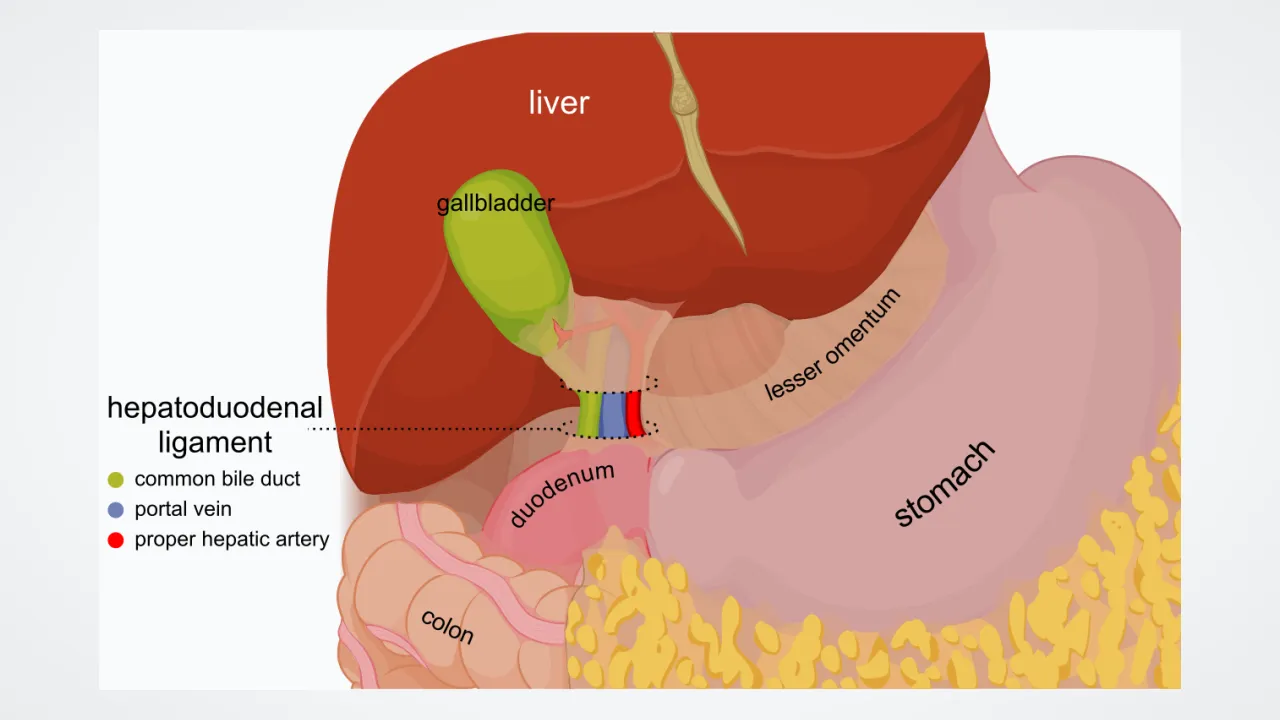
While skeletal ligaments stabilize joints, fold-like internal ligaments inside your abdomen even act like gentle hammocks that hold organs such as your liver securely in place when you jump!
1. Why do resting collagen fibers inside a ligament have a wavy, crimped pattern?
2. How does the Y-shaped iliofemoral ligament in your hip save your body energy every day?
🤯 Mind-Blowing Fact • Grade 5
Running along your spine is a special set of 'yellow ligaments' (ligamenta flava) made of nearly 80% stretchy elastin that springs your back upright every time you bend over!
✨ Word Sparks (Grade 5 Glossary)
Tap 🔊 to hear
Fibroblasts
Living cells that spin tough collagen ligament fibers
Enthesis
Specialized anchor zone bonding ligament smoothly into bone
Ligamenta Flava
Elastic yellow spinal ligaments recoiling your back upright
🪝
How do dense bands of Type I collagen combine steel-like tensile strength with lightning-fast neural reflexes?
1
Dense Regular Connective Tissue Engineering
Across the human skeleton, more than nine hundred ligaments guide joint kinematics while preventing traumatic dislocations. Histologically classified as dense regular (or slightly interlaced) connective tissue, skeletal ligaments consist primarily of tightly packed Type I collagen bundles maintained by spindle-shaped cells called , interwoven with small percentages of elastic fibers and lubricating proteoglycans.
2
Non-Linear Stress-Strain Mechanics
Biomechanists admire ligaments for their clever 'toe-region' stress-strain curve. At rest, collagen fibrils display a microscopic sinusoidal crimp. During gentle everyday motion, uncrimping allows smooth, low-resistance gliding; however, if a sudden athletic pivot threatens joint stability, the aligned collagen triple-helices recruit simultaneously, skyrocketing in stiffness to resist tensile loads rivaling structural cables of comparable thickness.
3
Anatomical Specializations: Yellow Ligaments to the ACL
While most ligaments gleam pearly white from collagen—such as the knee's anterior and posterior cruciate ligaments (ACL and PCL) or the hip's 3,500-newton iliofemoral ligament of Bigelow—the spine's ('yellow ligaments') contain up to eighty percent elastin! Stretching between vertebral arches whenever you bend forward to tie your shoes, these elastic bands recoil smoothly to help lift your torso upright.
4
The Ligamento-Muscular Reflex Arc
Far more than passive mechanical straps, living ligaments function as sophisticated sensory antennas. Embedded Ruffini endings, Pacinian corpuscles, free nerve terminals, and Golgi-like tension receptors continuously stream high-speed proprioceptive data along myelinated nerve fibers to the spinal cord and cerebellum. Whenever an athlete steps onto an uneven root and sudden shear threatens a joint capsule, this ligamento-muscular reflex arc triggers protective muscular co-contractions within tens of milliseconds—dynamically stiffening surrounding muscles to rescue joint alignment before collagen fibers tear.
5
Entheses and Healing Dynamics
Where each ligament anchors into hard cortical bone—a specialized four-zone transition called a fibrocartilaginous —tissue grades seamlessly from flexible parallel collagen fibers through unmineralized and mineralized fibrocartilage directly into living bone, preventing sharp mechanical stress concentrations. Because intra-articular ligaments like the knee's anterior cruciate ligament receive sparse microvascular blood flow compared to extra-articular straps like the medial collateral ligament, severe Grade III tears cannot bridge gaps alone and inspired 20th-century orthopedic pioneers to invent minimally invasive arthroscopic graft reconstructions.