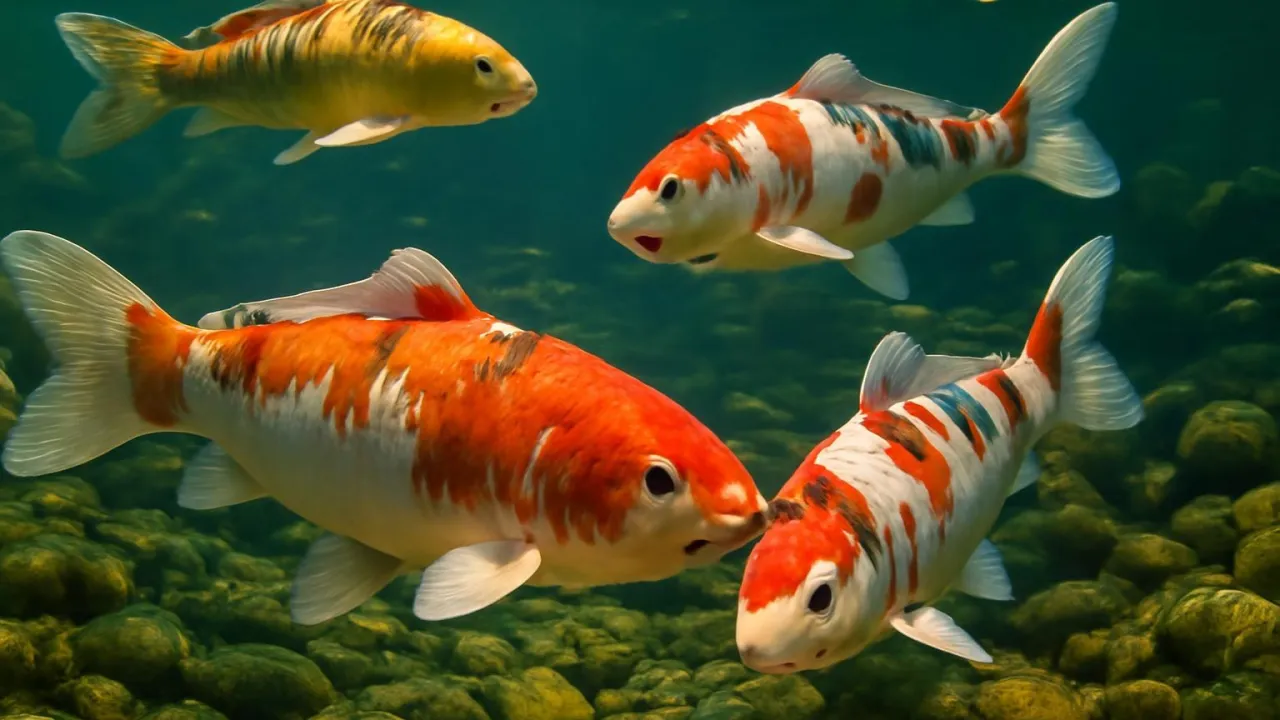
Koi carp can recognize human faces and remember who feeds them!
✨ Word Sparks (Grade 2 Glossary)
Tap 🔊 to hear
freshwater
Water without salt, like ponds or rivers
crustaceans
Small water animals with hard shells
environment
The place where animals live and grow
🪝
Have you ever seen a fish with shiny, colorful scales like a rainbow?
1
Colorful Scales
Koi carp have bright, shiny scales that reflect light beautifully. Their colors include red, white, orange, and black. These colors make koi popular for garden ponds.
2
Where They Live
Koi live in ponds and slow rivers. They prefer warm water and clean . People often keep koi in outdoor ponds for decoration.
3
What They Eat
Koi carp eat plants, insects, and small found in water. They use their mouths to suck up food from the pond bottom. They are friendly and often eat from people’s hands.
Koi carp can remember human faces and come when called for food.
✨ Word Sparks (Grade 3 Glossary)
Tap 🔊 to hear
camouflage
Colors that help animals hide
barbels
Whisker-like feelers near a fish’s mouth
omnivore
An animal that eats plants and animals
🪝
Did you know koi carp can live more than fifty years and recognize people?
1
Colorful Adaptations
Koi carp have bright, colorful scales that provide in ponds. Their patterns help protect them from predators. These adaptations increase their chances of survival. Bright colors also attract mates during breeding.
2
Habitat and Life Cycle
Koi live in freshwater ponds and slow-moving rivers. They hatch from eggs laid on plants underwater. Young koi grow quickly by eating small insects and plants. They develop to help find food.
3
Feeding and Behavior
Koi are that eat plants, insects, and small crustaceans. They use their to sense food on pond bottoms. Koi can learn to recognize their owners and feeding times. This shows their smart behavior.
4
Human Connection
People breed koi for their bright colors and patterns. They are symbols of luck and friendship in many cultures. Koi ponds create peaceful, beautiful garden spaces. This makes them popular worldwide.
Koi carp’s bright colors help them survive and play important roles in pond ecosystems worldwide.
✨ Word Sparks (Grade 4 Glossary)
Tap 🔊 to hear
ecosystem
All living things and their environment together
predator
An animal that hunts other animals for food
reproduction
How animals have babies and make more
🪝
How do koi carp’s bright colors affect their survival and their role in ecosystems?
1
Color and Survival
Koi carp’s bright colors provide camouflage that helps them avoid in clear water. Their distinct patterns also attract mates during breeding seasons. This cause-and-effect relationship is key for their survival and . Bright colors can sometimes make them more visible to predators in murky water.
2
Ecosystem Role
Koi carp are important in pond food webs because they eat algae, insects, and small crustaceans. By feeding on plants, they help control algae growth, which improves water quality for other animals. In turn, koi serve as prey for larger fish, birds, and mammals, helping maintain balance.
3
Human Impact
Humans breed koi carp for ornamental ponds worldwide, which sometimes affects native fish populations negatively. Introducing koi into wild habitats can disrupt local by competing for food and space. Responsible care and preventing koi from escaping into the wild help protect natural waterways and biodiversity.
4
Geographic Distribution
Originally from East Asia, koi carp are now found in ponds and water gardens across many continents. Their adaptability to different climates allows them to thrive in diverse environments worldwide. This wide distribution reflects human interest in koi as decorative fish and cultural symbols.
2. What can happen if koi are put into wild habitats?
🤯 Mind-Blowing Fact • Grade 5
Koi carp can live over 70 years and have been bred for colorful scales for centuries.
✨ Word Sparks (Grade 5 Glossary)
Tap 🔊 to hear
barbels
Whisker-like feelers that help fish find food
swim bladder
Organ that helps fish control their buoyancy
hybridization
When two different species breed and mix genes
🪝
What scientific features make koi carp unique among freshwater fish worldwide?
1
Taxonomy and Scientific Context
Koi carp, scientifically named Cyprinus rubrofuscus, belong to the Cyprinidae family, which includes carps and minnows. This species is a domesticated variant of the wild common carp, selectively bred for vibrant coloration and scale patterns. Their genetic diversity reflects centuries of human cultivation and selective breeding for ornamental traits.
2
Physiological Mechanics
Koi carp possess near their mouths that function as tactile sensors, aiding in detecting food in murky pond bottoms. Their scales are composed of overlapping bony plates that provide protection and reflect light, creating their characteristic shimmering appearance. Koi have a that allows precise buoyancy control for navigating various water depths.
3
Conservation and Botanical History
Though koi carp are not endangered, their introduction into non-native habitats can threaten local fish species through competition and . Historically, koi breeding began in Japan during the 19th century, evolving into a cultural art form symbolizing perseverance and good fortune. Conservation efforts focus on protecting native ecosystems from koi overpopulation.
4
Quantitative Comparisons
Adult koi carp can grow up to 36 inches (91 cm) long and weigh as much as 30 pounds (14 kg). They thrive in water temperatures ranging from 59 to 77 degrees Fahrenheit (15 to 25 degrees Celsius). Koi can live for over 50 years, with some individuals reaching ages beyond 70 years in optimal conditions.
5
Ecological and Cultural Importance
Koi carp play significant roles in freshwater pond ecosystems by controlling algae and insect populations, thus maintaining water quality. Culturally, koi are celebrated in festivals and art worldwide, symbolizing strength, courage, and longevity. Their presence in gardens enhances human well-being through aesthetic beauty and peaceful ambiance.