Karnak Temple Complex
Whispers of Stone in Ancient Egypt
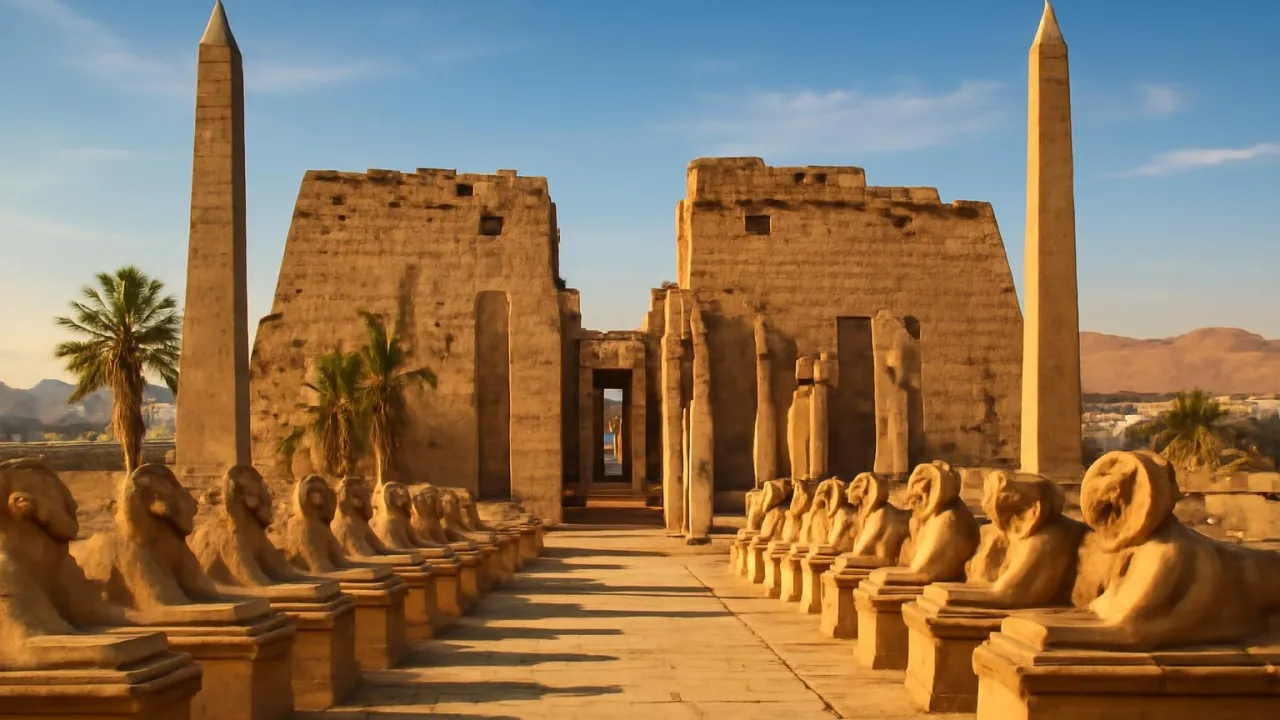
If you lined up all of Karnak’s stone columns, they would stretch for over a mile!
1 An Architectural Marvel Through the Ages
The Karnak Temple Complex, built and expanded over nearly two millennia, stands as the largest religious structure ever constructed by humans. Its vast layout includes a series of monumental , sanctuaries, obelisks, and the iconic Great Hypostyle Hall, whose 134 papyrus-shaped columns soar up to 69 feet (21 meters) high. The main axis aligns precisely with the rising sun during the winter solstice, demonstrating the Egyptians’ mastery of astronomical engineering. Successive pharaohs from the Middle Kingdom through the Ptolemaic era contributed to Karnak’s ever-growing grandeur, each leaving their mark in stone.
2 Engineering Feats and Construction Techniques
Ancient builders employed ingenious methods to transport and erect blocks weighing up to 70 tons, utilizing mudbrick ramps, wooden sledges, and coordinated labor teams. The obelisks, carved from single pieces of Aswan granite, required advanced knowledge of leverage, balance, and friction reduction to stand upright and remain stable for millennia. The columns’ capitals, modeled after blooming papyrus plants, not only supported massive stone but also distributed weight evenly, preventing collapse. Hieroglyphic inscriptions and carved reliefs on every surface record the technical and ceremonial achievements of Egypt’s greatest builders.
3 Acoustics and Ritual Soundscapes
The temple’s architecture was designed with acoustic resonance in mind, amplifying chants, music, and ritual sounds to create an awe-inspiring atmosphere. The stone surfaces reflect and blend sound waves, allowing a single voice to echo throughout the Hypostyle Hall. During religious festivals, processions of priests, musicians, and dancers would fill the air with rhythmic vibrations, connecting worshippers to the divine. This intentional acoustic engineering enhanced the spiritual experience for all who entered the sacred precinct.
4 Historical and Cultural Significance
Karnak served as the spiritual heart of ancient Thebes and the principal sanctuary of the god Amun-Ra, shaping Egyptian religion and society for over 1,500 years. The annual Opet Festival, which celebrated the renewal of kingship, saw thousands gather in processions along the avenue of sphinxes. The temple’s inscriptions provide a primary source for understanding Egyptian mythology, royal lineage, and daily life. Today, Karnak is a UNESCO World Heritage Site, drawing scholars and visitors from around the globe to study its enduring mysteries.
5 Preservation and Modern Exploration
Ongoing archaeological excavations and conservation efforts are vital for protecting Karnak’s fragile sandstone structures from , flooding, and human impact. Modern technologies such as 3D laser scanning and ground-penetrating radar help researchers uncover hidden chambers and reconstruct collapsed sections. The temple complex continues to inspire architects, engineers, and artists, serving as a testament to human ingenuity and the enduring power of belief. Every year, new discoveries at Karnak deepen our understanding of ancient Egypt’s achievements and its influence on world history.
1. How did Karnak’s builders raise massive obelisks?
2. Why is Karnak still important to scientists and historians today?