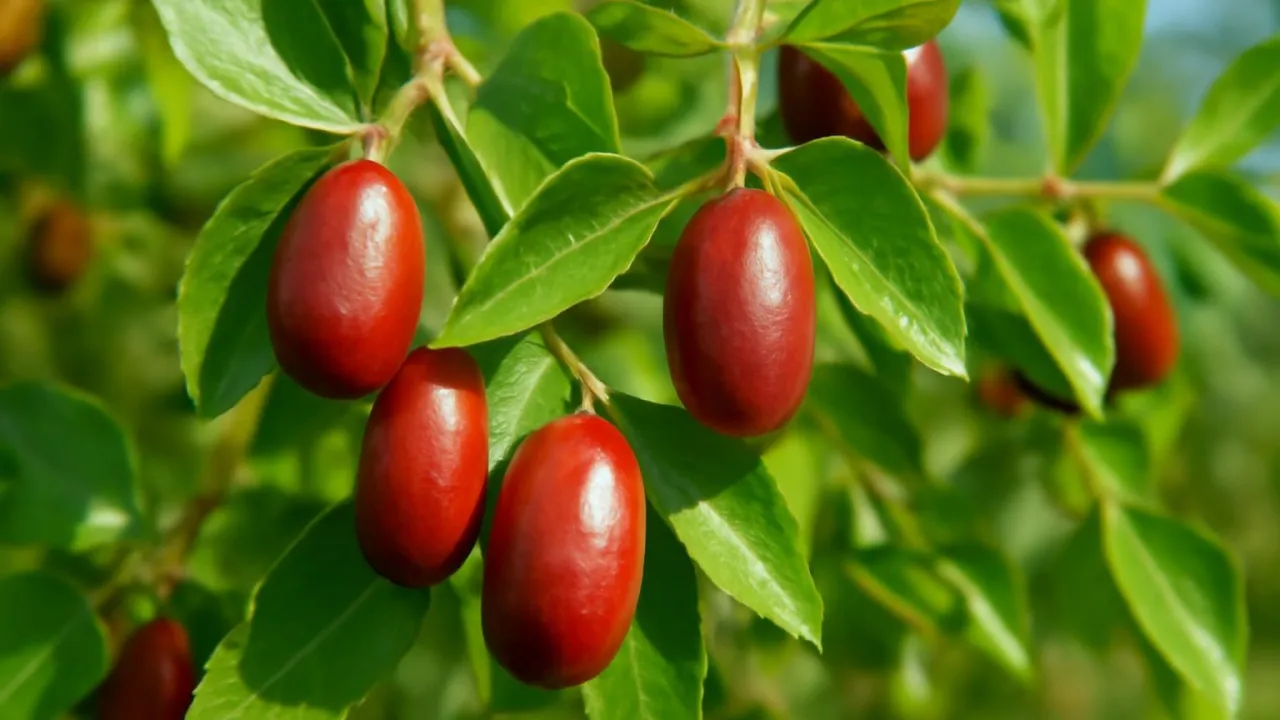
Jujube fruits can dry naturally and keep their sweet taste for a long time.
✨ Word Sparks (Grade 2 Glossary)
Tap 🔊 to hear
ripe
When fruit is ready to eat
thrive
To grow well and be healthy
dry
To lose water and become hard
🪝
Have you ever tasted a fruit that can dry and stay sweet for months?
1
Jujube Fruit Colors
Jujube fruits start green and turn brown when . They are small and round. Birds like to eat them. The fruit grows on tall trees.
2
Where Jujubes Live
Jujube trees grow best in warm, sunny places with good soil. They need moderate water to . These trees can live many years. People grow them in Asia and other warm lands.
3
Sweet and Dry Jujubes
Jujube fruit tastes sweet like apples or dates. People eat them fresh or . When dried, they stay sweet for months. This makes them a tasty snack all year.
Jujube fruit can dry naturally on the tree and keep its sweet flavor for months.
✨ Word Sparks (Grade 3 Glossary)
Tap 🔊 to hear
adaptation
A change that helps living things survive
pollination
When insects help plants make seeds
nutrients
Food parts plants and animals need to live
🪝
Did you know jujube fruit can dry like dates and still taste sweet all year?
1
Jujube Fruit and Tree
Jujube fruits are small, round, and change color from green to brown when ripe. The jujube tree can grow up to 30 feet tall and has thorny branches. It thrives in warm climates and needs plenty of sunlight. The fruit’s skin is smooth and shiny, helping protect it from pests.
2
How Jujubes Survive
Jujube trees have tough leaves that reduce water loss, an for dry areas. The fruit’s sweet taste attracts animals, which help spread seeds for new trees. Jujubes can dry naturally on the tree, which helps preserve and sugars. This drying ability is a survival trait in hot, dry environments.
3
Jujube’s Role in Nature
Jujubes provide food for birds and insects, making them important in the food web. Their seeds grow into new trees, helping forests grow and stay healthy. by insects helps the tree produce fruit. The tree’s thorns protect it from predators like deer.
4
Interesting Jujube Facts
Jujube fruit is sometimes called a red date because it looks like a date fruit. It is used in traditional medicine for health benefits. The fruit contains vitamins and antioxidants that help protect the body. People enjoy eating jujubes fresh, dried, or cooked in recipes.
Jujube trees can survive droughts by growing deep roots to find underground water.
✨ Word Sparks (Grade 4 Glossary)
Tap 🔊 to hear
herbivores
Animals that eat plants
symbiotic
A helpful relationship between living things
erosion
Soil washing away by wind or water
🪝
Have you ever wondered how jujube trees survive in hot, dry climates and help other living things?
1
Jujube Tree Adaptations
Jujube trees have evolved thick, waxy leaves that reduce water loss through evaporation, helping them survive in arid environments. Their thorny branches protect the tree from like deer, which might otherwise eat the leaves or fruit. The tree’s ability to grow deep roots allows it to access underground water during droughts. These adaptations enable jujubes to thrive in warm, dry regions across Asia and the Middle East.
2
Ecological Role of Jujubes
Jujube fruits provide an important food source for birds, insects, and mammals, supporting local food webs. Pollinators such as bees help fertilize flowers, allowing the tree to produce nutritious fruit. The tree’s presence can improve soil quality by preventing with its root system. Humans also cultivate jujubes for food and traditional medicine, showing a relationship between people and the plant.
3
Geographic Distribution
Originally native to China, jujube trees have spread to many warm climates worldwide, including parts of the Middle East, India, and the southern United States. They grow best in well-drained soils with full sun exposure and tolerate drought better than many fruit trees. Their ability to adapt to different soils and climates has made them valuable in diverse agricultural systems. Jujubes are especially popular in regions with hot summers and mild winters.
4
Human Uses and Impact
People harvest jujube fruit fresh or dry it for long-term storage, making it a versatile food source. The fruit is used in cooking, snacks, and traditional remedies for its health benefits. Cultivation of jujubes supports rural economies and helps maintain biodiversity by preserving heirloom varieties. However, overharvesting and habitat loss can threaten wild jujube populations, highlighting the need for sustainable farming practices.
Jujube fruit’s natural drying process preserves sweetness and nutrients without added sugar or refrigeration.
✨ Word Sparks (Grade 5 Glossary)
Tap 🔊 to hear
drupe
A fruit with a hard seed inside
transpiration
Water loss from leaves into the air
antioxidant
A substance that helps protect cells
🪝
Did you know the jujube tree’s unique adaptations allow it to thrive in harsh climates and support ecosystems?
1
Scientific Classification and Origins
The jujube tree, scientifically named Ziziphus jujuba, belongs to the Rhamnaceae family, which includes many shrubs and small trees. Native to China, it has been cultivated for over 4,000 years and spread across Asia, the Middle East, and parts of Europe. Its long history reflects its importance as both a food source and medicinal plant. Taxonomically, it is a deciduous tree that produces a fruit, botanically classified as a true fruit.
2
Physiological Adaptations to Environment
Jujube trees possess thick, leathery leaves with a waxy cuticle that minimizes , conserving water in arid climates. Their extensive root systems penetrate deep soil layers to access groundwater during drought periods. The fruit’s ability to dry naturally on the tree concentrates sugars and preserves nutrients, allowing long-term storage without refrigeration. These physiological traits enable the jujube to survive and reproduce in harsh environments with limited water availability.
3
Ecological and Human Importance
Ecologically, jujube trees provide food for various animals, including birds and mammals, contributing to seed dispersal and biodiversity. Human cultivation supports rural economies through fruit production and traditional medicine, where jujube extracts are valued for and immune-boosting properties. The tree also plays a role in agroforestry systems by improving soil stability and reducing erosion. Conservation efforts focus on protecting wild populations from overharvesting and habitat destruction.
4
Botanical and Culinary Characteristics
Botanically, the jujube fruit is a with a single hard seed inside, often compared to dates because of its sweet flavor when dried. Culinary uses vary widely, including fresh eating, drying for snacks, and incorporation into teas, desserts, and traditional dishes. Nutritional comparisons show dried jujubes contain higher sugar concentration than fresh fruit, making them a natural energy source. Their versatility and health benefits have increased global interest in jujube cultivation.
5
Quantitative Comparisons and Growth
Jujube trees typically reach heights between 15 and 30 feet (4.5 to 9 meters) and can live for several decades under optimal conditions. The fruit measures about 1 to 2 inches (2.5 to 5 centimeters) in diameter and weighs roughly 5 to 15 grams. Jujubes tolerate temperatures ranging from -20 to 100 degrees Fahrenheit (-29 to 38 degrees Celsius), showing remarkable resilience. Their growth rate and drought tolerance surpass many other fruit trees, making them valuable in challenging agricultural zones.