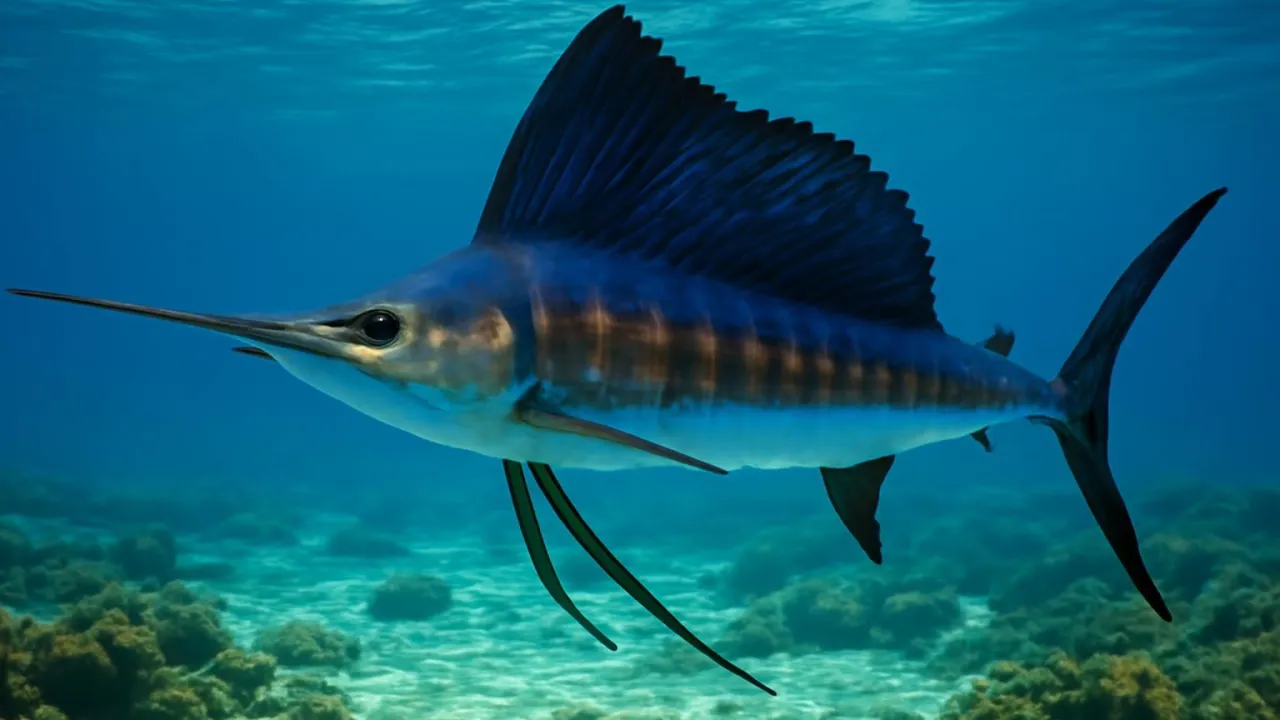
Sailfish can leap high out of the water to catch prey or escape danger!
✨ Word Sparks (Grade 2 Glossary)
Tap 🔊 to hear
predator
An animal that hunts other animals
prey
An animal that is hunted for food
herd
To gather animals together in a group
🪝
Have you ever seen a fish with a big sail on its back?
1
Big Sail and Long Nose
The Indo-Pacific sailfish has a large sail on its back and a long pointed nose. This sail helps it swim faster by cutting through the water. Its nose is sharp and helps catch small fish and squid for food.
2
Fastest Swimmer in Warm Seas
This sailfish lives in warm waters of the Indo-Pacific Ocean and can swim very fast. It can reach speeds up to 68 miles per hour, making it one of the fastest fish in the ocean. It often leaps out of the water to escape .
3
Life in the Ocean
Sailfish like to swim near the ocean surface where they hunt for food. They use their sail to scare smaller fish and them together. This helps the sailfish catch its more easily.
The sailfish’s sail can rise and fall like a flag to help it swim and hunt.
✨ Word Sparks (Grade 3 Glossary)
Tap 🔊 to hear
adaptation
A body part that helps survival
camouflage
Colors that help hide from others
predator
An animal that hunts others for food
🪝
How does the Indo-Pacific sailfish use its sail to survive in the ocean?
1
Amazing Sail and Speed
The Indo-Pacific sailfish has a large sail that helps it swim faster by reducing water resistance. This allows it to reach speeds up to 68 miles per hour. Its long, pointed bill stabs through water to catch prey quickly. These features help it survive by escaping and catching food.
2
Hunting and Camouflage
Sailfish use their sail to herd small fish into tight groups, making it easier to catch them. Their blue and silver colors provide in the ocean, hiding them from . This protective coloring helps the sailfish blend in with the water around them.
3
Habitat and Life Cycle
They live in warm Indo-Pacific waters where they spawn and grow. Young sailfish hatch from eggs and grow quickly to avoid . Their fast swimming helps them find food and stay safe as they develop into adults.
4
Role in the Ocean
As , sailfish help keep fish populations balanced by eating smaller fish and squid. They are part of the food web and support ocean health. Their presence shows a healthy ecosystem where many species live together.
Sailfish use their sail to herd prey and can swim faster than most ocean animals.
✨ Word Sparks (Grade 4 Glossary)
Tap 🔊 to hear
ecosystem
A community of living things and their home
migration
Moving from one place to another seasonally
predator
An animal that hunts other animals for food
🪝
What makes the Indo-Pacific sailfish a key player in ocean ecosystems?
1
Sailfish’s Speed and Adaptations
The Indo-Pacific sailfish can swim at speeds up to 68 miles per hour, making it one of the fastest fish in the ocean. Its large sail fin reduces water resistance, allowing quick bursts of speed to catch prey or escape . The long, pointed bill helps it stab and stun smaller fish during hunting.
2
Ecosystem Role and Food Web
As a , the sailfish maintains balance by controlling populations of smaller fish and squid. This role supports the health of coral reefs and open ocean . Sailfish also serve as prey for larger predators such as sharks, linking different levels of the food web.
3
Geographic Range and Habitat
The Indo-Pacific sailfish is found in warm tropical and subtropical waters across the Indian and Pacific Oceans. It prefers surface waters near coral reefs and open seas where food is plentiful. Seasonal occur as sailfish follow prey and breeding cycles.
4
Human Impact and Conservation
Sailfish are popular targets for sport fishing due to their speed and fight, which can impact local populations. Conservation efforts focus on sustainable fishing practices and protecting habitats to ensure sailfish populations remain healthy. Educating people about their ecological role helps promote ocean conservation.
2. Why is the sailfish important in the ocean food web?
🤯 Mind-Blowing Fact • Grade 5
Sailfish can swim faster than a car on the highway, reaching speeds up to 68 miles per hour.
✨ Word Sparks (Grade 5 Glossary)
Tap 🔊 to hear
hydrodynamic
Designed to move easily through water
pelagic
Living in open ocean waters far from shore
biodiversity
Many different kinds of living things
🪝
How do the Indo-Pacific sailfish’s unique features support its survival and ocean health?
1
Scientific Classification and Physical Traits
The Indo-Pacific sailfish, scientifically named Istiophorus platypterus, belongs to the family Istiophoridae. It can grow up to 11 feet long and weigh over 200 pounds, making it a large predator. Its most distinctive feature is the large dorsal sail fin, which can be raised or lowered depending on the situation. This sail is used for swimming, hunting, and communication.
2
Physiological Mechanics of Speed
The sailfish’s body shape and retractable sail reduce drag, allowing it to reach swimming speeds up to 68 miles per hour. Its long, spear-like bill stabs prey, stunning them for easier capture. Specialized muscle fibers provide bursts of speed, while its streamlined body conserves energy during long-distance travel. These adaptations make it one of the ocean’s fastest and most efficient hunters.
3
Conservation and Human Interactions
While sailfish are prized in sport fishing, overfishing and habitat degradation threaten their numbers in some regions. Conservation programs promote catch-and-release practices and protect spawning grounds to help populations recover. Understanding their ecological role helps maintain and balance in ocean ecosystems. Public education encourages sustainable fishing to protect this species.
4
Ecological Role and Quantitative Comparisons
Sailfish regulate populations of smaller fish and squid, preventing overpopulation and supporting coral reef health. Their swimming speed surpasses that of most other fish, with only a few species like the black marlin matching their velocity. They can leap up to 10 feet above the water surface during hunting or escape, showcasing incredible power and agility. These behaviors influence prey behavior and ecosystem dynamics.
5
Geographic Distribution and Migration Patterns
Found throughout the tropical and subtropical Indo-Pacific oceans, sailfish migrate seasonally to follow prey and breeding cycles. They prefer surface waters near coral reefs and open seas, where temperatures range between 68 and 86 degrees Fahrenheit. These migrations help sustain their populations and the ecosystems they inhabit. Their presence indicates healthy ocean environments.