👷 CAREERS
💼 Global Public Service, International Relief & Community Development
VA Economics, Civics & Career Readiness SOL K.8, 1.8, 2.8, 3.9
Humanitarian Aid Worker
Bringing Clean Water, Food, and Hope Worldwide
Grade 2 • Developing • 90 words
🧭 Career FieldInternational Relief, Global Health & Nonprofit Service
🛠️ Key Tools & SkillsPortable water purifiers, solar lanterns, nutrition measuring tapes, pop-up school kits, and cargo manifests
🏢 WorkplaceRemote villages, mobile health clinics, clean-water well sites, and global relief hubs
⚡ Everyday Impact SparkPartners with communities across the globe during droughts, earthquakes, and crises to build clean water systems, clinics, and pop-up classrooms
🤯 Mind-Blowing Fact • Grade 1
UNICEF's famous 'School-in-a-Box' holds supplies for forty students and a teacher—and its painted metal lid doubles as a chalkboard!
✨ Word Sparks (Grade 1 Glossary)
Tap 🔊 to hear
Humanitarian
Helping care for people's safety and dignity
Drought
Long dry spell with very little rain
Purify
To clean water so it is safe
🪝
How does a 'school in a box' bring pencils and books to kids far away?
1
Neighbors Around the World
Splash! Clear, clean water flows from a brand-new village pump. Children cheer and fill bright jugs. A aid worker travels near and far to help families in tough times.
2
Water, Food, and Tents
After big earthquakes or dry seasons, aid workers bring grain, warm tents, solar lamps, and doctors' kits.
3
Learning Keeps Going
They even unpack metal trunks filled with slates, chalk, and books—turning any tent into a happy schoolroom!
1. What clever trick can the lid of a humanitarian 'School-in-a-Box' trunk do?
2. Which basic everyday needs do humanitarian aid workers help communities secure first?
🤯 Mind-Blowing Fact • Grade 2
Specially formulated peanut-paste packets used by humanitarian nutrition teams need zero refrigeration or mixing with water, helping hungry children regain strength anywhere!
✨ Word Sparks (Grade 2 Glossary)
Tap 🔊 to hear
Filter
Device trapping dirt and germs from water
Custom
Tradition or polite way a community lives
Solar-powered
Run by energy captured from bright sunlight
🪝
Why do humanitarian aid workers listen to local village leaders first before unpacking a single tool?
1
Listening Before Building
Sit in a circle under a shade tree and listen closely! Whenever a humanitarian aid worker arrives after an earthquake, flood, or drought, local families know their land and best. Working side by side ensures new wells and clinics fit what neighbors truly need.
2
Clean Water Heroes
Dirty river water can make kids sick, so aid teams install sand , pumps, and handwashing stations. Clean water keeps whole villages healthy!
3
Speaking Many Languages
Many aid workers learn two or three languages and partner with local translators, engineers, teachers, and nurses to build lasting solutions.
1. Why do humanitarian aid workers partner closely with local community members instead of working alone?
2. Why are solar-powered water pumps and lanterns so useful in remote relief work?
🤯 Mind-Blowing Fact • Grade 3
Founded in 1881 by Clara Barton—who later lived in Glen Echo right across the Potomac River from Virginia—the American Red Cross connected the United States to global humanitarian relief!
What does the word 'WASH' stand for when humanitarian engineers race to keep a camp healthy?
1
The Lifesaving Power of WASH
After a major cyclone or earthquake damages city pipes, clean water becomes more urgent than almost anything else. Humanitarian specialists focus on WASH—short for Water, , and Hygiene—drilling deep wells, testing chlorine levels, and building safe washrooms.
2
Solar Cold Chains for Vaccines
Childhood vaccines must stay chilled between thirty-six and forty-six degrees Fahrenheit even across hot deserts! Aid logisticians pack insulated solar coolers onto trucks, boats, or even pack animals so rural clinics receive potent vaccines.
3
Short-Term Relief Versus Long-Term Development
Emergency relief delivers urgent tents and food right after a disaster. Long-term development teaches drought-hardy farming, trains local midwives, and builds earthquake-resistant schools so communities stand strong on their own.
4
Guided by Shared Principles
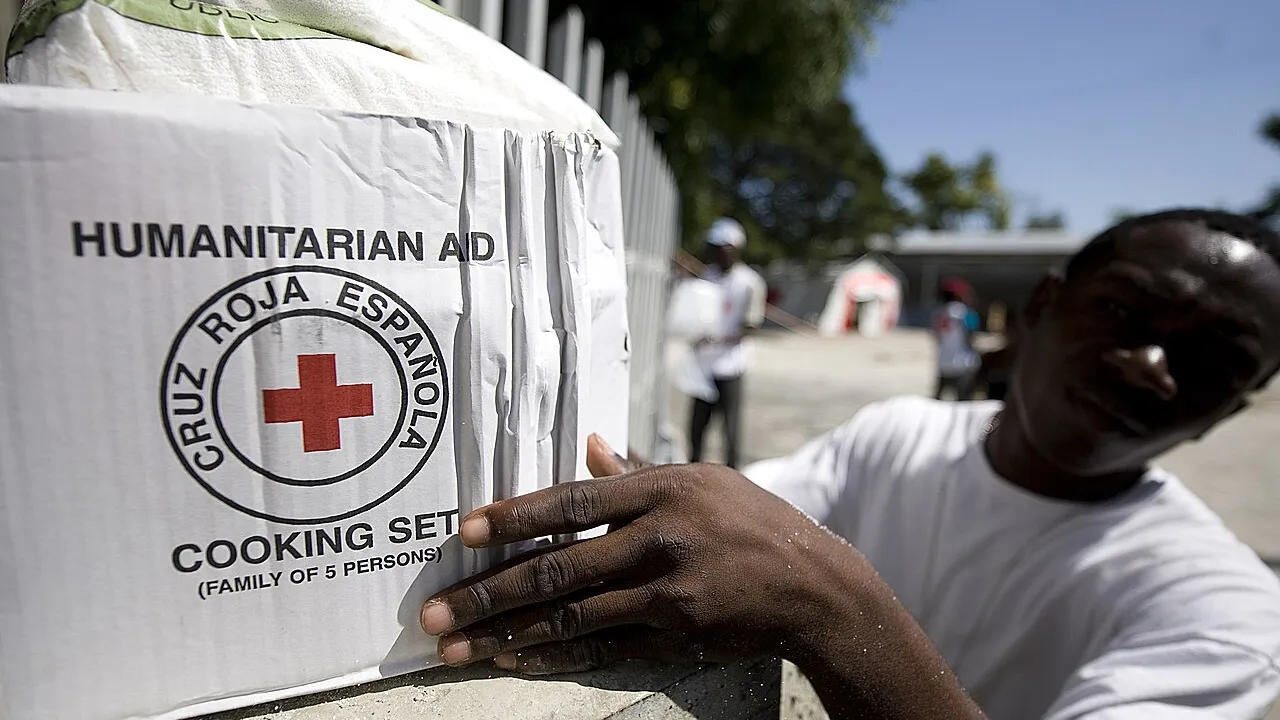
Humanitarian organizations like the Red Cross and Red Crescent help people purely based on human need, treating every family with equal kindness.
1. In humanitarian work, what three essentials does the acronym 'WASH' stand for?
2. What is the 'cold chain' that humanitarian logistics workers protect?
🤯 Mind-Blowing Fact • Grade 4
According to the international Sphere Handbook used by humanitarian engineers worldwide, every person in an emergency settlement is entitled to at least 15 liters of clean water daily within 500 meters of their shelter!
✨ Word Sparks (Grade 4 Glossary)
Tap 🔊 to hear
Impartiality
Helping fairly based only on real need
Hydrologist
Scientist locating and testing underground water sources
Voucher
Credit pass redeemable for food or supplies
🪝
Why do modern humanitarian workers sometimes give families digital cash cards instead of shipping bags of grain across an ocean?
1
Smarter Aid That Supports Local Farmers
Imagine a coastal storm damages houses on an island, yet inland farms ten miles away still have plenty of fresh rice, beans, and vegetables for sale. Shipping food bags thousands of miles by cargo ship takes weeks—and could accidentally put local farmers out of business! When local markets still function, modern humanitarian aid workers often provide secure mobile-money transfers or so families buy the exact foods and repair tools they need while boosting their own town's economy.
2
Four Core Humanitarian Principles
International relief professionals follow four globally recognized principles: Humanity (relieving human suffering wherever it occurs), (helping based solely on urgent need without favoritism), Neutrality (never taking sides in disputes), and Independence (keeping aid separate from outside agendas). Recognized emblems like the Red Cross, Red Crescent, and Red Crystal signal neutral medical and relief teams worldwide.
3
Sphere Standards for Human Dignity
Relief camps never guess how much water or space people deserve. Engineers and public-health workers follow the international Sphere Handbook, which sets measurable minimum standards—such as at least fifteen liters of safe water per person daily and walkable access to water taps within five hundred meters.
4
Many Careers Under One Umbrella
Humanitarian teams unite , civil engineers, pediatricians, nutritionists, child-protection educators, translators, and supply-chain planners.
1. When nearby local farms and shops still have food after a disaster, why can giving families grocery vouchers work better than shipping food from overseas?
2. What does the humanitarian principle of 'Impartiality' require?
🤯 Mind-Blowing Fact • Grade 5
Medical journals have hailed simple Oral Rehydration Salts—a precise pinch-and-scoop balance of clean water, glucose sugar, and electrolytes deployed by aid workers—as potentially the single most important medical advance of the twentieth century, saving tens of millions of children's lives!
✨ Word Sparks (Grade 5 Glossary)
Tap 🔊 to hear
Anticipatory action
Acting on forecasts before a crisis hits
Localization
Empowering local community organizations to lead relief
Electrolytes
Essential body salts maintaining healthy hydration
🪝
How do humanitarian aid specialists combine satellite drought forecasts, hydrogeology, and international law to avert crises before they strike?
1
Anticipatory Action and Famine Early Warning
Historically, global relief mobilized only after television cameras broadcast severe drought or flood devastation. Today, humanitarian analysts combine Normalized Difference Vegetation Index (NDVI) satellite crop imagery, El Niño ocean-temperature forecasts, and local grain-price tracking through networks like FEWS NET (Famine Early Warning Systems Network). Triggering ''—distributing drought-tolerant seeds, reinforcing livestock water points, and fortifying river levees weeks ahead of predicted shocks—protects livelihoods at a fraction of emergency airlift cost.
2
Global Cluster Coordination and Supply Hubs
When a massive 7.5-magnitude earthquake strikes, dozens of United Nations agencies and nongovernmental organizations converge within forty-eight hours. To prevent chaotic overlap, the UN Office for the Coordination of Humanitarian Affairs (OCHA) activates eleven specialized Clusters—including WASH, Health, Nutrition, Shelter, Logistics, and Emergency Telecommunications—backed by strategic air-cargo hubs in Dubai, Brindisi, Accra, and Panama.
3
Hydrogeology, Oral Rehydration, and Therapeutic Nutrition
Field science saves lives with elegant simplicity. Hydrogeologists use electrical resistivity ground surveys to site deep solar boreholes free of surface contamination. Meanwhile, public-health teams deploy two of medical history's highest-impact inventions: Oral Rehydration Salts (precise glucose-sodium ratios leveraging intestinal co-transport to halt dehydration) and Ready-to-Use Therapeutic Food (lipid-based micronutrient pastes formulated so bacteria cannot grow inside without water).
4
International Humanitarian Law and Localization
Grounded in the Geneva Conventions and international humanitarian law, field coordinators negotiate safe medical and food-delivery corridors while shifting operational leadership, engineering budgets, and decision-making directly to national and community-led organizations—a vital equity reform known as .
5
Resilience in a Changing World
Whether training village solar-pump technicians, reuniting separated family members, or setting up child-friendly learning tents within days of a cyclone, humanitarian aid workers blend cross-cultural humility, logistics engineering, and public health to turn global solidarity into lasting human dignity.