👷 CAREERS
💼 Historical Scholarship, Archival Research & Public History
VA Economics, Civics & Career Readiness SOL K.8, 1.8, 2.8, 3.9
Historian
Time-Travel Detectives Piecing Together True Human Stories
Grade 2 • Developing • 92 words
🧭 Career FieldUniversities, Archives, Historic Landmarks, Museums & Publishing
🛠️ Key Tools & SkillsPrimary source letters, maps, photographs, oral history microphones, and critical analysis
🏢 WorkplaceDocument archives, historic sites, libraries, universities, and documentary studios
⚡ Everyday Impact SparkConnects letters, diaries, and eyewitness records to explain how the past shaped our world
🤯 Mind-Blowing Fact • Grade 1
Some historians record voice interviews called 'oral histories' so great-grandparents' real memories are saved forever!
✨ Word Sparks (Grade 1 Glossary)
Tap 🔊 to hear
diary
A notebook where someone writes daily thoughts
past
All the time before right now
fact
Something that can be proven true
🪝
How do we know what life was like before anyone alive today was born?
1
Letters from Long Ago
Crinkle! Yellowed paper unfolds on a wooden desk. Faded ink shows a letter written two hundred years ago! Leaning in with a magnifying glass, a historian reads every word.
2
Checking Real Clues
Old photos, maps, and diaries hold true clues. Historians also listen to grandparents tell memories from childhood. They check carefully so no tall tales slip in.
3
Sharing the Story
Next, they write books and guide tours at old forts and towns. Thanks to them, the feels alive!
1. Which item helps a historian learn what happened two hundred years ago?
2. What is an oral history?
🤯 Mind-Blowing Fact • Grade 2
Many historians learn to read cursive handwriting and old-fashioned spelling from centuries ago so they can decipher original letters!
✨ Word Sparks (Grade 2 Glossary)
Tap 🔊 to hear
primary source
Firsthand clue made during a past event
eyewitness
A person who saw an event happen
century
A period of one hundred years
🪝
If two eyewitnesses remember the same event differently, how does a historian figure out what really happened?
1
Detectives of Time
Imagine finding an attic trunk stuffed with black-and-white photographs, ship tickets, and old newspapers! Sorting through clues just like these, a historian pieces together true stories from earlier centuries.
2
Primary Sources First
Historians love ''—items created right at the time an event happened, like a soldier's journal, a town map, or a speech. Because one person might forget details, historians compare several clues side by side to check what matches.
3
More Than Memorizing Dates
History isn't just a list of dates! Historians ask why people moved, invented machines, or changed laws—helping us understand our towns today.
1. Which of these is a primary source from the year 1776?
2. Why do historians compare clues from several different people?
🤯 Mind-Blowing Fact • Grade 3
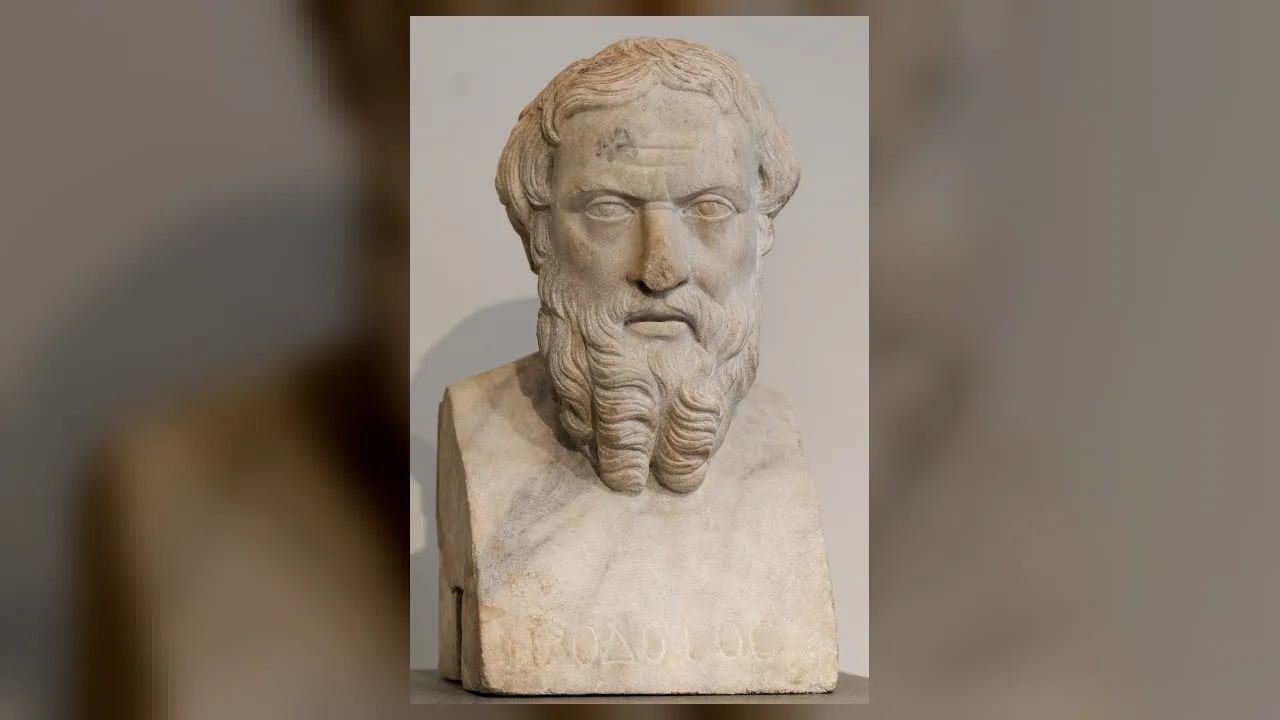
Over 2,400 years ago, a Greek writer named Herodotus traveled across the Mediterranean interviewing eyewitnesses, earning the nickname 'The Father of History'—from a Greek word meaning 'inquiry'!
✨ Word Sparks (Grade 3 Glossary)
Tap 🔊 to hear
secondary source
A history account written after the event
census
An official count of everyone living somewhere
inquiry
Asking careful questions to discover the truth
🪝
Where do historians work besides libraries—from movie sets to Colonial Williamsburg?
1
Deciphering Faded Ink
Under soft reading-room lamps at the National Archives, a historian examines a 150-year-old train schedule alongside pages listing every family on a block. Suddenly, two puzzle pieces click together to explain how a tiny crossroads grew into a bustling city!
2
Primary vs. Secondary Sources
Historians divide clues into two main groups. Primary sources are original records—letters, treaties, photographs, and speeches from the era itself. are books or articles written later by researchers analyzing those originals. Good historians always trace claims back to primary evidence.
3
Specializing in Every Topic
Everything has a history! Some scholars study ancient Egypt or early American civics, while others research the history of aviation, medicine, music, or sports.
4
Public Historians in Action
Public historians work at national parks, living-history sites like Colonial Williamsburg, documentary film studios, and museums—making sure costumes, buildings, and scripts stay true to real facts.
1. Why might a movie director hire a historian while filming a story set in 1860?
2. What does the original Greek word behind 'history' mean?
🤯 Mind-Blowing Fact • Grade 4
At the Library of Congress, the Veterans History Project has collected more than 115,000 firsthand oral histories, letters, and photographs from American service members!
✨ Word Sparks (Grade 4 Glossary)
Tap 🔊 to hear
corroboration
Confirming a claim using multiple independent clues
perspective
A person's point of view on events
chronology
Arranging events in exact time order
🪝
How do historians uncover overlooked voices and test whether an old document is telling the whole truth?
1
Questioning Every Clue
Suppose you discover a nineteenth-century newspaper article praising a brand-new canal, and right beside it a canal worker's letter complaining of leaky locks and unpaid wages. Which one is right? Stepping into that puzzle, a historian analyzes , motive, and context rather than taking any single page at face value.
2
Sourcing, Corroboration, and Context
Professional historians follow a disciplined method. First comes sourcing: asking who created a document, when, and for what audience. Second comes contextualization: understanding what else was happening in that region and era. Third comes : comparing independent records—tax ledgers, maps, photographs, and archaeological finds—to see where evidence agrees.
3
Expanding Whose Stories Are Told
Generations ago, many history books focused almost entirely on battles and famous leaders. Modern historians also examine church registers, Freedmen's Bureau records, stitched quilts, ship manifests, and recorded oral interviews to illuminate women, Indigenous nations, immigrants, and everyday working families across Virginia and the nation.
4
Guiding Civic Decisions Today
Courts, lawmakers, landmark preservation boards, documentary filmmakers, and school textbook authors rely on historians every day to research treaties, historic neighborhoods, and constitutional milestones accurately so citizens can make wise decisions.
1. What does a historian do during 'corroboration'?
2. How do historians learn about everyday people who didn't publish famous books?
🤯 Mind-Blowing Fact • Grade 5
Multispectral imaging at the Library of Congress revealed that Thomas Jefferson literally wiped out 'subjects' and wrote 'citizens' right in the middle of drafting the Declaration of Independence in June 1776!
✨ Word Sparks (Grade 5 Glossary)
Tap 🔊 to hear
historiography
How historians study and write history
paleography
Reading and dating old styles of handwriting
anachronism
Something placed in the wrong historical time
🪝
Why does our understanding of the past keep evolving even though the events themselves already happened?
1
New Light on Hidden Ink
When imaging scientists and archivists shone multispectral light in twelve different wavelengths onto Thomas Jefferson's rough draft of the Declaration of Independence in 2010, a surprise emerged beneath a scratched-out smudge: Jefferson had originally written 'fellow-subjects' before overwriting it with 'fellow-citizens'! Moments like that show why a historian's work is never static—new tools and fresh questions continually uncover hidden evidence.
2
Historiography and Evidence
While the past itself is fixed, —how scholars research, interpret, and write about the past—evolves as newly opened archives, translated manuscripts, and archaeological data come to light. Credentialed historians, often holding master's degrees or PhDs, study (historical handwriting scripts) and foreign languages to examine charters, diplomatic cables, court dockets, and personal correspondence.
3
Digital Humanities and Quantitative Scale
Today, digital historians pair close reading with computational power. Optical character recognition and GIS mapping allow researchers to trace migration patterns across millions of nineteenth-century census entries, shipping logs, weather diaries, and digitized newspapers in minutes—revealing large-scale economic and environmental shifts invisible inside a single family journal.
4
Guarding Against Anachronism
Rigorous historical scholarship avoids —projecting modern technologies, slang, or assumptions backward onto earlier eras—while honestly analyzing multiple eyewitness perspectives, primary evidence, and cause-and-consequence chains across political, social, cultural, and scientific turning points throughout world and American history.
5
Memory for a Self-Governing People
Just as an individual without memory would struggle to navigate tomorrow, a constitutional republic relies on honest, evidence-based history in classrooms, public archives, museums, and civic debates to understand its founding principles, shared achievements, and hard-won lessons across generations.