🏢 WorkplaceHighway jobsites, bridge builds, quarries, ports, and building foundations
⚡ Everyday Impact SparkGuides 50-ton steel machines with fingertip accuracy down to a single inch
🤯 Mind-Blowing Fact • Grade 1
Experienced excavator operators have such steady control with their joysticks that they can pick up a tiny teacup or close a matchbox using a 40,000-pound digger!
✨ Word Sparks (Grade 1 Glossary)
Tap 🔊 to hear
Excavator
A big machine with a long digging arm and bucket
Bulldozer
A tracked machine with a wide blade pushing dirt
Cab
The enclosed seat area where the operator sits
🪝
Who drives the giant yellow diggers and cranes on a building site?
1
Rumble and Scoop!
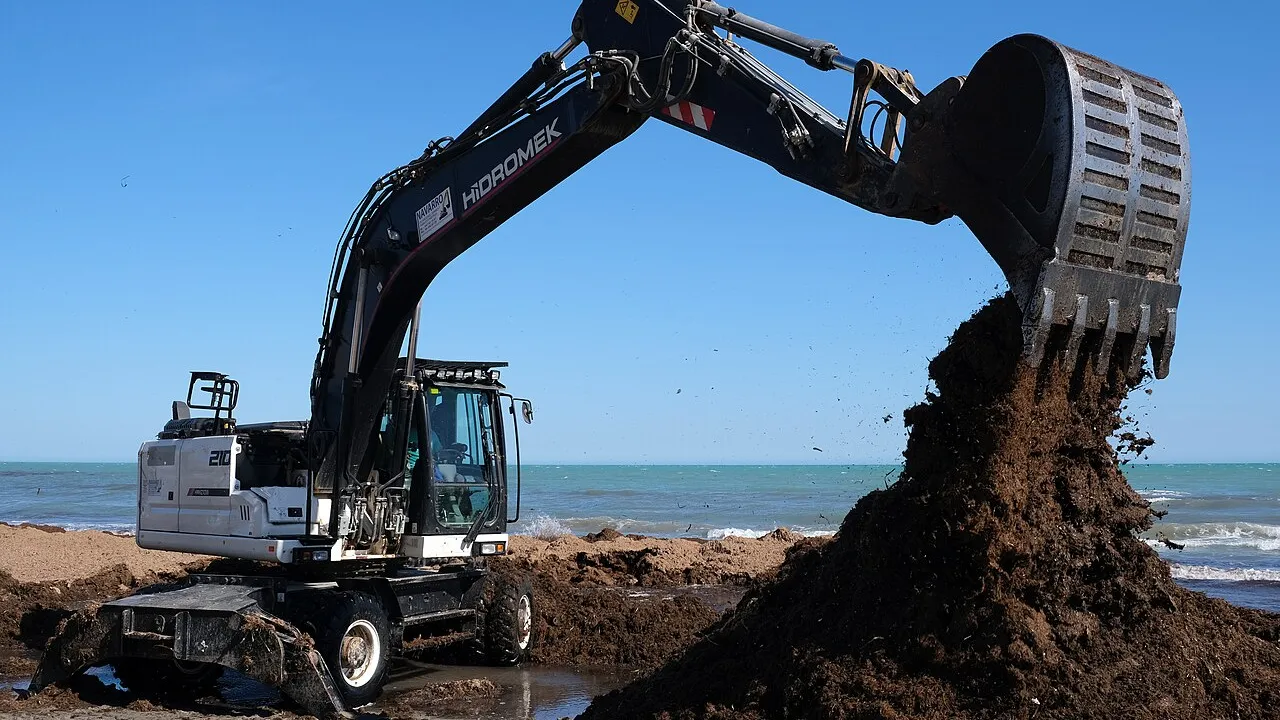
Rumble, clank! Giant steel tracks roll over bumpy dirt. A long yellow arm reaches down and scoops up a mountain of soil. Inside the glass sits a heavy equipment operator!
2
Big Helpful Machines
push dirt flat for new roads and playgrounds. Tall cranes lift heavy beams high into the sky.
3
Gentle Hands, Safe Eyes
Operators move two smooth joysticks with gentle, careful hands. They watch helpers on the ground to keep everyone safe!
1. Which machine uses a wide front blade to push dirt flat for new roads?
2. How does a heavy equipment operator steer the digging arm inside a modern cab?
🤯 Mind-Blowing Fact • Grade 2
All across the United States, painted flags on grass follow a universal color code—yellow marks gas lines, red marks electric cables, and blue marks drinking-water pipes!
✨ Word Sparks (Grade 2 Glossary)
Tap 🔊 to hear
Hydraulics
Using pressurized liquid in tubes to power strong machines
Trench
A long, narrow ditch dug into the ground
Tracks
Linked steel loops keeping heavy machines from sinking
🪝
How can a giant metal digging arm lift tons of rock as easily as you lift a spoon?
1
Fluid Muscle Power
Look closely at the shiny silver cylinders along a big digger's yellow arm. Those strong tubes hold pressurized oil called '.' When a heavy equipment operator gently nudges a joystick, oil pushes pistons with giant muscle—lifting boulders that a hundred people could not budge!
2
A Machine for Every Job
Skilled operators train on many specialized machines. Excavators dig deep for clean-water pipes, long motor graders shave bumpy gravel roads flat, and big wheel loaders fill waiting dump trucks.
3
Call Before You Dig
Before scooping up a single bucket of dirt, careful operators check colorful warning flags on the grass so they never bump buried electric cables or town water mains.
1. What gives an excavator's metal arm the super strength to lift heavy boulders?
2. Why do operators check red, blue, and yellow flags on the ground before digging?
🤯 Mind-Blowing Fact • Grade 3
Tower cranes that build skyscrapers actually 'build themselves' taller—using a hydraulic climbing frame to jack up the cab and slide new steel tower sections underneath as the building rises!
✨ Word Sparks (Grade 3 Glossary)
Tap 🔊 to hear
Spotter
A ground helper guiding an operator with hand signals
Motor Grader
A long machine with an angled blade leveling roadbeds
Counterweight
Heavy rear block keeping cranes and diggers balanced
🪝
Why do bulldozers crawl on wide steel caterpillar tracks instead of regular car tires?
1
Floating Over Mud With Tracks
Try walking across soft mud in skinny shoes, and your feet sink right in—yet strap on wide winter snowshoes, and you stay right on top! A 60,000-pound bulldozer uses that exact snowshoe science. Its wide, linked steel tracks spread heavy weight across lots of ground so it climbs muddy hills without getting stuck.
2
GPS Screens Inside the Cab
Climb inside an air-conditioned modern grader or excavator cab, and it looks like a spacecraft cockpit! Bright satellite GPS screens display a live 3D map of the jobsite, guiding the steel blade within half an inch of the engineer's plan.
3
Hand Signals With Spotters
On noisy construction sites or high skyscraper crane lifts, operators partner closely with trained ground '' using crisp hand signals and two-way radios to place loads safely.
4
Morning Walk-Around Checks
Every morning shift starts with a careful 360-degree walk-around inspection—checking hydraulic hoses, backup beeper alarms, wide mirrors, and track bolts before turning the key.
1. How do wide continuous steel tracks keep heavy bulldozers from sinking in soft dirt?
2. What holds the back of a crane or excavator down so it doesn't tip forward when lifting a heavy load?
🤯 Mind-Blowing Fact • Grade 4
As a crane boom tilts lower and reaches farther away from its center, leverage multiplies so dramatically that a crane rated for 100 tons close-in might safely lift only 12 tons at full horizontal reach!
✨ Word Sparks (Grade 4 Glossary)
Tap 🔊 to hear
Compaction
Pressing soil and gravel tight so foundations stay firm
Leverage
Turning force that grows stronger farther from a pivot
Girder
A massive steel or concrete beam spanning a bridge
🪝
How do crane and earthmoving operators use physics, soil science, and satellite lasers to build bridges, tunnels, and seaports?
1
Shaping the Foundations of Civilization
Before a single school brick is laid, an interstate highway paved, or an offshore wind turbine bolted upright, heavy equipment operators sculpt the ground underneath. Across Virginia—from boring and expanding the Hampton Roads Bridge-Tunnel to hoisting cargo containers at the Port of Virginia—operators command specialized fleets of hydraulic excavators, vibratory rollers, pile drivers, and towering lattice cranes.
2
Soil Compaction and Trench Safety
Ordinary dirt may look simple, yet loose, uncompacted soil settles under rain and cracks concrete foundations! Operators drive heavy steel-drum rollers that vibrate thousands of times per minute, squeezing air pockets out of crushed stone and clay to create a rock-solid roadbed. Whenever digging deep utility trenches for municipal water mains, operators carefully slope or step back dirt walls—and lower steel protective trench boxes—so heavy earth can never cave in on pipe crews below.
3
Crane Load Charts and Wind Physics
Licensed crane operators are everyday physicists in hard hats. Before hoisting a 35-ton concrete bridge , the operator calculates exact radius math on a load chart: the farther out a crane boom reaches horizontally, the less weight it can lift without tipping forward! Electronic wind gauges perched on the boom tip alert crews immediately if high gusts require pausing lifts.
4
Simulators and Apprenticeships
Aspiring operators train inside wrap-around virtual-reality motion simulators during paid Operating Engineers apprenticeships before earning national crane and heavy-machinery certifications.
1. Why do heavy equipment operators run vibrating steel-drum rollers over soil before paving a highway?
2. What happens to a crane's safe lifting capacity as its boom reaches farther horizontally away from its base?
🤯 Mind-Blowing Fact • Grade 5
Pushing oil at 5,000 psi against a single 6-inch-wide hydraulic piston generates over 141,000 pounds of force—enough to lift ten full-grown African elephants with one cylinder!
✨ Word Sparks (Grade 5 Glossary)
Tap 🔊 to hear
Pascal's Law
Rule that fluid pressure pushes equally in enclosed tubes
Torque
Rotational twisting or tipping force around a pivot point
Outriggers
Extendable stabilizer legs bracing a crane wide and flat
🪝
How do Pascal's hydraulic law, rotational torque equations, and millimeter-accurate GNSS guidance empower one operator to sculpt mountains and erect skyscrapers?
1
Pascal's Law Multiplied Into Megatons
Step inside the pressurized, sound-insulated cab of a 90-ton hydraulic excavator or a 350-foot crawler crane, and your fingertips command pure fluid and mechanical physics. Seventeenth-century French scientist Blaise Pascal proved that pressure applied to an enclosed, incompressible liquid transmits undiminished in every direction. Pumping synthetic hydraulic fluid at 5,000 pounds per square inch (psi) against wide steel cylinder pistons multiplies a compact engine pump's output into over a hundred thousand pounds of digging and lifting force.
2
Rotational Torque and Stability Polygons
Every heavy crane lift obeys strict rotational equilibrium: Load Weight multiplied by Horizontal Radius must stay well below Counterweight Mass multiplied by Rearward Moment Arm. Before hoisting steel trusses or stadium lights, NCCCO-certified crane operators extend wide hydraulic onto engineered timber mats to enlarge the crane's stability polygon, calculate rigging sling-angle tensions, and monitor computerized Load Moment Indicators (LMIs) measuring live boom deflection and wind drag.
3
3D Machine Control and RTK-GNSS
Twenty-first-century earthmoving largely replaces wooden survey stakes with Real-Time Kinematic Global Navigation Satellite Systems (RTK-GNSS) and robotic laser total stations. Dual satellite receivers mounted atop a bulldozer blade or excavator boom compare real-time bucket teeth coordinates against an engineer's 3D digital terrain model—automatically feathering hydraulic valves to carve highway banking curves, wetland basins, and airport runways within millimeter tolerances.
4
Hybrid-Electric Fleets and Remote Teleoperation
To cut fuel consumption and urban jobsite noise, equipment fleets increasingly deploy diesel-electric hybrid wheel loaders that recapture swing-braking energy, zero-emission battery excavators for indoor tunnel boring, and 5G teleoperated machines that keep human operators safe clear of unstable landslide zones.
5
Credentials of the Craft
Through four-year International Union of Operating Engineers (IUOE) or industry apprenticeships, OSHA soil-mechanics training, and national practical exams, heavy equipment operators build rewarding careers literally shaping modern infrastructure.